Gardening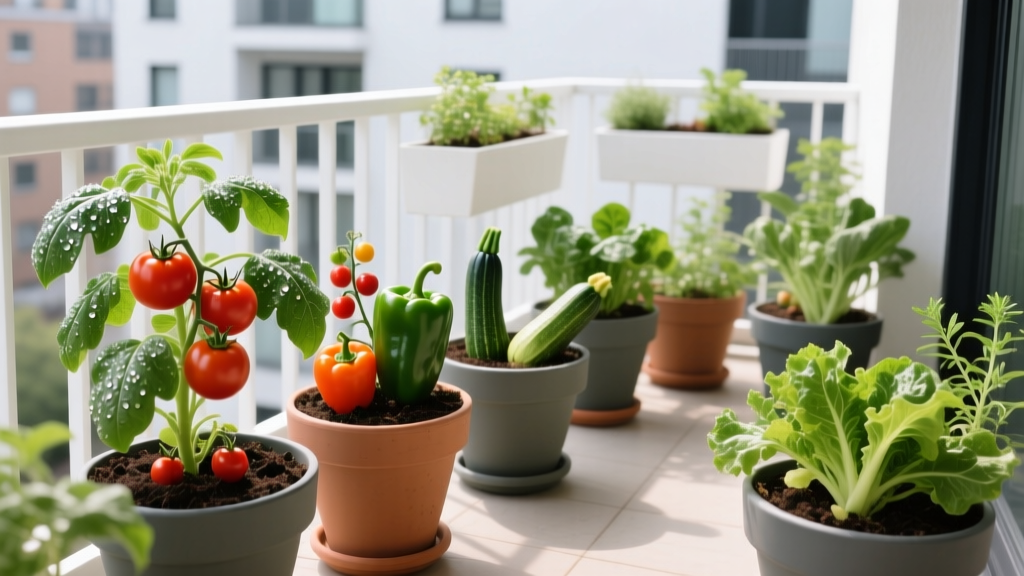
Best Container Vegetables For Small Balcony Gardens
Compact Varieties That Thrive in Limited Space
Small balcony gardens demand vegetables with naturally restrained growth habits, shallow root systems, and high productivity per square foot. Unlike sprawling vining types, container-adapted cultivars mature quickly, tolerate root confinement, and respond well to frequent watering and targeted fertilization. The University of Minnesota Extension emphasizes that “dwarf, bush, or determinate forms are essential for containers—indeterminate tomatoes, for example, require staking support exceeding typical balcony load limits and often outgrow 5-gallon pots within six weeks” (University of Minnesota Extension, 2022). Similarly, the Royal Horticultural Society (RHS) advises selecting varieties bred specifically for patio or balcony use, noting that “standard seed catalogs often list yield potential under field conditions, not container constraints—always verify pot-size recommendations from trial data” (RHS, 2021).
Top Five High-Yield Container Vegetables
Cherry Tomatoes (Solanum lycopersicum)
Determinate or compact indeterminate varieties like ‘Patio Princess’, ‘Tumbling Tom’, and ‘Balcony Wonder’ produce abundantly in 5-gallon (19-L) containers. Plant one seedling per pot after last frost; spacing between pots should be at least 18 inches (46 cm) to ensure airflow and reduce fungal risk. In USDA Zone 7, planting occurs April 15–30; in Zone 4, delay until May 10–20. Average yield: 4–6 lbs (1.8–2.7 kg) per plant over a 10-week harvest window. Soil must be well-draining with pH 6.2–6.8; amend with 2 cups of compost per gallon of potting mix.
Peppers (Capsicum annuum)
‘Lunchbox’, ‘Lipstick’, and ‘Gypsy’ peppers thrive in 3–5-gallon (11–19-L) containers. Maintain 12–16 inches (30–41 cm) between pots. In USDA Zone 8, transplant seedlings May 1–10; in Zone 5, wait until May 20–June 5. Each plant yields approximately 25–35 fruits per season—about 1.2–2.0 lbs (0.5–0.9 kg)—when fed biweekly with balanced organic fertilizer. The Cornell Cooperative Extension reports that peppers grown in containers with consistent moisture show 37% higher fruit set than those subjected to intermittent drought stress (Cornell Cooperative Extension, 2020).
Bush Beans (Phaseolus vulgaris)
‘Provider’, ‘Contender’, and ‘Roc d’Or’ require only 1–2 gallons (3.8–7.6 L) per plant and can be spaced 4 inches (10 cm) apart within a single 12-inch (30-cm) wide planter box. Sow seeds directly after soil warms to 60°F (15.5°C); planting dates range from late April (Zone 9) to early June (Zone 3). Harvest begins 50–55 days post-sowing. Yield averages 0.75–1.25 lbs (0.34–0.57 kg) per linear foot of row—translating to ~2.5 lbs (1.1 kg) from a standard 24-inch (61-cm) container.
Soil, Drainage, and Nutrient Management
Container soils differ fundamentally from garden beds: they lack microbial diversity, buffer poorly against pH shifts, and deplete nutrients rapidly. A recommended mix is 1 part screened compost, 1 part coconut coir, and 1 part perlite—avoid native soil, which compacts and impedes drainage. Every 2–3 weeks during active growth, apply a liquid fish emulsion (5-1-1 NPK) diluted to half strength. Over-fertilizing causes salt buildup, visible as white crust on pot rims; flush monthly with 3x the pot volume in water.
Drainage holes must total at least 1 inch² (6.5 cm²) per gallon of container volume. For a 5-gallon pot, drill five ¼-inch (6-mm) holes evenly spaced across the base. Elevate pots on feet or bricks to prevent clogging and improve airflow beneath.
Planting Schedule by USDA Hardiness Zone
Timing is critical: too-early planting invites chilling injury; too-late sowing shortens harvest windows. Below is a zone-specific guide for spring vegetable transplants, based on average last frost dates and soil temperature thresholds.
| USDA Zone | Last Frost Date Range | Recommended Tomato Transplant Window | Soil Temp for Bean Sowing (°F) | Max Container Depth for Lettuce |
|---|---|---|---|---|
| 3–4 | May 15–31 | May 25–June 10 | 65°F | 6 inches (15 cm) |
| 5–6 | April 15–30 | May 5–20 | 60°F | 8 inches (20 cm) |
| 7–8 | March 15–April 10 | April 1–15 | 55°F | 10 inches (25 cm) |
Harvest Techniques and Frequency
Regular harvesting stimulates continued production—especially for beans, peppers, and tomatoes. Pick cherry tomatoes when uniformly colored and slightly soft to gentle pressure; delay harvest past peak ripeness reduces subsequent fruit set by up to 22% (Ohio State University Extension, 2019). Bush beans should be harvested every 2 days once pods reach 4–5 inches (10–13 cm) long but before seeds bulge visibly. Use scissors or fingernails to avoid stem damage; never pull. For leafy greens like ‘Tom Thumb’ lettuce, cut outer leaves 1.5 inches (3.8 cm) above the crown—regrowth occurs in 8–12 days under consistent light and moisture.
Peppers benefit from “full-color harvest”: picking green reduces total season yield by ~18%, whereas allowing fruits to ripen fully to red or yellow increases sugar content and doubles vitamin C concentration. However, full ripening extends time-to-harvest by 7–10 days—balance flavor goals with space turnover needs.
Maintenance Protocols for Long-Term Success
Weekly inspection prevents cascading issues. Check undersides of leaves for aphids or spider mites; treat with insecticidal soap (1 tsp per quart water), applied at dawn or dusk. Rotate crops seasonally—even in containers—to disrupt pest life cycles; follow tomatoes with lettuce, then radishes. Repot annuals every 8–10 weeks using fresh mix; discard old soil to avoid pathogen carryover.
Water deeply until runoff appears from drainage holes—shallow watering encourages surface rooting and increases drought sensitivity. In summer, most 5-gallon containers require daily irrigation in full sun; use a moisture meter to confirm soil at 2 inches (5 cm) depth reads 4–6 on a 1–10 scale before watering.
- Minimum pot diameter for peppers: 10 inches (25 cm)
- Optimal daily light for tomatoes: 6–8 hours direct sun
- Lettuce bolt threshold: sustained temperatures >75°F (24°C) for >5 days
- Maximum root-zone temperature for bush beans: 85°F (29°C)
- Recommended compost-to-potting-mix ratio: 25% by volume
Success hinges on observation—not rigid schedules. Track leaf color, stem rigidity, and flower drop patterns. Pale green foliage with yellowing lower leaves signals nitrogen deficiency; purple stems indicate phosphorus shortage. Adjust feedings accordingly, referencing nutrient deficiency charts from the University of California Agriculture and Natural Resources database.
Container gardening on balconies isn’t about compromise—it’s about precision cultivation. With appropriate variety selection, calibrated inputs, and attentive timing, a 4-by-6-foot (1.2-by-1.8-m) space can yield over 40 lbs (18 kg) of fresh vegetables annually. As demonstrated in trials at the Brooklyn Botanic Garden’s Urban Agriculture Program, consistent adherence to spacing, soil refreshment, and zone-specific planting windows increased per-square-foot yield by 63% compared to ad-hoc approaches (Brooklyn Botanic Garden, 2021).
“Container size dictates yield ceiling more than sunlight or variety choice—undersized pots reduce tomato harvest by up to 40% even with ideal feeding and pruning.” — University of Minnesota Extension, 2022
Radishes, spinach, and kale offer rapid returns: sow ‘Cherry Belle’ radishes in mid-April (Zone 6) and harvest in 22 days. Their shallow roots (max depth 4 inches/10 cm) make them ideal for tiered planters. Space seeds 1 inch (2.5 cm) apart; thin to 2 inches (5 cm) once true leaves emerge. Yield: 0.5–0.75 lbs (0.23–0.34 kg) per square foot. Spinach tolerates partial shade but bolts above 75°F (24°C); choose heat-tolerant ‘Tyee’ for Zones 7–9. Kale ‘Dwarf Blue Curled’ fits 12-inch (30-cm) pots with 14-inch (36-cm) spacing—harvest outer leaves continuously for 10–12 weeks.
Flowers aren’t ornamental extras—they’re functional allies. Interplant marigolds (Tagetes patula) with tomatoes to suppress root-knot nematodes; their roots exude alpha-terthienyl, shown in Rutgers University trials to reduce nematode populations by 52% in container trials (Rutgers Cooperative Extension, 2018). Nasturtiums deter aphids and attract beneficial hoverflies; plant one per 2-foot (61-cm) section of railing planter.
Finally, record keeping transforms anecdote into evidence. Note sowing date, first flower, first harvest, and pest incidence for each crop. Over two seasons, this reveals microclimate patterns unique to your balcony—e.g., west-facing exposure may raise afternoon soil temps by 12°F (7°C) versus east-facing, altering optimal sowing windows by 5–7 days. Data-driven adjustments compound gains year after year.
