Gardening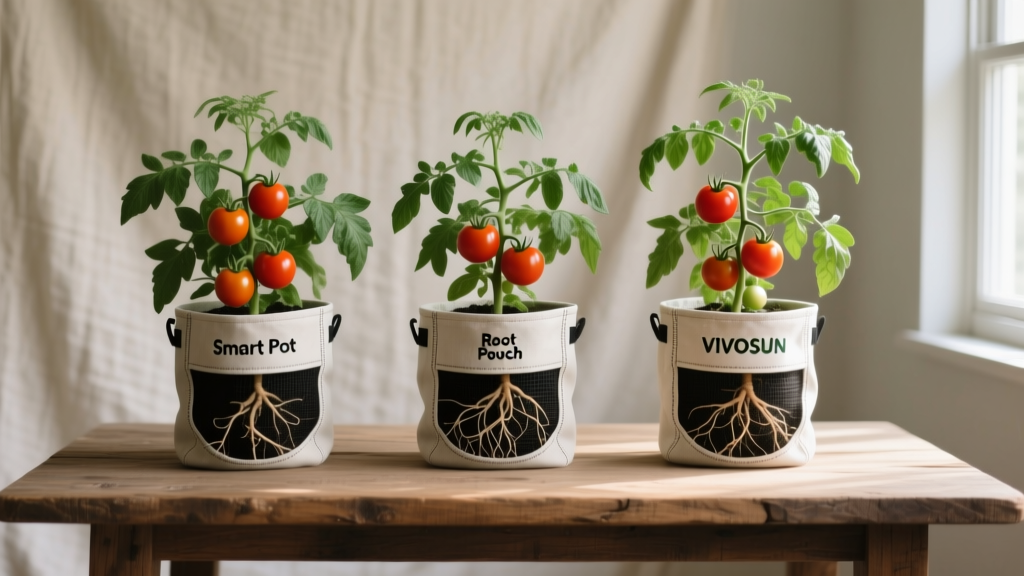
Best Fabric Grow Bags for Tomatoes: Smart Pot vs Root Pouch
David ParkPublished
The Rise of Fabric Grow Bags in Home Gardening
Tomatoes are the undisputed kings of the home garden, but not everyone has the luxury of deep, loamy in-ground soil or the space for massive wooden raised beds. Enter the fabric grow bag. Over the last decade, these breathable, flexible containers have revolutionized urban and small-space vegetable gardening. But with dozens of brands flooding the market, which one actually delivers the best harvest?
In this comprehensive product review and comparison, we are putting the three most popular fabric grow bags to the test: the industry-standard Smart Pot, the eco-friendly Root Pouch, and the budget-conscious VIVOSUN. We will break down their materials, durability, air-pruning capabilities, and overall value to help you decide which bag will yield the juiciest, most abundant tomatoes this season.
The Science of Air Pruning: Why Fabric Beats Plastic
Before diving into the brands, it is crucial to understand why fabric bags outperform traditional plastic or ceramic pots. When a tomato root system reaches the edge of a solid plastic pot, it begins to circle the perimeter. This 'root binding' chokes the plant, restricts nutrient uptake, and eventually leads to stunted growth.
Fabric bags solve this through a process called air pruning. According to research published by the University of Florida IFAS Extension on container vegetable production, proper root zone aeration is critical for preventing root rot and maximizing nutrient uptake. When roots reach the porous edge of a fabric bag, they are exposed to ambient air. The tip of the root dehydrates slightly and stops growing, which stimulates the plant to produce dense, fibrous lateral branching behind the tip. This creates a massive, highly efficient root ball that absorbs water and fertilizer at an incredible rate.
Sizing Guide: What Size Bag Do Tomatoes Need?
Tomatoes are heavy feeders with extensive root systems. While you can grow small herbs in a 1-gallon bag, tomatoes require serious volume to thrive.
- Determinate (Bush) Tomatoes: Require a minimum of 10 to 15 gallons. These varieties grow to a fixed size and produce fruit all at once.
- Indeterminate (Vining) Tomatoes: Require a minimum of 15 to 20 gallons. These plants grow continuously throughout the season and need a massive root zone to support heavy yields and tall staking.
- Cherry and Dwarf Varieties: Can thrive in 5 to 7 gallons, making them perfect for balcony gardeners.
Product 1: Smart Pot (The Industry Standard)
The Smart Pot is the original fabric container, manufactured by High Caliber Growing Systems. Made from a proprietary, BPA-free, non-woven polypropylene fabric, it has been the go-to choice for commercial nurseries and serious home gardeners for over thirty years.
Pros and Cons
- Pros: Unmatched durability (easily lasts 5+ seasons), excellent air-pruning porosity, holds its shape well when filled, and features a sturdy, folded top rim that makes moving it easier.
- Cons: Higher upfront cost, lacks built-in handles on standard sizes, and the black fabric can get warm in extreme southern heat.
Cost: Approximately $18 to $24 for a 15-gallon bag.
Verdict: If you want a buy-it-once-and-forget-it product that guarantees optimal root health, the Smart Pot is the gold standard for indeterminate tomatoes.
Product 2: Root Pouch (The Sustainable Choice)
Root Pouch takes a different approach to fabric. Instead of pure polypropylene, they blend recycled PET (from plastic water bottles) with natural, biodegradable fibers like recycled cotton. This creates a fabric that feels slightly more organic and offers unique moisture-retention properties.
Pros and Cons
- Pros: Highly eco-friendly manufacturing, the natural fiber blend retains moisture slightly better than pure polypropylene (great for hot climates), and it features a soft, felt-like texture that insulates roots against temperature swings.
- Cons: The natural fibers can break down faster than pure plastic fabrics, meaning a lifespan of about 3 to 4 seasons. It can also be slightly heavier when wet.
Cost: Approximately $14 to $19 for a 15-gallon bag.
Verdict: Root Pouch is the best choice for eco-conscious gardeners and those living in arid, hot climates where moisture retention in the root zone is a daily battle.
Product 3: VIVOSUN (The Budget-Friendly Multi-Pack)
VIVOSUN is a massive name in indoor and outdoor horticulture, known for providing affordable gear. Their heavy-duty fabric grow bags are made from 300g加厚 (thickened) non-woven fabric and usually come in multi-packs, making them incredibly cost-effective for gardeners planting a large orchard of patio tomatoes.
Pros and Cons
- Pros: Extremely affordable, features heavy-duty reinforced nylon handles for easy lifting, and comes in multi-packs (e.g., 5-packs or 10-packs).
- Cons: The fabric is less porous than Smart Pot, which can slightly reduce air-pruning efficiency. The bags tend to be floppier and harder to stand up when empty.
Cost: Approximately $25 to $30 for a 5-pack of 15-gallon bags ($5 to $6 each).
Verdict: VIVOSUN is the undisputed champion for gardeners on a budget or those who need to pot up dozens of plants at once and prioritize handles for frequent moving.
Feature Comparison Chart
| Feature | Smart Pot | Root Pouch | VIVOSUN |
|---|---|---|---|
| Material | Non-woven Polypropylene | Recycled PET & Natural Fibers | Thickened Non-woven Fabric |
| Ideal Tomato Size | 15 - 20 Gallon | 15 - 20 Gallon | 15 Gallon |
| Avg. Cost (15 Gal) | $20.00 | $17.00 | $6.00 |
| Handles | No (Standard) | No | Yes (Reinforced) |
| Air Pruning Efficiency | Excellent | Very Good | Good |
| Moisture Retention | Moderate | High | Moderate |
| Expected Lifespan | 5+ Seasons | 3-4 Seasons | 2-3 Seasons |
How to Grow Tomatoes in Fabric Bags: A Step-by-Step Guide
Choosing the right bag is only half the battle. Because fabric bags drain exceptionally well and promote massive root growth, they require a specific approach to soil and watering.
1. The Ideal Soil Mix for Fabric Containers
Never use topsoil or heavy garden dirt in a fabric bag; it will compact and suffocate the roots. You need a light, fluffy, and nutrient-dense potting mix. Here is a proven recipe for a 15-gallon tomato bag:
- 1/3 Coco Coir or Peat Moss: For moisture retention and base structure.
- 1/3 Coarse Perlite or Pumice: For critical drainage and aeration.
- 1/3 High-Quality Compost or Worm Castings: For slow-release nutrients and microbial life.
- Amendments: Mix in 2 cups of granular organic tomato fertilizer (like Espoma Tomato-tone) and a handful of agricultural lime to provide calcium and prevent blossom end rot.
2. Planting and Staking
When transplanting your tomato seedling, bury the stem deep—up to the first set of true leaves. Tomatoes will sprout adventitious roots along the buried stem, giving them an even stronger foundation. Because fabric bags are lightweight, tall indeterminate tomatoes can act like sails in the wind and tip over. Stake your tomatoes immediately upon planting using a heavy-duty steel T-post driven into the ground next to the bag, or use a tall, sturdy tomato cage weighted down with a few bricks at the base of the bag.
3. Watering and Feeding Schedules
The primary drawback of fabric grow bags is that they dry out faster than plastic or wood. In the heat of mid-summer, a 15-gallon tomato plant may require watering twice a day.
Pro Tip: Invest in an inexpensive drip irrigation system with a battery-operated timer. Running a 1-gallon-per-hour drip emitter into each bag for 30 minutes every morning ensures consistent moisture, which is the key to preventing tomato splitting and blossom end rot.
Because frequent watering leaches nutrients out of the bottom of the bag, you must feed your plants regularly. Apply a liquid kelp or fish emulsion fertilizer every two weeks during the flowering and fruiting stages to maintain vigorous growth.
Final Verdict: Which Bag Should You Buy?
Your ideal fabric grow bag depends entirely on your gardening style, budget, and climate.
Choose the Smart Pot if you are growing massive, indeterminate heirloom tomatoes and want a premium, highly durable container that offers the absolute best air-pruning environment for your root zone. It is an investment that pays off in massive harvests year after year.
Choose the Root Pouch if you garden in a hot, dry climate where moisture retention is a constant struggle, or if you prioritize sustainable, recycled gardening products. The natural fiber blend is a game-changer for reducing watering frequency.
Choose the VIVOSUN bags if you are on a strict budget, want to grow a large variety of determinate patio tomatoes, or need the convenience of heavy-duty handles to move your plants around your patio to chase the sun.
Whichever brand you choose, transitioning to fabric grow bags will fundamentally improve your container gardening success, giving you the aeration and drainage that tomatoes crave for a bountiful, disease-free harvest.
