Gardening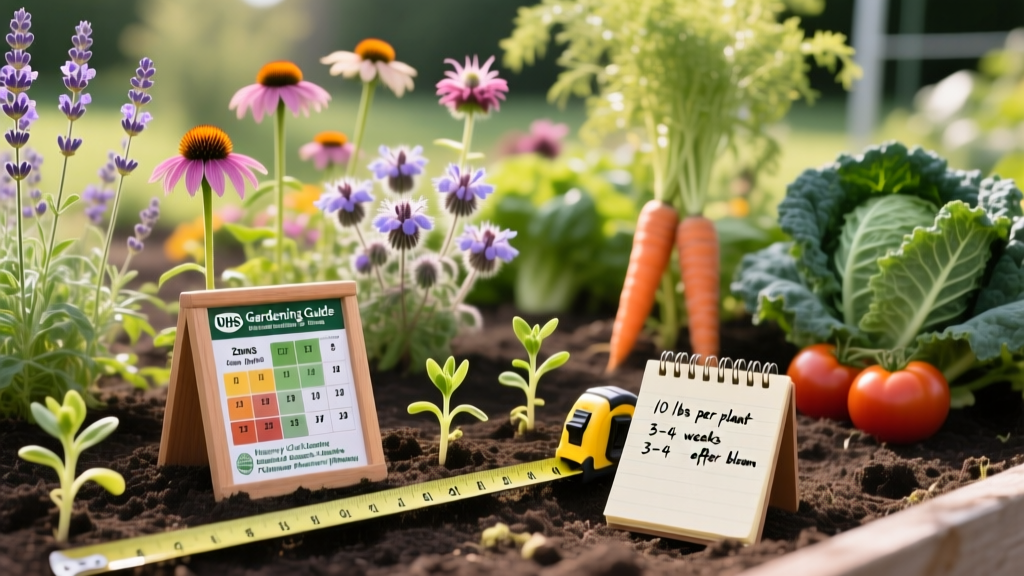
Best Flowers To Attract Pollinators To Your Garden
Building a Pollinator-Friendly Garden
A garden that hums with bees, flickers with butterflies, and draws in hummingbirds is beautiful — and it helps your vegetables produce more food. Pollinators help grow about one-third of the food people eat. Over the past few decades, their numbers have dropped because of habitat loss, pesticide use, and disease. Planting the right flowers is one of the simplest things home gardeners can do to support these insects and birds while also boosting yields in nearby vegetable beds. The trick is choosing plants that offer nectar and pollen across many months, suit your climate zone, and are easy to get started.
The United States Department of Agriculture (USDA) Plant Hardiness Zone Map divides North America into 13 zones based on average annual minimum temperatures. Knowing your zone helps you pick plants that will survive winter and bloom when pollinators need them most. The Royal Horticultural Society (RHS) in the United Kingdom offers similar guidance for British and European gardeners, and many of the same plant families grow well on both sides of the Atlantic.
Lavender (Lavandula angustifolia)
Few plants attract as wide a range of pollinators as lavender. Honeybees, bumblebees, solitary mason bees, and several species of butterfly all visit lavender flowers for their abundant nectar. Research published by the University of Sussex in 2014 found that lavender ranked among the top three plants for attracting bees in a study of 32 common garden plants, with plots recording an average of 3.9 bees per plant per minute during peak bloom.
Lavender thrives in USDA Zones 5 through 9. In Zone 5 and 6, plant outdoors after the last frost date — typically mid-May — and mulch heavily in autumn. In Zones 7 through 9, lavender can be planted in early spring or autumn. Space plants 45–60 cm (18–24 inches) apart to allow good air circulation, which reduces the risk of root rot in humid climates. Full sun and well-drained, slightly alkaline soil are best; lavender will not tolerate waterlogged roots.
Pruning for Continuous Bloom
Cut back by about one-third immediately after the first flush of flowers fades, usually in late June or early July depending on your zone. This encourages a second flush of bloom in late summer, extending the nectar window for pollinators by four to six weeks. Avoid cutting into old wood, as lavender does not regenerate reliably from bare stems.
Borage (Borago officinalis)
Borage is an annual herb that self-seeds prolifically, meaning you plant it once and it returns year after year. Its star-shaped blue flowers are rich in nectar and especially attractive to bumblebees. The flowers are also edible, making borage a dual-purpose plant for kitchen gardeners. The University of Minnesota Extension recommends borage as a companion plant for tomatoes and squash, noting that its presence can increase fruit set by improving bee visitation rates.
Direct sow borage seed after the last frost in USDA Zones 3 through 10. In Zones 8 through 10, an autumn sowing is also possible for winter and early spring bloom. Sow seeds 6 mm (¼ inch) deep and thin seedlings to 30 cm (12 inches) apart. Plants grow quickly and begin flowering within 50–60 days of germination. Because borage has a taproot, it does not transplant well; direct sowing is strongly preferred.
Echinacea (Coneflower)
Native to the prairies of North America, echinacea is a long-lived perennial that supports many pollinators. Bees collect both nectar and pollen from the prominent central cone, while goldfinches and other seed-eating birds feed on the seed heads in autumn if left standing. The RHS has awarded the Award of Garden Merit to several echinacea cultivars, recognising their reliability and ornamental value in temperate gardens.
Echinacea purpurea is hardy in USDA Zones 3 through 9. Plant bare-root divisions or container-grown plants in spring or early autumn, spacing them 45 cm (18 inches) apart. Plants typically reach 60–90 cm (24–36 inches) in height and spread to about 45 cm (18 inches) at maturity. Established clumps can be divided every three to four years to maintain vigour. Echinacea tolerates drought well once established, making it a low-maintenance choice for gardeners in drier zones.
Extending the Season with Deadheading
Removing spent flowers promptly encourages the plant to produce additional blooms, extending the flowering period from midsummer well into September in most zones. If you want to support birds and allow self-seeding, leave the final flush of seed heads standing through winter. This balance — deadheading early blooms, leaving late ones — gives pollinators and wildlife more benefit over time.
Sunflowers (Helianthus annuus)
Sunflowers are among the most productive nectar and pollen sources available to home gardeners. A single sunflower head is actually composed of hundreds of tiny individual flowers, each producing nectar and pollen. This makes them efficient for pollinators, particularly bumblebees and native solitary bees. Studies conducted at the Rothamsted Research station in Hertfordshire, England, have documented over 40 species of bee visiting sunflower crops.
Sow sunflower seeds directly outdoors after the last frost date in USDA Zones 3 through 11. In Zone 3, this is typically late May; in Zone 9 and above, seeds can go in as early as March. Sow seeds 2.5 cm (1 inch) deep and space standard varieties 60 cm (24 inches) apart. Dwarf varieties can be spaced 30 cm (12 inches) apart and work well in containers or smaller beds. Sunflowers are heavy feeders; incorporate a balanced fertiliser at planting and side-dress with nitrogen when plants reach 30 cm (12 inches) tall.
For a continuous supply of flowers, make successive sowings every two to three weeks from late spring through early summer. This staggers bloom times and ensures pollinators have access to fresh flowers from July through October in most temperate zones.
Choosing Single-Flowered Varieties
Many modern sunflower cultivars have been bred for large, showy blooms with extra petals — so-called "double" or "pollen-free" varieties. While attractive to humans, these offer little to pollinators. Choose single-flowered, open-pollinated varieties such as 'Velvet Queen', 'Lemon Queen', or 'Autumn Beauty' to maximise nectar and pollen availability. The RHS specifically recommends single-flowered forms for wildlife gardens.
Phacelia (Phacelia tanacetifolia)
Phacelia is perhaps the most underused annual in the pollinator gardener's toolkit. Its coiled clusters of violet-blue flowers are highly attractive to bees — particularly honeybees and bumblebees — and it produces nectar in quantities that rival borage. It is also used as a green manure crop, meaning it can be dug into the soil at the end of the season to improve structure and fertility.
Sow phacelia directly in USDA Zones 3 through 10 from early spring through summer. It tolerates light frost, so in Zones 6 and above it can be sown in early April, several weeks before the last frost date. Sow thinly on the surface and rake in lightly; seeds need light to germinate. Thin to 15 cm (6 inches) apart. Plants flower within 45–60 days of sowing and continue blooming for six to eight weeks. Successive sowings every three weeks from April through July will provide near-continuous bloom.
Planting Calendar by USDA Zone
| Plant | Zone 4–5 (Sow/Plant) | Zone 6–7 (Sow/Plant) | Zone 8–9 (Sow/Plant) |
|---|---|---|---|
| Lavender | Mid-May (transplant) | April or September | March or October |
| Borage | Late May (direct sow) | Late April | March or October |
| Echinacea | May (transplant) | April or September | March or October |
| Sunflower | Late May (direct sow) | Late April | March–April |
| Phacelia | Mid-May (direct sow) | Early April | March or August |
Designing for Season-Long Bloom
The most effective pollinator gardens provide flowers from early spring through late autumn. A single species, no matter how attractive, cannot sustain a diverse pollinator community on its own. Aim to have at least three species in bloom at any given time throughout the growing season. Early-season plants such as crocus, hellebores, and pulmonaria bridge the gap between winter and the main growing season, when queen bumblebees are emerging from hibernation and need food.
Mid-season bloomers — lavender, borage, echinacea, and phacelia — cover the peak pollinator activity period from June through August. Late-season plants are just as important. Ivy (Hedera helix), sedum, and asters provide nectar in September and October when most garden flowers have finished, supporting bees that are still foraging to build winter stores.
"Gardens with a diverse mix of flowering plants that bloom in succession from spring to autumn can support up to 10 times more bee species than gardens dominated by a single plant type." — Royal Horticultural Society, Greening Grey Britain Report, 2015
When planning your planting scheme, group plants in blocks of at least five to seven individuals of the same species rather than scattering single plants across the border. Pollinators are more efficient foragers when they can move between flowers of the same type without travelling long distances. Blocks of 1–2 square metres per species are a practical minimum for most garden settings.
Soil Preparation and Ongoing Care
Most pollinator-friendly plants prefer well-drained soil and will not perform well in heavy clay that stays wet in winter. If your soil is clay-heavy, incorporate grit or coarse sand at a rate of one part grit to three parts soil, along with well-rotted compost to improve both drainage and fertility. Raised beds are an excellent solution in gardens with persistently poor drainage.
Avoid using systemic insecticides, particularly neonicotinoids, on or near flowering plants. These chemicals are taken up by the plant and expressed in nectar and pollen, where they can impair bee navigation, memory, and reproduction even at sub-lethal doses. The European Food Safety Authority concluded in 2018 that neonicotinoids pose an unacceptable risk to bees, and the European Union subsequently banned their outdoor use. Many UK garden centres now label plants as "bee-friendly" to indicate they have not been treated with neonicotinoids, a practice encouraged by the RHS.
- Choose open-pollinated, single-flowered varieties over highly bred doubles whenever possible
- Leave some areas of bare soil for ground-nesting solitary bees, which make up the majority of bee species
- Avoid mulching every square centimetre of bed; ground-nesting bees need access to bare earth
- Reduce or eliminate pesticide use, particularly systemic insecticides applied to flowering plants
- Leave seed heads and hollow stems standing through winter to provide overwintering habitat for solitary bees and other beneficial insects
Companion Planting with Vegetables
Integrating pollinator plants directly into the vegetable garden is one of the most practical strategies available. Courgettes, squash, cucumbers, and runner beans all depend on insect pollination for fruit set. Poor pollination is one of the most common causes of low yields in these crops, and it is entirely preventable by ensuring pollinators are present and active in the garden.
The University of Minnesota Extension recommends interplanting borage, phacelia, and sweet alyssum (Lobularia maritima) between rows of squash and courgette. In trials, plots with companion pollinator plants recorded fruit set rates 25–40% higher than control plots without companion planting. Sweet alyssum is particularly useful because it flowers within 45 days of sowing, grows only 10–15 cm (4–6 inches) tall, and can be tucked between larger plants without competing for light.
- Sow sweet alyssum between courgette plants at the same time as the courgettes are transplanted outdoors
- Plant borage at the ends of squash rows where it will not shade smaller plants
- Sow phacelia in a dedicated strip along the sunny edge of the vegetable bed, 15 cm (6 inches) apart
- Repeat-sow phacelia and alyssum every three weeks to maintain continuous bloom throughout the cropping season
- Allow a few borage plants to set seed and self-sow for the following year
Fruit trees and soft fruit also benefit significantly from improved pollinator activity. Apple orchards with diverse wildflower understories have been shown in research conducted at Rothamsted Research to produce up to 18% higher yields compared to orchards managed with mown grass alone. Even a narrow strip of mixed pollinator flowers along a fence or path adjacent to fruit trees can make a measurable difference to fruit set.
The investment required to establish a pollinator-friendly garden is modest — a packet of phacelia seed costs less than £2 and will cover several square metres — but the returns in terms of biodiversity, garden productivity, and the simple pleasure of watching bees at work are real. Start with two or three of the plants described here, observe which pollinators visit most frequently in your garden, and expand your planting in subsequent seasons based on what you see.
