Pest Control
Best Grub Killers Reviewed: Chemical vs Organic Options
The Grub Problem: Why Timing and Product Choice Matter
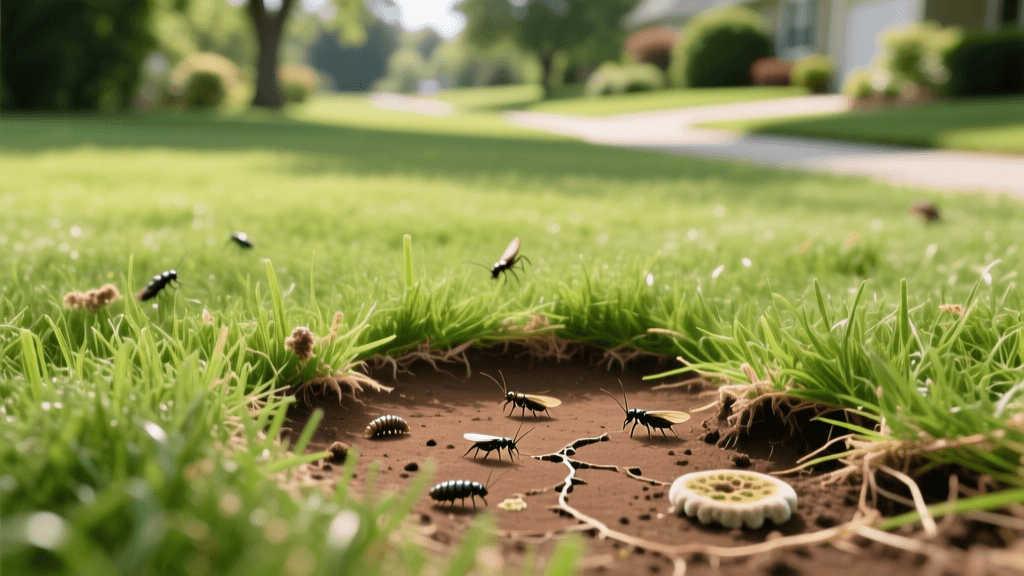
White grubs are the soil-dwelling larval stage of several beetle species, including Japanese beetles, June bugs, and European chafers. These C-shaped, cream-colored pests feed aggressively on grassroots, severing the turf from its root system and leaving behind irregular brown patches that roll up like loose carpet. If left unchecked, a severe grub infestation can destroy an entire lawn in a matter of weeks, while simultaneously attracting secondary pests like skunks, raccoons, and crows that tear up the soil searching for the protein-rich larvae.
According to Penn State Extension, effective grub management relies heavily on understanding the life cycle of the specific beetle species in your region and matching your treatment to the correct window of vulnerability. Not all grub killers are created equal. Some are designed as long-lasting preventatives applied before eggs hatch, while others are fast-acting curatives meant to eliminate active, feeding grubs. Furthermore, the rise of integrated pest management (IPM) has introduced highly effective organic and biological controls that offer long-term suppression without synthetic chemicals.
In this comprehensive product review and comparison guide, we break down the best chemical and organic grub control products on the market, evaluating their active ingredients, application timing, costs, and overall effectiveness to help you rescue your lawn.
How to Diagnose a Grub Infestation
Before purchasing any treatment, confirm that grubs are actually the culprit. Brown spots can also be caused by drought, fungal diseases, or dog urine. Perform the tug test: grab a handful of brown turf and pull gently. If it lifts away from the soil with little to no resistance, roots have likely been severed by grubs.
To confirm, cut a one-foot by one-foot square of sod about two inches deep and peel it back. Count the grubs in the soil and on the roots. Rutgers Cooperative Extension notes that a healthy lawn can typically tolerate up to 5 to 7 grubs per square foot. However, if you count 10 or more grubs per square foot, treatment is immediately necessary to prevent catastrophic turf loss.
Chemical Grub Control: Preventatives vs. Curatives
Synthetic chemical controls remain the most popular choice for homeowners seeking immediate or guaranteed seasonal protection. These products generally fall into two distinct categories: preventatives and curatives.
Best Chemical Preventative: Scotts GrubEx1
Active Ingredient: Chlorantraniliprole (0.08%)
Best For: Season-long prevention applied in late spring.
Cost: Approximately $5.00 per 1,000 square feet.
Scotts GrubEx1 is the gold standard for preventative grub control. Unlike older neonicotinoids, Chlorantraniliprole is a highly targeted anthranilic diamide that acts as a ryanodine receptor modulator. It causes muscle paralysis in early-stage larvae but is remarkably safe for beneficial insects, earthworms, and pollinators when applied correctly.
Timing and Application: GrubEx must be applied between May and early July, before beetle eggs hatch. It takes 60 to 90 days to fully activate in the soil profile, meaning it will be at peak toxicity precisely when young grubs begin feeding in late summer. Apply at a rate of 2.8 pounds per 1,000 square feet using a broadcast spreader, and immediately water the lawn with at least 0.5 inches of water to move the granules into the root zone.
Best Chemical Curative: Bayer Advanced 24 Hour Grub Killer Plus
Active Ingredient: Trichlorfon (Dylox) (6.2%)
Best For: Rapid knockdown of active, mature grubs in late summer or fall.
Cost: Approximately $3.50 per 1,000 square feet.
If you missed the preventative window and your lawn is currently under attack, Dylox (sold under various brand names, including Bayer Advanced) is the premier curative option. Trichlorfon is an organophosphate that acts as an acetylcholinesterase inhibitor, causing rapid nervous system failure in grubs. It is highly water-soluble and moves through the thatch layer quickly, often killing active grubs within 24 hours.
Timing and Application: Apply Dylox in August or September when grubs are young, active, and feeding near the soil surface. Because it degrades rapidly in alkaline soils and water (often losing efficacy within 7 to 10 days), it provides zero residual control for the following spring. Apply at 1.5 to 2 pounds per 1,000 square feet and water heavily immediately after application.
Organic Grub Control: Biological Warfare
For homeowners practicing strict organic lawn care or those looking to establish a self-sustaining ecosystem, biological controls offer a compelling, albeit slower, alternative to synthetic chemicals.
Best Long-Term Organic Solution: St. Gabriel Organics Milky Spore
Active Ingredient: Paenibacillus popilliae (Milky Spore bacteria)
Best For: Long-term, multi-year suppression of Japanese beetle grubs.
Cost: Approximately $35.00 per 1,000 square feet (high upfront cost).
Milky Spore is a naturally occurring bacterium that specifically targets and kills Japanese beetle grubs. When a grub ingests the spores while feeding on roots, the bacteria multiply rapidly inside the insect's hemolymph (blood), turning it a milky white color. Upon death, the grub decomposes and releases billions of new spores into the soil, creating a self-propagating cycle of biological control.
Timing and Application: Milky Spore is best applied in late summer or early fall when grubs are actively feeding. The traditional application method involves using a dispenser tube to drop one teaspoon of powder every four feet in a grid pattern across the lawn. While the upfront cost is high, a single successful application can provide 10 to 15 years of control as the spores naturalize in the soil. Note that it is highly specific to Japanese beetles and will not control June bug or European chafer grubs.
Best Fast-Acting Organic Solution: BioLogic Beneficial Nematodes
Active Ingredient: Heterorhabditis bacteriophora (Hb nematodes)
Best For: Curative organic control of a wide variety of grub species.
Cost: Approximately $8.00 per 1,000 square feet.
Beneficial nematodes are microscopic, unsegmented worms that hunt soil-dwelling pests. The Hb species is particularly effective against grubs. These nematodes enter the grub through natural body openings and release a symbiotic bacteria that kills the host within 48 hours. The nematodes then reproduce inside the carcass and emerge to hunt new prey.
Timing and Application: Nematodes must be applied when soil temperatures are between 60°F and 85°F, typically in late summer. Because they are living organisms, they must be kept refrigerated until use and applied during overcast conditions or in the early evening to avoid UV degradation. Mix the powder with water and apply using a hose-end sprayer. The soil must be kept consistently moist for two weeks post-application to ensure nematode survival.
Product Comparison Chart: Chemical vs. Organic Grub Killers
Use the table below to compare the core features of the top grub control products reviewed above.
| Product Type | Active Ingredient | Action Type | Speed of Kill | Longevity | Est. Cost (per 1k sq ft) |
|---|---|---|---|---|---|
| Scotts GrubEx1 | Chlorantraniliprole | Preventative | Slow (60-90 days) | 4 to 6 Months | $5.00 |
| Bayer Dylox | Trichlorfon | Curative | Fast (24-48 hours) | 7 to 14 Days | $3.50 |
| Milky Spore | Paenibacillus popilliae | Biological / Curative | Slow (1-3 weeks) | 10 to 15 Years | $35.00 (Upfront) |
| Hb Nematodes | Heterorhabditis bacteriophora | Biological / Curative | Moderate (3-5 days) | 1 Season | $8.00 |
Crucial Application and Safety Guidelines
Regardless of whether you choose a synthetic chemical or an organic biological, proper application technique is the difference between success and failure.
- Watering is Mandatory: Grub control products applied to the surface are useless. Grubs live in the root zone, 2 to 4 inches below the soil surface. You must water your lawn with at least 0.5 inches of water immediately after applying granular products to wash the active ingredient off the grass blades and into the soil.
- Manage Thatch: A thick layer of thatch (more than 0.5 inches) can bind chemical molecules and prevent nematodes from reaching the soil. Core aerate your lawn before application if thatch buildup is severe.
- Protect Pollinators: While modern preventatives like Chlorantraniliprole are safer for bees than older neonicotinoids, it is still best practice to mow your lawn and remove flowering weeds like clover and dandelions before applying any broadcast grub treatment. This eliminates the chance of foraging bees coming into contact with the product.
- Storage of Organics: If using beneficial nematodes, never store them in a hot mailbox or garage. They are living creatures and will die if exposed to extreme heat or freezing temperatures before application.
Final Verdict: Which Grub Killer Should You Buy?
Your choice of grub control should be dictated by the current state of your lawn and your long-term landscaping philosophy. If your lawn is currently suffering from active grub damage in late summer, reach for a curative product like Bayer Advanced Dylox for immediate chemical knockdown, or Hb Nematodes if you prefer an organic route. However, the most cost-effective and turf-friendly strategy is always prevention. Applying Scotts GrubEx1 in early summer provides excellent, pollinator-friendly season-long protection. For those dealing with chronic Japanese beetle issues and willing to invest in a long-term organic ecosystem, Milky Spore remains an unparalleled biological investment that will protect your soil for over a decade.