Gardening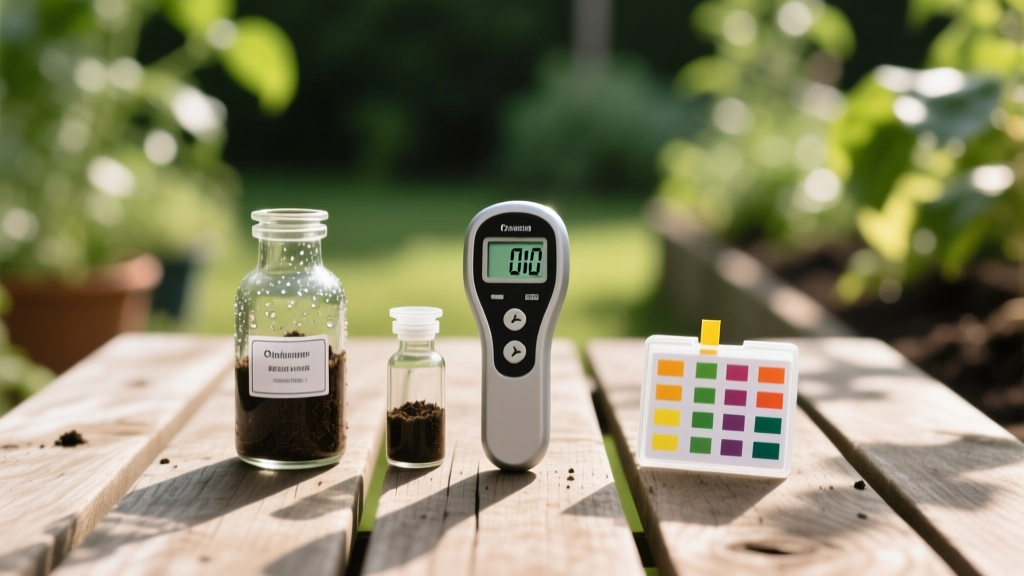
Best Home Soil Test Kits: Lab, Digital, and Chemical Compared
Sarah ChenPublished
Why Soil Testing is the Secret to a Thriving Garden
Gardening success starts beneath the surface. Guessing your soil's nutrient profile inevitably leads to over-fertilization, poor crop yields, and harmful environmental runoff. According to the Cornell University Cooperative Extension, a comprehensive soil test is the single most cost-effective investment a gardener can make. It prevents the blind application of unnecessary amendments and identifies hidden deficiencies that stunt plant growth.
Whether you are preparing a new raised bed for vegetables, troubleshooting a struggling flower border, or establishing a composting system, understanding your soil's pH and NPK (Nitrogen, Phosphorus, Potassium) levels is non-negotiable. But with dozens of testing methods on the market, which one actually delivers accurate, actionable data? In this guide, we review and compare the top three home soil test kits across lab-grade mail-in, chemical reagent, and digital probe categories.
Understanding the Three Main Types of Soil Testers
Before diving into specific product reviews, it is crucial to understand the technology behind the tests. Soil test kits generally fall into three distinct categories:
- Mail-In Lab Tests: You collect a sample and ship it to an agronomy lab. They use ICP-OES (Inductively Coupled Plasma Optical Emission Spectrometry) to measure exact nutrient concentrations down to the parts-per-million (PPM).
- Chemical Reagent Kits: At-home kits that use colored indicator dyes and barium sulfate to react with soil nutrients. You compare the resulting water color to a printed chart.
- Digital Probes: Metal rods inserted directly into the garden bed that measure electrical conductivity and galvanic resistance to estimate pH, moisture, and sometimes fertility.
In-Depth Product Reviews
1. MySoil Soil Test Kit (Best Overall Lab Test)
Price: ~$29.99 per test
Turnaround Time: 6-8 business days
Best For: Serious vegetable gardeners, new raised bed construction, and troubleshooting chronic plant diseases.
The MySoil kit bridges the gap between professional agricultural testing and home gardening. Unlike basic hardware store testers, this is a true laboratory analysis. After mailing your sample in the provided prepaid envelope, the lab tests for 13 critical properties: pH, Nitrogen, Phosphorus, Potassium, Calcium, Magnesium, Sulfur, Iron, Manganese, Zinc, Copper, Boron, and Organic Matter.
Pros:
- Highly accurate, lab-grade data.
- Results are delivered via a highly intuitive smartphone app and web portal.
- Provides custom, region-specific amendment recommendations based on your exact deficiencies.
- Tests for crucial secondary macronutrients (Calcium, Magnesium) that chemical kits ignore.
Cons:
- Requires waiting for mail transit and lab processing.
- Higher upfront cost compared to reusable digital probes.
Expert Insight: The University of Massachusetts Amherst Extension strongly recommends lab-based soil testing every 2-3 years to monitor long-term soil health and prevent the toxic buildup of phosphorus, which is a common issue when gardeners blindly apply 10-10-10 synthetic fertilizers year after year.
2. Luster Leaf Rapitest 1601 (Best Budget Chemical Kit)
Price: ~$15.99 (Includes 40 tests)
Turnaround Time: 10 minutes
Best For: Quick seasonal checks, budget-conscious gardeners, and educational projects with kids.
The Luster Leaf Rapitest 1601 is a classic, colorimetric soil test kit. It features four separate plastic comparator blocks for pH, Nitrogen, Phosphorus, and Potassium. You mix your soil with distilled water, add the powder from a color-coded capsule, shake, and wait for the chemical reaction to change the water's color.
Pros:
- Extremely affordable on a per-test basis (roughly $0.40 per test).
- Immediate results without waiting for a lab.
- Simple, analog process that requires no batteries or internet connection.
Cons:
- Color matching is highly subjective; users with color vision deficiency may struggle to read the results.
- Only provides general ranges (e.g., 'Low', 'Medium', 'High') rather than exact PPM values.
- Requires the purchase of distilled water to avoid contaminating the sample with municipal tap water minerals.
3. Sonkir Soil pH Meter MS02 (Best for Quick pH & Moisture Checks)
Price: ~$12.99
Turnaround Time: 1 minute
Best For: Container gardening, monitoring moisture levels in raised beds, and checking pH for acid-loving plants like blueberries and azaleas.
The Sonkir MS02 is a 3-in-1 digital probe that measures soil moisture, pH, and ambient light. It operates without batteries, using a galvanic cell generated by the moisture in the soil to power the analog needle display. You simply toggle the switch to your desired metric and insert the dual probes 4 to 6 inches into the soil.
Pros:
- Reusable thousands of times with zero consumables or refill kits.
- Excellent for preventing overwatering in container gardens and indoor pots.
- Instant pH readings help you quickly verify if your sulfur or lime applications are taking effect.
Cons:
- Does not test for NPK or any nutrient levels, despite some misleading marketing on similar generic probes.
- Probes can bend or break if forced into hard, rocky, or heavily compacted clay soils.
- pH accuracy can drift if the metal probes are not wiped completely clean after every use.
Head-to-Head Comparison Chart
| Feature | MySoil Lab Kit | Luster Leaf 1601 | Sonkir MS02 |
|---|---|---|---|
| Retail Price | $29.99 | $15.99 (40 tests) | $12.99 |
| NPK Testing | Yes (Exact PPM) | Yes (General Range) | No |
| Micronutrients | Yes (6 Micros) | No | No |
| pH Accuracy | High (+/- 0.1) | Moderate (+/- 0.5) | High (+/- 0.2) |
| Moisture Reading | No | No | Yes |
| Turnaround Time | 6-8 Days | 10 Minutes | 1 Minute |
| Actionable Advice | Custom App Recs | Basic Chart | None |
How to Collect a Scientifically Valid Soil Sample
Even a $300 laboratory test will yield useless data if the sample is collected improperly. To ensure your results represent your entire garden bed, follow these actionable steps:
- Timing is Everything: Test your soil in the early spring before planting, or in the late fall after harvest. Avoid testing immediately after applying fertilizers, compost, or lime, as this will skew the results.
- Use the Right Tools: Use a stainless steel trowel or soil probe. Avoid brass, bronze, or galvanized steel tools, as they can shed trace amounts of zinc or copper into your sample, contaminating the micronutrient readings.
- The Zig-Zag Method: Never take soil from just one spot. Walk your garden in a zig-zag pattern and collect 5 to 10 sub-samples. This accounts for natural variations in soil composition across your yard.
- Mind the Depth: For lawns and turf, sample to a depth of 3 to 4 inches. For vegetable gardens and raised beds, sample to a depth of 6 to 8 inches, as this is the primary root zone for most annual crops.
- Prep the Sample: Mix all sub-samples in a clean plastic bucket (never use a galvanized metal bucket). Remove any rocks, roots, or earthworms. Let the soil air-dry on a newspaper for 24 hours before placing it in the testing vial or mail-in pouch.
Interpreting Results and Amending Your Soil
Once you have your data, you must know how to act on it. The 'Law of the Minimum' dictates that plant growth is limited by the scarcest nutrient, not the total amount of nutrients available. If your lab test shows adequate Nitrogen and Potassium, but zero Phosphorus, adding more Nitrogen will not help your plants; it will only burn them.
Adjusting pH: pH is the master variable of soil health. If your pH is below 6.0, essential nutrients like phosphorus become chemically 'locked up' and unavailable to plant roots. To raise pH, apply agricultural lime (calcium carbonate) at a rate of 5 lbs per 100 square feet for every 0.5 pH point you wish to raise. To lower pH for acid-loving plants, apply elemental sulfur at a rate of 1 to 2 lbs per 100 square feet. Note that pH amendments take 3 to 6 months to fully react, which is why fall testing and application is highly recommended.
Final Verdict: Which Kit Should You Buy?
Your ideal soil test kit depends entirely on your gardening goals, budget, and patience.
If you are building a new raised bed, investing in expensive perennial fruit trees, or trying to solve a mysterious plant disease, the MySoil Lab Kit is the undisputed winner. The exact PPM readings and custom amendment recipes pay for themselves by saving you from buying the wrong fertilizers.
If you are a casual gardener on a budget who simply wants to know if your soil is completely depleted of NPK before planting a few tomato plants, the Luster Leaf Rapitest 1601 offers fantastic value and immediate, albeit generalized, results.
Finally, if you manage a container garden, indoor greenhouse, or need to monitor irrigation in real-time, the Sonkir MS02 is an indispensable, reusable tool for tracking moisture and pH, even though it completely ignores soil fertility.
By pairing a mail-in lab test every three years with a digital moisture probe for daily maintenance, you will build a resilient, highly productive garden ecosystem that thrives season after season.
