Lawn Care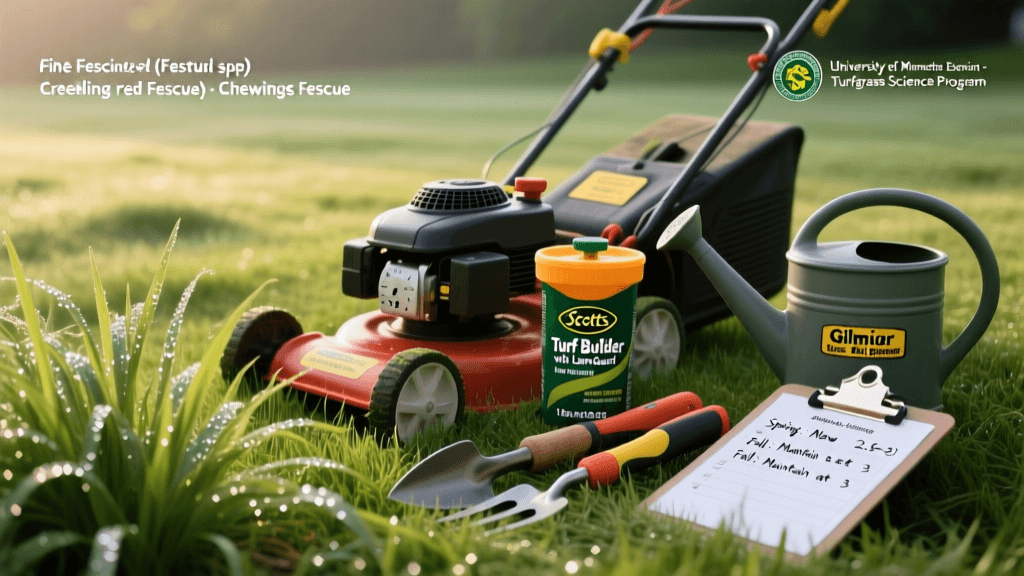
Best Mowing Heights For Shade Tolerant Grasses
Understanding Shade Tolerance and Mowing Height Interactions
Shade-tolerant grasses thrive where sunlight is limited—typically receiving fewer than four hours of direct sun daily—but their resilience hinges on precise mowing practices. Cutting too short stresses the plant, reduces photosynthetic capacity, and invites disease and weed invasion. Research from the University of Minnesota Turfgrass Science Program confirms that raising mowing height by just 0.5 inch in shaded areas increases leaf surface area by up to 22%, significantly improving carbohydrate reserves and root development (University of Minnesota Extension, 2021). This physiological advantage is especially critical under low-light conditions, where energy capture is already constrained.
Optimal Mowing Heights by Grass Species
Not all shade-tolerant grasses respond identically to height adjustments. Fine fescues—including creeping red fescue (Festuca rubra), chewings fescue (Festuca rubra ssp. commutata), and hard fescue (Festuca longifolia)—perform best when maintained at 3.0 to 4.0 inches year-round. Kentucky bluegrass (Poa pratensis), while moderately shade-tolerant, requires a narrower range: 2.5 to 3.5 inches in spring and fall, but no lower than 3.0 inches during summer months to avoid heat and drought stress.
Tall fescue (Festuca arundinacea), particularly newer turf-type cultivars like ‘Titan’ and ‘Falcon II’, tolerates dense shade better than older varieties and should be mowed at 3.5 to 4.5 inches. A 2019 field trial conducted by Rutgers University’s Turfgrass Program found that tall fescue mowed at 4.0 inches in 60% shade showed 37% greater tiller density and 28% less annual bluegrass (Poa annua) encroachment compared to plots mowed at 2.5 inches.
Seasonal Adjustments for Cool-Season Grasses
Mowing height must shift with seasonal growth patterns. In early spring (March–April), cool-season grasses benefit from a light initial cut at the lower end of their recommended range—e.g., 2.5 inches for Kentucky bluegrass—to remove winter-damaged leaf tissue without scalping. As temperatures rise above 65°F, gradually raise the deck: increase by 0.25 inch every two weeks until reaching peak summer height by mid-June.
During late summer (August–early September), maintain maximum height to buffer against heat stress and conserve moisture. Fall (September–October) allows for one final height reduction—to 3.0 inches for Kentucky bluegrass and 3.5 inches for fine fescue—to encourage lateral spread before dormancy. Never scalp in autumn; doing so depletes carbohydrate stores needed for winter survival.
Fertilization Strategies That Complement Proper Mowing
Fertilizer application rates and timing must align with mowing height decisions. In shaded lawns, nitrogen should be applied conservatively: 1.0 to 2.0 lbs N per 1,000 sq. ft. annually, split across two applications—early fall (September) and late fall (November). Over-fertilizing stimulates succulent growth vulnerable to disease, especially in low-light, high-humidity microclimates.
- Product example: Jonathan Green Lawn Food for Shade (10-10-10 NPK) — apply at 3.5 lbs per 1,000 sq. ft. in early September
- Product example: Scotts Turf Builder WinterGuard (22-3-14) — apply at 1.8 lbs per 1,000 sq. ft. in mid-November
- Always water in granular fertilizer within 24 hours of application to prevent foliar burn
Phosphorus and potassium levels should be guided by soil test results—not blanket applications. The Ohio State University Extension recommends soil testing every 2–3 years, especially in shaded zones where nutrient leaching and pH drift are common. In acidic soils (pH < 5.8), fine fescues show reduced iron uptake; liming to pH 6.0–6.5 improves chlorophyll synthesis and stress tolerance.
Watering Protocols for Shaded Lawns
Shaded lawns require less frequent but deeper irrigation than full-sun areas—yet overwatering remains the leading cause of fungal disease in these environments. Evapotranspiration rates under mature oak canopies drop by as much as 40% compared to open turf, meaning typical “1 inch per week” guidelines overestimate need (Penn State Extension, 2020).
Irrigate only when footprints remain visible on the grass for >5 minutes after walking, or when leaf blades begin folding longitudinally. When watering is necessary, apply 0.75 inches per session—enough to wet the top 6 inches of soil—using early-morning cycles (between 4:00–8:00 a.m.) to minimize leaf wetness duration. Avoid midday or evening irrigation, which extends dew periods and encourages dollar spot (Sclerotinia homoeocarpa) and red thread (Laetisaria fuciformis).
Equipment Considerations for Precision Mowing
Rotary mowers with sharp, balanced blades are acceptable for most shade-tolerant species—if calibrated correctly. However, reel mowers offer superior cut quality for fine fescues at heights above 3.0 inches, reducing fraying and bruising. Ensure blade sharpness is checked every 8–10 hours of use; dull blades tear rather than slice, creating entry points for pathogens.
Adjust mower decks seasonally using a ruler or digital height gauge—not visual estimation. A 2022 calibration study by the University of Wisconsin–Madison found that 68% of residential mowers operated 0.3–0.9 inches lower than labeled height due to worn wheels or improper leveling. Consistent height maintenance directly correlates with reduced anthracnose incidence in Kentucky bluegrass stands.
Common Mistakes and Their Consequences
One widespread error is “scalping” shaded lawns in spring to “clean up” brown foliage. This practice removes up to 70% of photosynthetic tissue, triggering compensatory growth that depletes root reserves and weakens disease resistance. Another misstep is using mulching mowers exclusively in heavy shade without periodic bagging: excessive clippings smother thin stands and foster fusarium patch (Microdochium nivale).
Leaving grass clippings is beneficial *only* when mowed regularly and at proper height—never when cutting more than one-third of the leaf blade at once. For example, if fine fescue is maintained at 3.5 inches, never let it grow beyond 5.25 inches before mowing.
“Mowing height is the single most controllable cultural factor influencing shade survival in cool-season turfgrasses. Raising height by 0.5 inch often delivers greater improvement than switching fertilizer products or fungicide programs.” — Dr. Eric Watkins, Professor of Turfgrass Science, University of Minnesota Extension (2021)
Regional Adaptation and Local Resources
Recommendations vary by climate zone. In the Pacific Northwest (USDA Zone 8b), where persistent cloud cover and high humidity prevail, fine fescue mixtures perform best at 3.75 inches year-round. In the Mid-Atlantic (e.g., Montgomery County, Maryland), where deciduous tree canopies create dynamic light patterns, a blended approach—70% tall fescue + 30% creeping red fescue—mowed at 4.0 inches from May through October—reduces summer thinning by 41% versus monocultures (Rutgers Turfgrass Field Station, 2019).
For site-specific guidance, consult your local cooperative extension office. Verified resources include:
- Ohio State University Extension’s “Shade-Tolerant Turfgrass Selection Tool” (updated 2023)
- University of Wisconsin–Madison’s “Turfgrass Mowing Height Calculator” (online interactive tool)
- Penn State Extension’s “Shaded Lawn Care Calendar” (downloadable PDF with monthly action items)
| Grass Species | Minimum Height (in) | Maximum Height (in) | Summer Target (in) | Key Disease Risk Below Minimum |
|---|---|---|---|---|
| Creeping Red Fescue | 2.75 | 4.25 | 3.75 | Red Thread |
| Kentucky Bluegrass | 2.5 | 3.5 | 3.25 | Summer Patch |
| Tall Fescue (‘Titan’) | 3.25 | 4.5 | 4.0 | Dollar Spot |
Consistency matters more than perfection. Even small deviations—such as maintaining fine fescue at 3.25 inches instead of 3.5 inches—can accumulate stress over time, especially when compounded by poor drainage or compacted soil. Conduct a simple “height audit” monthly: measure five random locations with a ruler, record values, and adjust deck settings if average falls outside target range by ±0.25 inch.
Remember: taller grass supports deeper roots, shades out weeds, cools soil surface temperatures by up to 9°F, and buffers against fluctuations in moisture and light. These benefits compound across seasons—making mowing height not just a maintenance task, but a foundational health strategy.
When establishing new shaded turf, select certified seed blends with documented shade performance—such as the University of Minnesota’s “Shade Mix” (80% fine fescue, 20% Kentucky bluegrass) or Penn State’s “Woodland Blend” (100% hard fescue). Seed at 5–6 lbs per 1,000 sq. ft. and mow first at 3.0 inches when seedlings reach 4.0 inches tall.
Avoid using growth regulators like trinexapac-ethyl (sold as Proxy or Tournament Greens) on shaded lawns unless prescribed by a certified turf consultant. While effective for height suppression in full sun, research from the University of Rhode Island shows it reduces carbohydrate storage by 19% in shaded tall fescue—compromising winter survival.
Monitor for signs of stress beyond color change: increased thatch accumulation (>0.5 inch), slow recovery from foot traffic, and persistent bare patches despite adequate moisture signal underlying mowing-height mismatches. Corrective action—raising height, adjusting schedule, or aerating—should begin within two weeks of observation.
Finally, track progress with objective metrics: measure weekly clipping volume (target: ≤1 bushel per 1,000 sq. ft.), photograph canopy density monthly, and note date of first and last disease symptoms each season. Data-driven adjustments yield measurable improvements in lawn resilience—without relying on reactive chemical interventions.