Gardening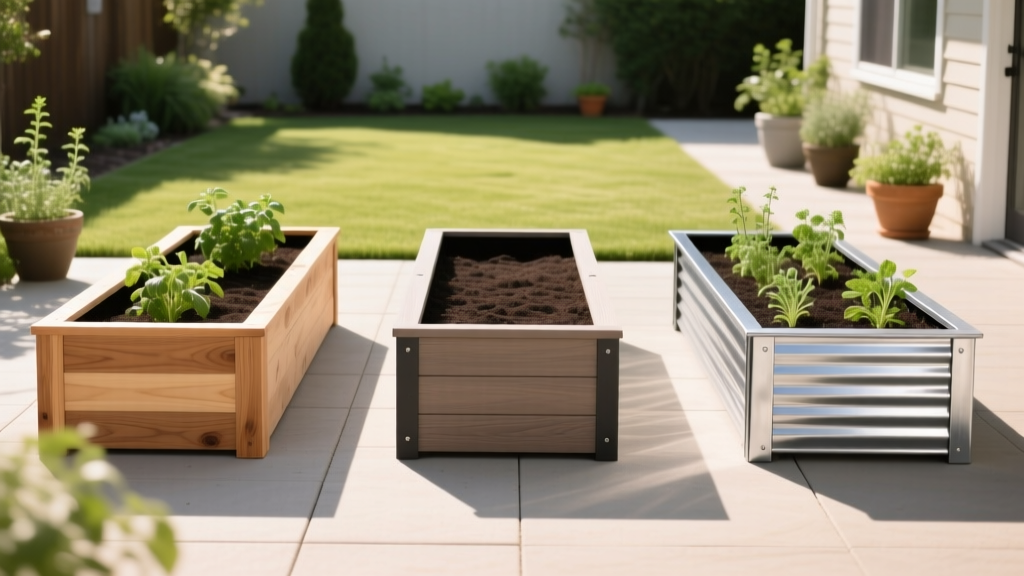
Best Raised Bed Garden Kits: Cedar vs Composite vs Metal
Sarah ChenPublished
The Ultimate Raised Bed Showdown: Choosing the Right Material
Raised bed gardening has completely transformed how home growers approach vegetable and flower cultivation. By elevating your soil, you gain superior drainage, better weed control, and the ability to customize your soil profile for specific crops. However, the foundation of any successful raised bed lies in the material you choose to contain that soil. The three dominant materials on the market today are natural cedar wood, engineered composite, and galvanized steel. Each offers distinct advantages regarding longevity, soil temperature regulation, and overall cost.
In this comprehensive product review and comparison, we will evaluate three of the most popular raised bed kits on the market: the Greenes Fence 4x8 Cedar Raised Bed, the Frame It All 4x8 Composite Raised Bed, and the Vego Garden 17-Inch Modular Metal Bed. We will break down their specifications, assembly timing, real-world costs, and long-term value to help you make the best investment for your garden.
1. The Classic Choice: Greenes Fence 4x8 Cedar Raised Bed
Cedar has long been the gold standard for wooden raised beds due to its natural resistance to rot and insects. The Greenes Fence 4x8 Cedar Raised Bed is a staple for traditional gardeners who want a natural, biodegradable material that blends seamlessly into the landscape.
Specifications and Assembly
- Dimensions: 4 ft. x 8 ft. x 10.5 in. (holds roughly 1.1 cubic yards of soil)
- Material: 100% untreated North American cedar
- Estimated Cost: $120 - $140
- Assembly Time: 30-45 minutes (features tool-free dovetail joints)
The dovetail design is a massive plus for DIYers. You simply slide the boards into the corner posts without needing a drill or screws. However, because it is only 10.5 inches tall, it is best suited for shallow-rooted crops like lettuce, radishes, and most annual flowers. Deep-rooting crops like carrots or tomatoes may require stacking a second kit on top, doubling your cost and assembly time.
Pros and Cons
The primary advantage of cedar is its aesthetic and environmental profile. It looks beautiful, smells fantastic, and will eventually decompose safely into the earth. The downside is longevity. Even with cedar's natural rot-resistant oils (thujaplicins), constant contact with moist soil will cause the bottom boards to degrade. Expect a lifespan of 5 to 8 years before structural integrity fails, unless you line the interior with heavy-duty landscaping plastic to separate the wood from the damp soil.
2. The Modern Workhorse: Frame It All 4x8 Composite Raised Bed
Composite materials have surged in popularity as gardeners seek the look of wood without the maintenance. The Frame It All 4x8 Composite Raised Bed utilizes a blend of recycled high-density polyethylene (HDPE) plastic and wood fibers.
Specifications and Assembly
- Dimensions: 4 ft. x 8 ft. x 11 in. (holds roughly 1.2 cubic yards of soil)
- Material: 60% pre-consumer recycled wood fibers, 40% recycled HDPE plastic
- Estimated Cost: $190 - $220
- Assembly Time: 45-60 minutes (requires a rubber mallet and drill for corner brackets)
Unlike the dovetail cedar beds, composite kits usually require you to secure the corner joints with provided hardware. The boards are incredibly rigid and will not warp, crack, or splinter. At 11 inches tall, it provides slightly more soil depth than the standard cedar kit, making it versatile for a wider variety of vegetables.
Pros and Cons
The biggest selling point of composite is its 25-year lifespan. It will not rot, it is impervious to termites, and it never needs sealing or staining. The color is UV-protected, meaning it won't fade drastically in the sun. The main drawback is the upfront cost, which is nearly double that of a basic cedar kit. Additionally, in extremely hot climates, the dark composite boards can absorb heat, potentially raising the soil temperature near the edges and stressing shallow roots during mid-summer heatwaves.
3. The Heavy-Duty Contender: Vego Garden 17-Inch Modular Metal Bed
Galvanized steel raised beds have taken the gardening world by storm, offering a sleek, modern aesthetic and unmatched durability. The Vego Garden 17-Inch Modular Metal Bed is a premium option designed for serious growers and those with mobility issues.
Specifications and Assembly
- Dimensions: Modular (configures to 2x8, 4x4, or 3x6 ft.), 17 in. tall
- Material: Zn-Al-Mg alloy coated galvanized steel
- Estimated Cost: $170 - $190
- Assembly Time: 60-90 minutes (requires a wrench and socket set to tighten dozens of bolts)
The 17-inch height is a game-changer. It provides ample depth for deep-rooting crops like parsnips, carrots, and indeterminate tomatoes, while also reducing the amount of bending required for planting and weeding. The modular corner joints allow you to reconfigure the shape of the bed in future seasons if you decide to redesign your garden layout.
Pros and Cons
Metal beds boast a 20+ year lifespan and are completely immune to rot and burrowing pests like gophers (when paired with a wire mesh bottom). The reflective nature of the metal also helps warm the soil faster in the early spring, extending your growing season. The cons include the tedious assembly process involving numerous nuts and bolts, and the sharp top edges, which require the installation of the included rubber safety trim to prevent cuts.
Head-to-Head Comparison Chart
| Feature | Greenes Cedar | Frame It All Composite | Vego Garden Metal |
|---|---|---|---|
| Upfront Cost | ~$130 | ~$200 | ~$180 |
| Expected Lifespan | 5 - 8 Years | 20 - 25 Years | 20+ Years |
| Soil Depth | 10.5 Inches | 11 Inches | 17 Inches |
| Assembly Difficulty | Very Easy | Moderate | High (Many bolts) |
| Heat Retention | Low (Insulating) | Moderate to High | Moderate (Reflective) |
| Best For | Traditional aesthetics, shallow crops | Low maintenance, long-term set-and-forget | Deep root crops, accessibility, modern look |
Soil Safety and Temperature Considerations
A common concern among organic gardeners is whether galvanized steel or composite plastics will leach harmful chemicals into the soil. To address this, we look to the Oregon State University Extension Service, which has published extensive guidelines on raised bed material safety.
According to Oregon State University Extension, modern galvanized steel is coated with a zinc-aluminum alloy. While zinc can leach into the soil in minuscule amounts, zinc is actually an essential micronutrient required for plant growth. The extension service notes that significant leaching only occurs in highly acidic soils (pH below 5.5). As long as you maintain a neutral soil pH between 6.2 and 6.8, galvanized steel is entirely safe for growing edible crops.
Regarding composite materials, the HDPE plastic used is food-safe and inert, meaning it will not leach endocrine disruptors like BPA or phthalates into your soil. Cedar is naturally safe, but gardeners must avoid using older, pressure-treated lumber (pre-2004) which contained chromated copper arsenate (CCA).
Actionable Advice: Soil Volume and the Perfect Mix
Regardless of which kit you purchase, filling it with the right soil is critical. Never use native ground soil in a raised bed; it will compact and suffocate plant roots. For a standard 4x8 foot bed that is 12 inches deep, you will need approximately 1.2 cubic yards of soil.
Timing: Order your soil and assemble your beds 3 to 4 weeks before your region's last expected spring frost. This allows the soil to settle and any microbial life to activate before you transplant seedlings.
The Ultimate Raised Bed Soil Recipe:
- 50% High-Quality Topsoil: Provides the structural base and essential minerals.
- 30% Organic Compost: Supplies slow-release nutrients and feeds soil biology.
- 10% Coco Coir or Peat Moss: Retains moisture without waterlogging the roots.
- 10% Coarse Perlite or Pumice: Ensures critical drainage and aeration.
Cost and Longevity Analysis
When evaluating garden investments, it is vital to look at the amortized cost per year rather than just the initial price tag. If we break down the cost based on the expected lifespan of each material, the financial picture shifts dramatically:
- Cedar: $130 / 6 years = $21.66 per year
- Composite: $200 / 22 years = $9.09 per year
- Metal: $180 / 20 years = $9.00 per year
While cedar is the cheapest to buy today, composite and metal are vastly more economical over a decade. Furthermore, metal and composite eliminate the physical labor and secondary costs of replacing rotting wooden boards every few seasons.
Final Verdict: Which Kit Should You Buy?
Your final decision should align with your specific gardening goals, physical capabilities, and aesthetic preferences.
Choose the Greenes Fence Cedar Kit if you are a beginner on a strict budget, want a classic cottage-garden look, and are primarily growing leafy greens and herbs. It is the fastest to assemble and the most eco-friendly at the end of its life cycle.
Choose the Frame It All Composite Kit if you want a permanent, zero-maintenance garden structure. It is ideal for suburban homeowners who want the beauty of wood without the annual upkeep, and it performs exceptionally well in damp, humid climates where wood rots rapidly.
Choose the Vego Garden Metal Kit if you are a serious vegetable grower cultivating deep-rooted crops, or if you require a taller bed to minimize back strain. The 17-inch depth, early-spring soil warming properties, and gopher-proof durability make it the ultimate high-performance choice for the dedicated horticulturist.
