Lawn Care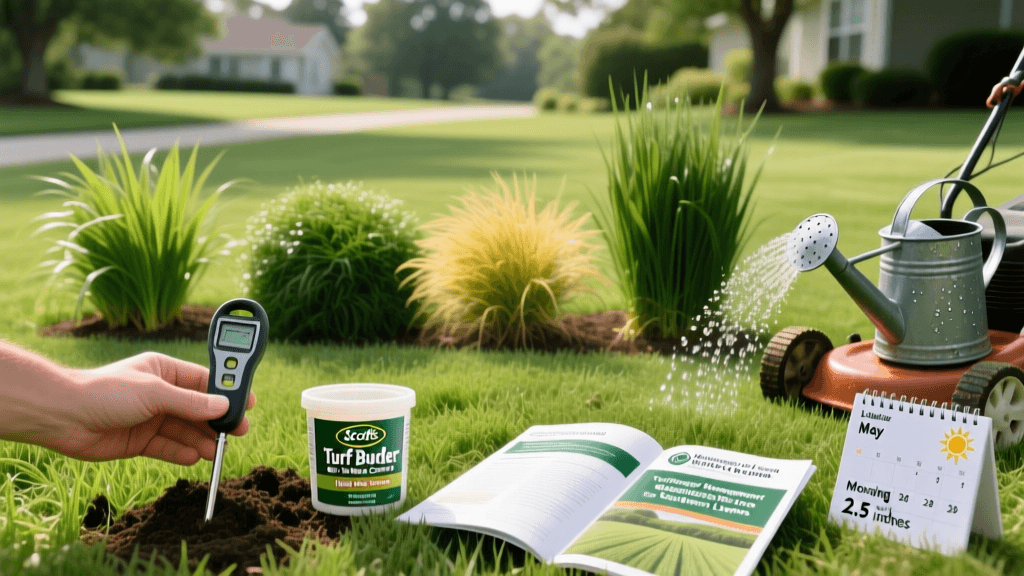
Best Time To Dethatch Summer Grass Types
Understanding Thatch and Its Impact on Warm-Season Turf
Thatch is a tightly interwoven layer of living and dead organic matter—primarily stems, stolons, rhizomes, and roots—that accumulates between the green vegetation and the soil surface. While a thin thatch layer (½ inch or less) can benefit lawns by insulating soil and reducing moisture loss, excessive buildup (>¾ inch) impedes water infiltration, restricts gas exchange, and creates a favorable environment for pests and fungal diseases. For warm-season grasses, which grow most vigorously in summer, timing dethatching operations to coincide with peak growth ensures rapid recovery and minimizes turf stress.
Optimal Dethatching Windows for Key Summer Grass Species
Timing is critical: dethatching too early risks exposing tender new growth to late spring frosts; too late invites heat stress, drought vulnerability, and delayed recovery before fall dormancy. University of Florida IFAS research confirms that dethatching should occur only when grass is actively growing and soil moisture is adequate—not during drought or extreme heat events (University of Florida IFAS, 2021).
Bermudagrass (Cynodon dactylon)
Best dethatched between mid-May and early July in USDA Zones 7–10. At this stage, soil temperatures consistently exceed 65°F at 4-inch depth, and shoot growth exceeds 0.25 inches per week. In Georgia’s Piedmont region, optimal timing aligns with three consecutive days above 85°F and soil moisture at 18–22% volumetric water content. Use a vertical mower (e.g., Agri-Fab 45-0298) set to a ¼-inch cutting depth, removing no more than one-third of the thatch layer in a single pass.
Zoysiagrass (Zoysia japonica and Z. matrella)
Target late June through mid-July in the Mid-Atlantic and Southeast. Zoysiagrass recovers more slowly than bermudagrass, so avoid dethatching after August 1 in locations like Raleigh, North Carolina. Research from Kansas State University Turfgrass Program shows that zoysiagrass treated with a dethatcher set to ⅜-inch depth in early July exhibited 92% canopy recovery within 28 days—versus only 63% when performed in late August (Kansas State University, 2020).
St. Augustinegrass (Stenotaphrum secundatum)
This species tolerates minimal mechanical dethatching due to shallow root architecture. If needed, perform light vertical mowing in early June—only when thatch exceeds ¾ inch and the lawn shows signs of poor drainage or increased chinch bug activity. Use a low-impact tool such as the Scotts Turf Builder Lawn Sweeper with optional dethatch kit, operating at ⅛-inch depth. Never remove more than 0.3 inches of material in one session.
Pre-Dethatching Preparation Protocols
Three to five days prior to dethatching, irrigate deeply to moisten the top 4 inches of soil—ideally delivering 0.75 inches of water. Avoid dethatching on saturated soils, which increases compaction risk. Mow the lawn to its recommended height 24–48 hours beforehand: 1–1.5 inches for bermudagrass, 1.5–2 inches for zoysiagrass, and 2.5–3.5 inches for St. Augustinegrass.
Fertilize 7–10 days before dethatching using a slow-release nitrogen source. For example, apply 0.5 lb of actual N per 1,000 sq ft using GreenView Fairway Formula (22-0-10) at a rate of 2.3 lbs per 1,000 sq ft. This supports rapid regrowth without encouraging excessive top growth that could hinder recovery.
Post-Dethatching Recovery and Maintenance
Immediately after dethatching, collect all debris using a power rake or leaf blower to prevent smothering emerging shoots. Then apply a light topdressing: ⅛ inch of compost-amended sand (60% sand, 30% compost, 10% topsoil) improves soil structure while protecting exposed crowns. Water daily for the first 7 days—delivering 0.25 inches per session—to maintain consistent moisture in the upper 2 inches of soil.
Resume regular mowing 5–7 days post-dethatching, but raise the deck height by 0.25 inch for the first two cuts to reduce stress. Do not apply pre-emergent herbicides for at least 21 days after dethatching, as disturbed soil and open canopy increase herbicide volatility and potential phytotoxicity.
Product Selection and Calibration Guidelines
Selecting the right equipment prevents turf damage and ensures uniform results. Mechanical dethatchers vary widely in aggressiveness:
- Agri-Fab 45-0298: Adjustable tine depth (⅛–½ inch); ideal for medium-thatch bermudagrass lawns up to 10,000 sq ft.
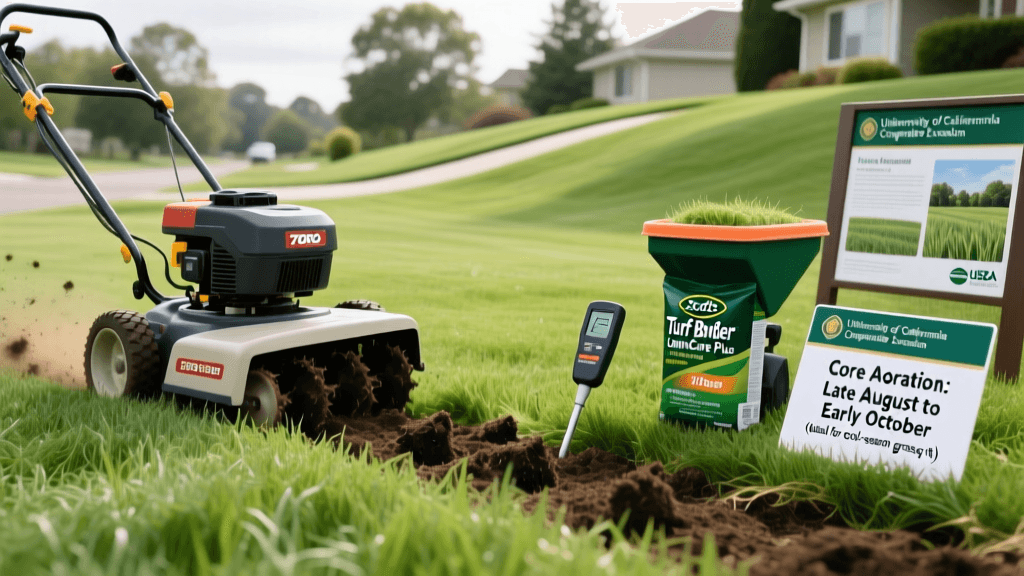
- Toro 51609 Ultra Deep Dethatcher: Fixed ⅜-inch depth; best for dense zoysiagrass in high-moisture coastal zones like Charleston, South Carolina.
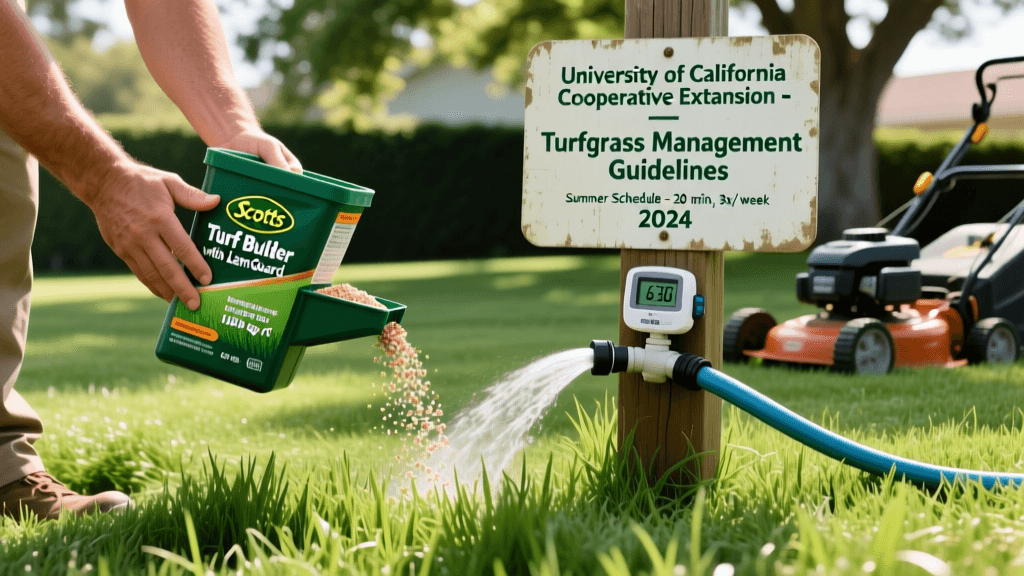
- Scotts Turf Builder Lawn Sweeper + Dethatch Kit: Low-impact option; maximum safe depth = ⅛ inch for St. Augustinegrass.
Calibration is essential. To verify depth settings, press the tines into moist soil and measure penetration with a ruler. Adjust until tines cut no deeper than specified for your grass type. Over-penetration increases root severance: trials at the University of Georgia Griffin Campus showed that tine depths exceeding ⅜ inch on zoysiagrass reduced root mass by 31% at 14 days post-treatment.
“Dethatching is not a routine annual chore—it’s a targeted intervention. Only act when thatch thickness exceeds ¾ inch, confirmed via core sampling and ruler measurement.” — Dr. Clint Waltz, University of Georgia Cooperative Extension, 2022
Regional Timing Reference Table
| Location | Bermudagrass Window | Zoysiagrass Window | St. Augustinegrass Window | Soil Temp Threshold (4″ depth) |
|---|---|---|---|---|
| Austin, TX | May 10 – June 25 | June 15 – July 20 | June 1 – June 30 | ≥68°F |
| Raleigh, NC | May 25 – July 5 | June 20 – July 25 | June 5 – July 5 | ≥65°F |
| Honolulu, HI | Year-round (avoid rainy season) | April–October | April–September | ≥70°F |
Always cross-reference local extension advisories. The Texas A&M AgriLife Extension Service publishes weekly soil temperature maps updated every Tuesday during growing season, allowing precise scheduling down to the county level. Similarly, the University of California Integrated Pest Management program provides real-time thatch monitoring protocols validated across 12 coastal and inland turf sites.
Measure thatch thickness annually using a soil probe or shovel: cut a 2-inch-deep wedge, then use calipers to determine organic layer depth. Repeat in five random locations per 5,000 sq ft. If average exceeds 0.75 inches, plan dethatching for the next appropriate window. Never dethatch during extended heat waves (temperatures >95°F for ≥3 days) or within 10 days of heavy rainfall (>2 inches).
For lawns with recurring thatch issues, consider cultural adjustments: reduce nitrogen application frequency by 25%, aerate biannually in spring and fall, and maintain consistent mowing intervals—never removing more than one-third of leaf blade height at any single mowing.
Soil pH also influences decomposition rates. Warm-season grasses thrive between pH 5.5 and 6.5. If soil tests reveal pH >6.8, apply elemental sulfur at 3 lbs per 1,000 sq ft to accelerate microbial breakdown of thatch. Retest pH 60 days post-application before reapplying.
Dethatching efficacy drops sharply when soil moisture falls below 15% volumetric water content. Use a handheld soil moisture meter (e.g., Irrometer Watermark Sensor Model 200SS) to confirm readings at 2- and 4-inch depths prior to operation.
Finally, track recovery progress: photograph the same 1-ft² quadrant weekly for four weeks. Healthy recovery shows new stolon extension ≥1.2 inches/week and ≥85% green cover by Day 21. Slower progress warrants a follow-up soil test and possible iron sulfate application (2 oz per 1,000 sq ft) to stimulate microbial activity.
Remember: dethatching is not fertilization, nor is it a substitute for proper irrigation or mowing discipline. It is one precise tool—deployed with botanical awareness, regional data, and calibrated intent—to sustain long-term turf resilience.