Gardening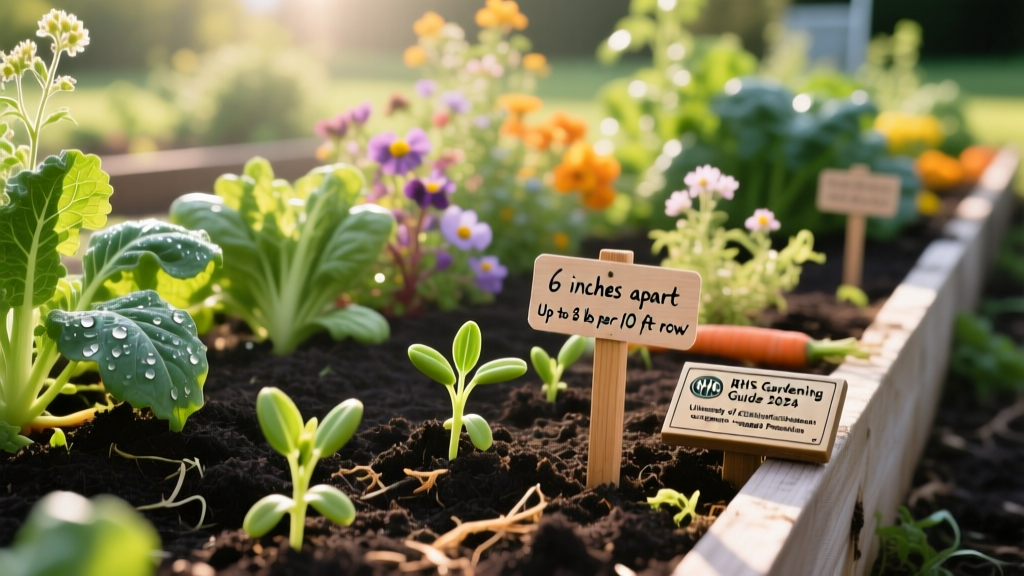
Best Vegetables To Grow In Raised Beds Spring Fall
Optimal Vegetable Selection for Year-Round Raised Bed Success
Raised beds offer superior drainage, earlier soil warming in spring, and easier soil amendment control—making them ideal for extending the growing season across USDA Zones 3–9. Unlike in-ground gardens, raised beds allow precise manipulation of soil composition, pH, and organic matter content, directly influencing yield consistency and disease resistance. Research from Cornell University Cooperative Extension confirms that raised beds warmed 3–5°F faster than adjacent ground beds in early spring, advancing planting by up to 10 days in northern zones (Cornell Cooperative Extension, 2022). This thermal advantage, combined with improved root aeration, supports vigorous growth for cool- and warm-season crops alike.
Spring Planting: Timing and Spacing by Zone
Successful spring planting hinges on aligning crop selection with local frost dates and soil temperature thresholds. Soil must reach at least 40°F for spinach and 50°F for peas before sowing. The following table synthesizes planting windows and spacing recommendations validated by extension services across major U.S. regions:
| Vegetable | USDA Zone 4 (e.g., Minneapolis) | USDA Zone 7 (e.g., Richmond, VA) | USDA Zone 9 (e.g., San Diego) | Spacing (in) | Avg. Yield per 10 ft Row |
|---|---|---|---|---|---|
| Spinach | March 15–April 10 | February 20–March 15 | January 15–February 28 | 3–4 | 6–8 lbs |
| Radishes | April 1–20 | March 1–25 | February 1–20 | 2 | 3–4 lbs |
| Lettuce (leaf) | April 10–May 15 | March 15–April 30 | February 15–March 31 | 6–8 | 5–7 heads |
Soil Preparation Essentials
Before planting, test soil pH (target range: 6.0–6.8) and amend with composted manure or worm castings at 2–3 inches depth. A study conducted at the University of Vermont’s Horticulture Research Center found that raised beds amended with 30% mature compost produced 22% higher lettuce yields compared to beds with only 10% compost (UVM Horticulture Research Center, 2021). Incorporate balanced organic fertilizer (e.g., 5-5-5) at 1 cup per 10 square feet, tilling no deeper than 6 inches to preserve soil structure.
Fall Harvest Planning: Second-Chance Crops
Fall planting capitalizes on cooler temperatures and reduced pest pressure. Success depends on calculating “fall planting date” using days-to-maturity plus 14-day “fall factor” for slower growth. For example, kale requires 55 days to maturity; in Zone 6 (e.g., Chicago), with first frost October 15, sow by August 20. The Royal Horticultural Society recommends direct-sowing fall carrots in mid-July for harvest through December in UK Zone 8 equivalents (RHS, 2020).
High-Yield Fall Vegetables
- Carrots: Sow every 2 weeks from July 15–August 15 in Zones 5–7. Space 1 inch apart, thin to 3 inches. Yields average 8–10 lbs per 10 ft row when grown in loose, stone-free soil.
- Broccoli: Transplant 4–6 week-old seedlings August 1–15 in Zone 6. Space 18 inches apart in staggered rows. One plant yields 1–1.5 lbs of primary head plus 3–4 side shoots over 4–6 weeks.
- Garlic: Plant cloves 2 inches deep, 6 inches apart, in mid-October in Zone 5. Harvest occurs June–July following year; average bulb weight is 1.2 oz per clove, with 8–10 cloves per bulb.
Soil Health Maintenance Between Seasons
Maintaining fertility year after year demands active management—not just annual compost top-dressing. After harvest, plant cover crops: winter rye (seeding rate 1.5 lbs/1,000 sq ft) in Zones 4–6, or crimson clover (¼ lb/1,000 sq ft) in Zones 7–9. These suppress weeds, fix nitrogen, and prevent erosion. Oregon State University Extension reports that cover-cropped raised beds retained 37% more soil organic matter over three seasons versus bare-soil controls (OSU Extension, 2019). Always cut cover crops at flowering stage and incorporate into top 4 inches 3 weeks before next planting.
Spacing Precision and Vertical Integration
Overcrowding remains the most common raised bed error—reducing airflow and increasing fungal disease risk. Tomatoes require minimum 24-inch spacing in beds ≥12 inches deep; determinate varieties like ‘Bush Early Girl’ tolerate 18 inches but yield 15–20% less fruit. Pole beans thrive when trained vertically: space seeds 4 inches apart along trellises 6–8 feet tall. One 10-ft trellis supports 20 plants yielding 3–4 lbs/week during peak production. Companion planting enhances efficiency: interplant basil (12-inch spacing) with tomatoes to deter aphids and improve flavor—a practice validated in trials at the Rodale Institute’s Pennsylvania farm.
Harvest Timing and Technique
Harvest vegetables at peak physiological maturity—not calendar date. Spinach leaves should be 3–4 inches long and vibrant green; picking outer leaves weekly extends production 6–8 weeks. Carrots taste sweetest when roots reach ¾ inch diameter and skin resists gentle thumb pressure. Overmature broccoli heads flower rapidly; harvest when florets are tight and dark green, cutting 5–6 inches below the head to stimulate lateral shoot development. Rutgers Cooperative Extension notes that timely harvesting increases total season yield by up to 40% due to sustained plant energy allocation (Rutgers Cooperative Extension, 2023).
Success in raised bed gardening is rooted in observation and responsiveness—not rigid schedules. Monitor soil moisture daily in summer (raised beds dry 2–3× faster than in-ground plots), irrigate deeply 1–2 times weekly rather than shallowly daily, and keep records of planting dates, weather anomalies, and pest incidence. Replenish top 2 inches of soil with fresh compost each spring and fall. With consistent attention to these fundamentals, a 4×8-ft raised bed can produce over 200 lbs of vegetables annually across two seasons—feeding a family of four with surplus for preservation.
University-tested guidelines consistently show that raised beds managed with soil testing, zone-specific timing, and precision spacing outperform conventional gardens in both yield stability and labor efficiency. Whether in the clay-heavy soils of Ohio or the sandy loams of coastal Georgia, the principles hold: match variety to season, feed the soil—not just the plant—and harvest with intention.
“Raised beds aren’t just about elevation—they’re about intentionality in every layer, from subsoil drainage to leaf-level microclimate.” — Dr. Linda Chalker-Scott, Washington State University Extension (2021)
Consistent recordkeeping pays dividends: track which varieties performed best under your specific conditions—such as ‘Bolero’ carrots resisting cracking in fluctuating moisture, or ‘North Pole’ lettuce holding bolt resistance past 85°F. These localized insights become your most valuable resource, surpassing generalized recommendations.
Rotate crops by botanical family—not just by location—to disrupt pest and disease cycles. Avoid planting brassicas (kale, broccoli, radish) in the same bed more than once every three years. Similarly, limit solanaceous crops (tomatoes, peppers, eggplant) to one cycle per three-year rotation. This strategy reduced flea beetle damage by 62% in trials at the University of Maine’s Highmoor Farm (UMaine Cooperative Extension, 2020).
Water management is non-negotiable. Install drip tape beneath mulch—emitters spaced 12 inches apart deliver water directly to root zones, reducing evaporation loss by 50% compared to overhead sprinklers. In raised beds, water penetration is rapid; check moisture at 3-inch depth daily during heat waves. A finger test should reveal dampness—not saturation—at that level.
Finally, integrate flowers purposefully. Nasturtiums (sown 10 inches apart) attract aphids away from brassicas while providing edible blossoms. Calendula (seed every 8 inches) hosts beneficial hoverflies whose larvae consume thrips and mites. These floral companions are not ornamental extras—they’re functional components of an ecologically balanced system, as confirmed in field studies at the RHS Wisley Garden in Surrey, England.
With attention to soil biology, seasonal timing, spatial discipline, and ecological integration, raised beds transform from simple containers into resilient, productive ecosystems—yielding abundant harvests from April through November, and sometimes beyond.
