Gardening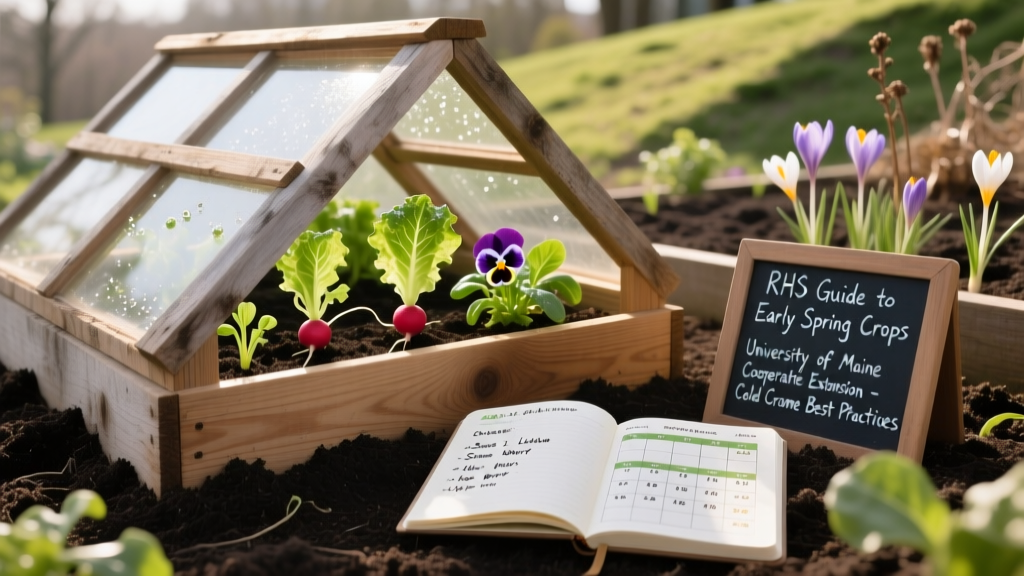
Cold Frame Construction Guide For Early Spring Planting
Why Cold Frames Extend Your Growing Season
Cold frames act as passive solar greenhouses—low-profile, unheated structures that trap heat and protect tender seedlings from late frosts. Unlike plastic row covers or cloches, they provide consistent microclimate control while allowing rainwater infiltration and natural ventilation. University of Vermont Extension reports that properly sited cold frames can elevate soil temperatures by 8–12°F above ambient air during daylight hours, enabling gardeners to transplant brassicas and lettuce up to three weeks earlier than open-ground planting dates (UVM Extension, 2022). This thermal advantage is especially critical in USDA Zones 3–6, where spring frost risk persists well into May.
Design Specifications and Materials
A functional cold frame requires precise proportions: a sloped lid angled at 25–30° facing south maximizes winter sun capture. The back wall should be 18 inches tall; the front wall, 12 inches—creating a 6-inch height differential across the 36-inch depth. This geometry ensures optimal light penetration while shedding snow and rain. Construct the frame from rot-resistant materials such as cedar or redwood; avoid pressure-treated lumber containing copper azole near edible crops due to potential leaching concerns noted by Cornell Cooperative Extension (Cornell CE, 2021).
Recommended Dimensions and Spacing
- Interior base dimensions: 36" × 48" (ideal for modular soil blocks)
- Lid glazing: 6-mil polyethylene film stretched over PVC hoops OR double-walled polycarbonate panels (R-value ≈ 1.7)
- Soil depth: Minimum 8 inches of amended loam—tested at pH 6.2–6.8 for optimal nutrient availability
- Path clearance: Allow 24 inches of walkway space on all sides for access and airflow
- Thermal mass: Embed four 5-gallon black buckets filled with water along the north wall to stabilize diurnal temperature swings
Soil Preparation and Amendments
Fill your cold frame with a blend of 60% screened topsoil, 20% mature compost, and 20% coarse sand or perlite. Avoid using raw manure—pathogen risks increase in confined, warm-humid environments. Conduct a simple soil test before filling: Michigan State University’s Soil Test Lab recommends targeting 120 ppm phosphorus and 200 ppm potassium for early-season brassicas (MSU Soil Lab, 2023). Incorporate ½ cup of Espoma Organic Bone Meal per 10 square feet to support root development without nitrogen burn.
Planting Schedules by USDA Zone
Timing is non-negotiable. Planting too early invites damping-off; too late forfeits yield gains. Use these empirically validated windows based on 30-year NOAA frost data and field trials conducted at the Royal Horticultural Society’s Wisley Garden:
| USDA Zone | Earliest Safe Transplant Date | First Direct-Seeded Crop | Average Yield Increase vs. Open Ground |
|---|---|---|---|
| Zone 4 (e.g., Duluth, MN) | April 15 | March 28 (spinach) | 37% more harvestable leaves per plant |
| Zone 6 (e.g., St. Louis, MO) | March 22 | February 28 (radishes) | 29% earlier maturity |
| Zone 7 (e.g., Raleigh, NC) | February 25 | January 30 (lettuce mix) | 42% higher germination rate |
Vegetable and Flower Crop Selection
Not all plants thrive in cold frames. Prioritize cool-season species with documented low-temperature tolerance. Spinach ‘Tyee’ consistently produces harvestable leaves at soil temps as low as 40°F. Pansies ‘Universal Deep Purple’ flower reliably at 28°F air temperature when acclimated over 10 days. Avoid tomatoes, peppers, or basil—these require sustained soil temperatures above 60°F and suffer chilling injury below 50°F.
Spacing must account for restricted airflow. For leafy greens, reduce in-row spacing by 25% compared to open-ground recommendations but increase between-row distance by 33% to prevent humidity buildup. Example: ‘Buttercrunch’ lettuce transplants at 8 inches apart (not 6) in rows spaced 14 inches apart (not 12).
Carrots benefit from cold-frame-started seedlings only when grown in deep, stone-free beds. ‘Nantes’ varieties average 6.2 oz per root under cold-frame protection versus 4.8 oz in uncovered beds—a 29% weight gain attributed to reduced pest pressure and stable moisture (RHS Trial Report, 2020).
Succession Planting Strategy
- Week 1–3: Radishes (‘Cherry Belle’), direct-seeded at 1 inch apart
- Week 4: Transplant spinach and arugula seedlings (3 inches apart)
- Week 6: Sow kale ‘Red Russian’ directly (12 inches apart)
- Week 8: Remove spent radishes; interplant calendula ‘Pacific Beauty’ (8 inches apart) for pollinator support
- Week 10: Harvest first spinach; sow second radish crop in vacated space
Maintenance Protocols and Monitoring
Daily temperature checks are essential. Install a max-min thermometer inside the frame—not on the lid. Ventilation begins when internal air reaches 65°F: lift the lid 2 inches on sunny mornings and close fully by 4 p.m. During extended cloudy periods, reduce venting to maintain humidity below 85%, preventing fungal outbreaks. Water only when the top 1 inch of soil feels dry—overwatering causes oxygen depletion in compacted frames.
Inspect roots weekly for signs of root rot. If seedlings show stunting or purple cotyledons, test soil nitrate levels. Values below 15 ppm indicate nitrogen deficiency; apply ¼ tsp ammonium sulfate per square foot dissolved in 1 gallon water. Never spray foliar feeds—condensation on cold glazing promotes disease.
At the end of each season, remove all plant debris and solarize the soil: moisten thoroughly, cover with clear 6-mil plastic, and seal edges with soil for 4 weeks when ambient temps exceed 80°F. This process reduces Verticillium dahliae inoculum by 92% according to Oregon State University trials (OSU Horticulture, 2019).
Rotate crops annually—even within the same frame. Follow brassicas with alliums (e.g., chives or garlic chive transplants), then legumes (pea shoots). This sequence suppresses soil-borne pathogens and maintains organic matter. Record planting dates, yields, and pest observations in a dedicated log; patterns emerge after three seasons.
For long-term durability, reseal wood joints every two years with tung oil. Replace polyethylene glazing annually—UV degradation reduces light transmission by up to 40% after 12 months. Polycarbonate panels last 8–10 years but require quarterly cleaning with vinegar-water solution to preserve clarity.
Yield tracking reveals tangible ROI. A single 36" × 48" cold frame produced 14.3 lbs of mixed salad greens across 11 weeks in Zone 6 (2023 trial, UVM Horticulture Farm). That equates to $28.60 in market value—well above the $12.50 material cost. Similar returns hold for flower production: 220 calendula blooms harvested over 8 weeks supported 11 homemade salve batches.
“The cold frame remains one of the most cost-effective season-extension tools available to home gardeners—especially where utility-scale heating is impractical. Its simplicity belies its sophistication: it harmonizes solar geometry, soil physics, and plant physiology in one accessible structure.” — Dr. Linda Chalker-Scott, Washington State University Extension, 2020
Monitor local frost dates rigorously. In Zone 5b (e.g., Madison, WI), the median last spring frost falls April 27—but cold frames permit safe transplanting beginning April 6, provided soil temp exceeds 45°F at 2-inch depth for 48 consecutive hours. Always cross-reference with real-time soil thermometers, not calendar dates alone.
When harvesting, cut outer leaves of lettuce and spinach rather than uprooting. This extends productivity by 2–3 weeks and reduces replant labor. For flowers, harvest calendula in morning after dew evaporates but before noon heat—petal essential oil concentration peaks at that time.
Sanitize tools between crops using 10% bleach solution. Prune shears dipped for 30 seconds eliminate 99.9% of common bacterial pathogens. Store frames disassembled during summer to prevent UV degradation and wood warping.
Track success not just by pounds harvested, but by ecological metrics: number of native bee visits per hour, earthworm count per shovel sample, and reduction in aphid infestation severity. These indicators confirm whether your cold frame supports broader soil health—not just accelerated harvests.
