Lawn Care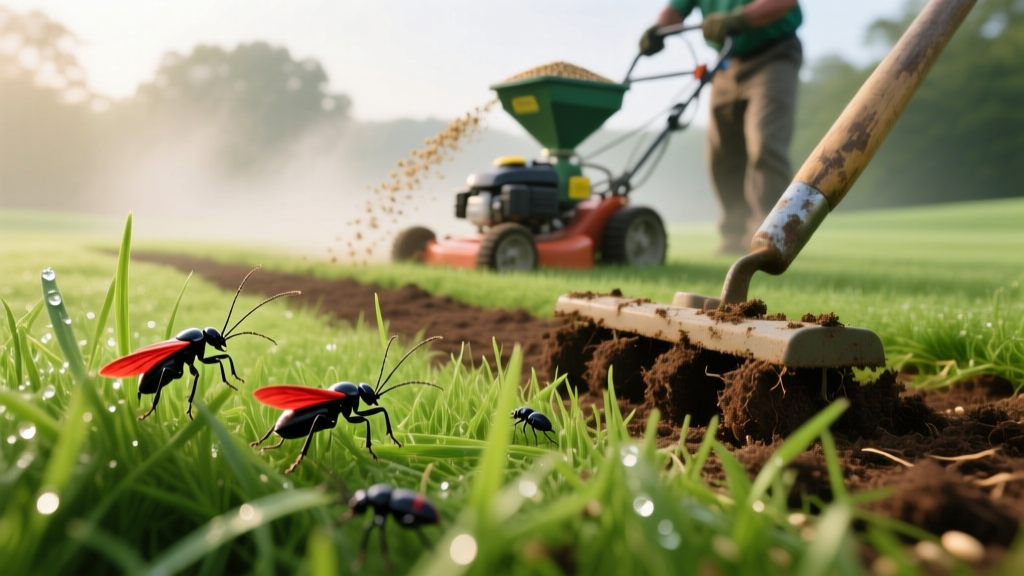
Chinch Bug Treatment: Bifen IT, Aeration & Seeding 2026
David ParkPublished
The 2026 Threat: Identifying Chinch Bug Damage
As we navigate the 2026 lawn care season, turfgrass managers and homeowners alike are facing aggressive pest pressures, particularly from the Southern chinch bug (Blissus insularis). These tiny, sap-sucking insects are notorious for devastating warm-season grasses, especially St. Augustine, Zoysia, and Bermuda. While their damage is often mistaken for drought stress or fungal disease, a chinch bug infestation can turn a lush, green lawn into a barren, brown wasteland in a matter of weeks if left unchecked.
Chinch bugs thrive in hot, dry conditions and typically hide in the thatch layer of the lawn during the day. They pierce the grass blades, suck out the vital plant juices, and inject a toxic saliva that blocks the grass's vascular system, causing the blades to yellow, then brown, and eventually die. To effectively combat this pest, a multi-faceted approach is required. In 2026, the gold standard for integrated pest management (IPM) combines the immediate chemical knockdown of Bifen IT with the long-term cultural defenses of core aeration and strategic overseeding.
Confirming the Infestation: The Tin Can Flotation Test
Before applying any chemical treatments, you must confirm that chinch bugs are the actual culprits. Because their damage mimics irrigation deficits, treating for chinch bugs when your lawn is simply underwatered is a waste of time and resources. The most reliable method for identification is the classic "tin can" flotation test.
- Remove both ends of a standard metal coffee can.
- Push the can about two inches deep into the soil at the margin of a damaged, brown patch (where the dead grass meets the healthy green grass).
- Fill the can with water and wait for about five minutes.
- Observe the surface. If chinch bugs are present, they will float to the top.
Identification Guide: Adult chinch bugs are about 1/5 inch long, featuring black bodies with white wings folded over their backs, displaying a distinct hourglass pattern. Nymphs are smaller, wingless, and range from bright red to orange with a white band across their abdomen. According to the University of Florida IFAS Extension, finding 20 or more chinch bugs per square foot warrants immediate intervention.
Immediate Knockdown: Treating with Bifen IT
Once an infestation is confirmed, rapid action is necessary to save the remaining turf. Bifen IT is a highly effective, broad-spectrum insecticide containing 7.9% Bifenthrin, a synthetic pyrethroid. Bifenthrin works by disrupting the nervous system of the chinch bugs, providing rapid knockdown and long-lasting residual control in the thatch layer.
2026 Application Rates and Protocol
For optimal results against chinch bugs, the standard application rate for Bifen IT is 1 fluid ounce per 1,000 square feet. Because chinch bugs reside in the thatch and at the soil-thatch interface, proper dilution and application volume are critical.
- Mixing: Dilute 1 oz of Bifen IT in 1 to 2 gallons of water for every 1,000 sq ft. Using a higher water volume ensures the chemical penetrates through the grass canopy and into the thatch layer where the bugs hide.
- Application: Use a pump sprayer or a hose-end sprayer calibrated to the correct dilution. Apply evenly across the affected areas, extending at least 5 feet into the surrounding healthy grass to create a buffer zone.
- Watering In: Unlike some soil-applied grubs treatments, Bifen IT for chinch bugs should not be heavily watered in immediately. A light misting (about 1/8 inch of water) helps move the product off the grass blades and into the thatch, but heavy irrigation will wash it past the target zone.
Safety Note: Bifenthrin is highly toxic to aquatic organisms and bees. The Environmental Protection Agency (EPA) strictly advises against applying Bifen IT near bodies of water or while pollinators are actively foraging on blooming weeds in the lawn. Always mow down blooming weeds like clover or dandelions before spraying.
The Aeration and Seeding Perspective: Long-Term Defense
While Bifen IT provides an essential chemical reset, relying solely on insecticides is a flawed, short-term strategy. Chinch bugs are symptomatic of a deeper lawn health issue: excessive thatch and soil compaction. This is where the cultural practices of core aeration and overseeding become your ultimate long-term defense.
Core Aeration for Thatch Disruption
Chinch bugs love thatch. A thatch layer thicker than 1/2 inch provides a perfect, insulated microclimate that protects pests from predators, extreme weather, and even liquid insecticides. Furthermore, compacted soil stresses the grass roots, making the turf more susceptible to the toxic saliva injected by the bugs.
By scheduling core aeration shortly after your initial Bifen IT treatment has done its job (usually 2 to 3 weeks later), you physically extract plugs of soil and thatch. This process:
- Breaks up the dense thatch layer, exposing surviving pests to sunlight and natural predators.
- Increases oxygen flow to the root zone, stimulating deeper, healthier root growth that can withstand pest pressure.
- Enhances water infiltration, eliminating the dry, hydrophobic soil conditions that chinch bugs prefer.
- Introduces thatch-decomposing microorganisms from the soil to the surface, accelerating natural thatch breakdown.
For a comprehensive look on how aeration improves overall turf health and pest resistance, refer to the Penn State Extension guide on lawn aeration.
Overseeding with Resistant Cultivars
Following aeration, the lawn is primed for overseeding. If you are managing a cool-season lawn that has been damaged by the related hairy chinch bug, overseeding with endophyte-enhanced turfgrass varieties is a game-changer for 2026. Endophytes are naturally occurring, beneficial fungi that live within the grass plant. They produce alkaloids that make the grass highly unpalatable and toxic to surface-feeding insects like chinch bugs.
For warm-season lawns (like St. Augustine), overseeding isn't done with traditional seed. Instead, use the aeration holes and open spaces to plant pest-resistant plugs of cultivars like 'Floratam' or 'Palmetto', which have documented genetic resistance to Southern chinch bug feeding.
2026 Integrated Recovery Schedule
Timing is everything when combining chemical treatments with mechanical soil disruption. Applying Bifen IT immediately after aeration can result in the chemical being pulled up in the soil plugs or degrading too quickly in the sun. Follow this optimized 2026 timeline:
| Phase | Timing | Action Step | Product / Tool |
|---|---|---|---|
| 1. Identification | Early Summer / First Signs of Stress | Perform the tin can flotation test to confirm chinch bug presence and map the damage. | Coffee can, water |
| 2. Knockdown | Day 1 | Apply liquid insecticide to the thatch layer. Mow and remove clippings first to ensure penetration. | Bifen IT (1 oz / 1,000 sq ft) |
| 3. Recovery | Days 2 - 14 | Water deeply but infrequently to encourage root recovery. Monitor for surviving nymphs. | Sprinkler / Irrigation system |
| 4. Aeration | Day 15 - 21 | Core aerate the lawn to relieve compaction, break up thatch, and prepare the seedbed. | Walk-behind core aerator |
| 5. Overseeding | Day 21 (Same day as aeration) | Spread endophyte-enhanced seed or plant resistant grass plugs into the aeration holes. | Turf-type tall fescue / St. Aug plugs |
| 6. Establishment | Days 22 - 45 | Keep the top inch of soil consistently moist to ensure seed germination and plug establishment. | Organic starter fertilizer |
Environmental Stewardship and Resistance Management
As we progress through 2026, turfgrass professionals are hyper-aware of insecticide resistance. Chinch bugs in certain regions of the Southeast have developed a tolerance to older pyrethroids. To prevent Bifen IT from losing its efficacy on your property, do not use it as a preventative treatment. Only apply Bifen IT when the tin can test confirms an active, damaging population.
By rotating your chemical classes (e.g., alternating Bifenthrin with a neonicotinoid like Imidacloprid or a diamide like Chlorantraniliprole in subsequent years if necessary) and relying heavily on the cultural controls of aeration and biological resistance via endophytes, you ensure that your lawn remains a fortress against chinch bugs. A well-aerated, deeply rooted, and properly seeded lawn is naturally resilient, requiring fewer chemical interventions and resulting in a safer, greener environment for your family and local ecosystem.