Lawn Care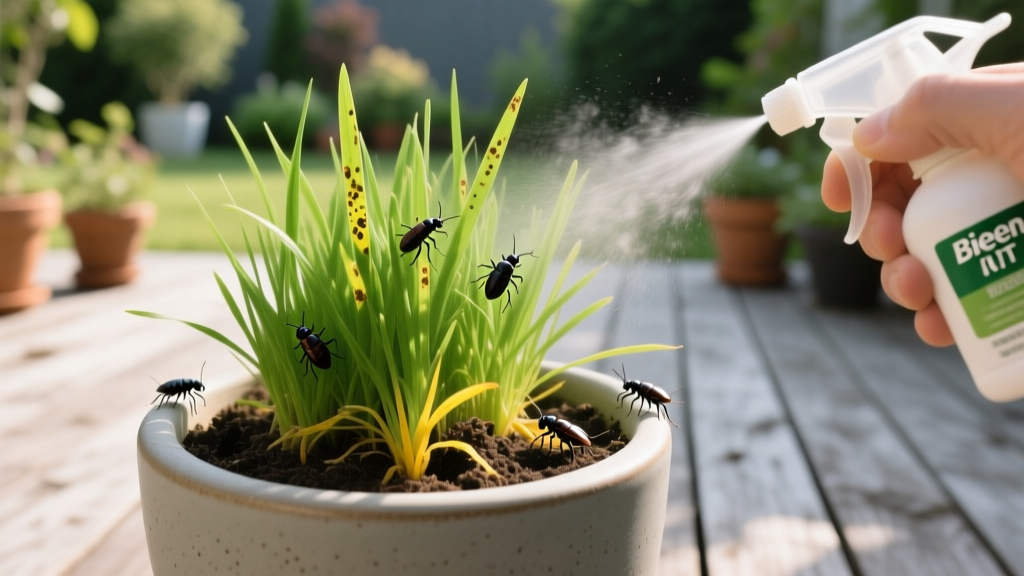
Bifen IT Chinch Bug Treatment for Potted Grass 2026
David ParkPublished
The 2026 Container Gardening Trend: Turf and Ornamental Grasses
As we navigate the 2026 landscaping season, the boundary between traditional lawn care and container gardening continues to blur. Urban homeowners and patio enthusiasts are increasingly turning to large-scale planters, corten steel troughs, and half-barrels to grow lush patches of turfgrass and towering ornamental grasses. Whether you are cultivating a modular St. Augustine 'pocket lawn' for a rooftop terrace or growing dramatic fountain grass and pampas grass in oversized ceramic pots, container-grown grasses bring life to hardscapes. However, these potted environments present unique pest management challenges. Chief among these is the southern chinch bug (Blissus insularis), a destructive pest that thrives in the hot, dry microclimates typical of patio containers. When an infestation strikes your potted grass, Bifen IT (Bifenthrin 7.9%) remains one of the most effective and widely utilized treatments available to homeowners. This comprehensive guide explores how to identify chinch bugs in container environments and safely apply Bifen IT to protect your potted investments.
Identifying Chinch Bugs in Potted Grasses
Chinch bugs are notoriously difficult to spot until significant damage has already occurred. They are tiny—adults measure only about 1/5 of an inch long—featuring black bodies with distinctive white, triangular markings on their wings. Nymphs are even smaller, starting out bright red with a white band across their backs before darkening as they mature. In container settings, chinch bugs primarily target St. Augustine, Zoysia, and Bermuda grasses, though they will also feed on the thick culms of certain ornamental grasses when populations explode.
The first sign of a chinch bug infestation in a planter is usually a localized yellowing of the grass blades, which rapidly progresses to crispy, brown, dead patches. Because potted grasses are confined, the damage can spread across the entire container in a matter of days. To confirm their presence, adapt the classic 'tin can test' for your containers. Take a bottomless coffee can or a PVC pipe segment and push it about two inches deep into the potting mix near the edge of the dying patch. Fill the cylinder with water and wait for five minutes. If chinch bugs are present, they will float to the surface to escape the water. Finding more than two or three bugs per can indicates a severe infestation requiring immediate chemical intervention.
The Patio Microclimate: A Chinch Bug Haven
Why do chinch bugs target potted grasses so aggressively? The answer lies in the patio microclimate. Concrete, brick, and stone hardscapes absorb and radiate intense heat during the summer months. When you place a container on a sun-baked patio, the potting mix dries out significantly faster than traditional ground soil. Chinch bugs are uniquely adapted to thrive in hot, drought-stressed environments. The dry thatch layer that often accumulates in container-grown turf provides the perfect insulated habitat for them to breed and feed on the base of the grass crowns. Furthermore, because pots are elevated and isolated, natural predators like big-eyed bugs and ground-dwelling beneficial nematodes are less likely to colonize the container, allowing chinch bug populations to multiply unchecked.
Bifen IT: The Pyrethroid Standard for 2026
Bifen IT is a professional-grade insecticide containing 7.9% Bifenthrin as its active ingredient. Bifenthrin is a synthetic pyrethroid, a class of chemicals modeled after the natural insecticidal properties of chrysanthemum flowers. According to the National Pesticide Information Center (NPIC), bifenthrin works by disrupting the nervous system of insects, causing paralysis and rapid death upon contact or ingestion. It is highly valued in 2026 for its dual-action capability: it provides an immediate knockdown of active chinch bug populations and leaves a residual barrier in the thatch and upper soil layer that continues to protect the container for several weeks.
When treating container grasses, Bifen IT is generally preferred over granular treatments. Granules often fail to penetrate the dense, root-bound thatch of potted grasses and can easily wash out of the container's drainage holes during the next watering cycle. A liquid spray ensures thorough coverage of the grass crowns where the bugs actively feed.
Calculating Bifen IT Dosages for Planters
One of the most common mistakes homeowners make when treating container grasses is miscalculating the dosage. The standard Bifen IT label rate for chinch bug control on traditional lawns is 1 fluid ounce per 1,000 square feet, mixed in 1 to 2 gallons of water. However, applying this math to a small patio planter requires careful adjustment to avoid phytotoxicity (chemical burn) and environmental contamination.
- Large 4x4 Planter (16 sq ft): Requires approximately 0.016 oz of Bifen IT.
- Standard Half-Barrel (approx. 4 sq ft surface area): Requires roughly 0.004 oz of Bifen IT.
Because measuring such minuscule fractions of an ounce is nearly impossible with standard household tools, the best approach for 2026 container gardeners is to mix a standard 1-gallon batch (1 oz Bifen IT to 1 gallon of water) and use it to treat multiple containers, adjacent patio perimeters, and ground-level lawn borders simultaneously. Always mix the solution in a dedicated pump sprayer, agitate well, and apply evenly over the surface of the potted grass until the foliage is thoroughly wet and the liquid just begins to penetrate the top layer of the potting mix.
Application Methods: Foliar Spray vs. Soil Drench
When treating containers, you must decide between a targeted foliar/thatch spray and a deeper soil drench. The table below outlines the pros and cons of each method for potted environments.
| Method | Application Technique | Pros for Containers | Cons for Containers |
|---|---|---|---|
| Foliar & Thatch Spray | Spraying directly onto grass blades and crown area | Immediate contact kill; minimal soil saturation; reduces runoff risk. | May miss bugs hiding deep in root-bound thatch. |
| Soil Drench | Pouring mixed solution deeply into the potting mix | Reaches hidden nymphs; longer residual in the soil profile. | High risk of toxic runoff out of drainage holes; wastes product. |
For most container setups, a heavy foliar and thatch spray is the recommended protocol. It maximizes the chemical's contact with the pests while minimizing the volume of liquid that escapes through the bottom of the pot.
Preventing Toxic Runoff on Hardscapes
Environmental stewardship is a critical component of modern container gardening. The Environmental Protection Agency (EPA) explicitly warns that pyrethroids, including bifenthrin, are highly toxic to aquatic organisms and beneficial pollinators. When you treat a potted plant on a patio, any excess liquid that drains out of the bottom of the pot will flow across the hardscape and potentially enter municipal storm drains, which often lead directly to local waterways.
To prevent toxic runoff, always place large saucers or drip trays beneath your containers before applying Bifen IT. If a tray overflows with the chemical solution, do not dump it into the yard or street. Instead, use a sponge or towel to absorb the excess liquid and wring it back into your pump sprayer for reapplication, or dispose of the towel according to local hazardous waste guidelines. Additionally, avoid spraying on windy days to prevent drift onto nearby patio furniture, outdoor dining areas, or blooming potted flowers that attract bees and butterflies.
Post-Treatment Container Care and IPM
Once the Bifen IT application has dried (typically within 1 to 2 hours), the immediate threat to your potted grass is neutralized. However, long-term container health requires an Integrated Pest Management (IPM) approach. Chinch bugs are attracted to drought stress, so implementing a smart drip-irrigation system for your patio planters in 2026 is highly recommended. Drip lines deliver moisture directly to the root zone without wetting the foliage, maintaining optimal soil moisture and making the environment less hospitable to chinch bugs.
Furthermore, manage the thatch layer in your containers. In the confined space of a pot, thatch builds up rapidly. Use a small hand rake to gently remove dead organic matter from the soil surface every few weeks. If you plan to rotate your container plantings in the autumn, consider solarizing the empty potting soil by covering it with clear plastic in the hot sun for a week, which will naturally bake and eliminate any remaining overwintering pest eggs before your next planting season.