
Landscaping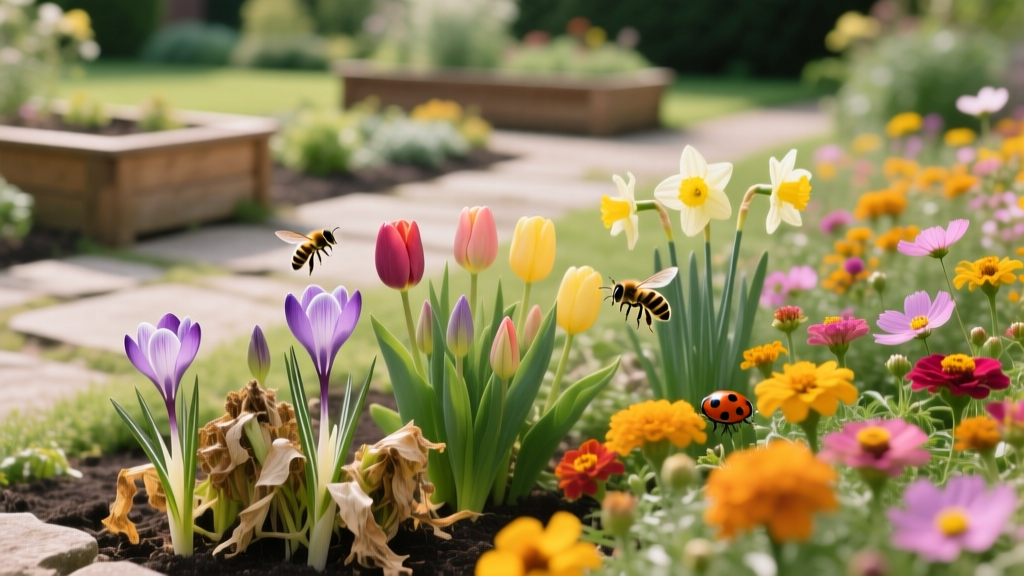
2026 Guide: Spring Bulb to Summer Annual Rotation for Bio-Control
James MillerPublished
The Critical Habitat Gap in Ecological Landscaping
As we navigate the 2026 landscaping season, ecological garden design has shifted from a niche trend to a fundamental best practice. One of the most significant challenges home gardeners face is the transition from spring-blooming bulbs to summer annuals. While gardeners often focus purely on the aesthetic continuity of color, from a bio-control perspective, this transition represents a critical 'habitat gap.' When spring bulbs like tulips, daffodils, and crocuses finish their bloom cycle and begin to senesce, the floral resources in your garden can plummet. This sudden scarcity of nectar and pollen forces beneficial insects—such as parasitic wasps, hoverflies, and lady beetles—to abandon your landscape in search of food, leaving your newly planted summer beds vulnerable to explosive pest outbreaks.
By strategically planning your seasonal flower bed rotation from spring bulbs to summer annuals, you can maintain a continuous corridor of bio-control agents. According to the Xerces Society for Invertebrate Conservation, conservation bio-control relies heavily on providing continuous, overlapping bloom times to sustain the adult stages of predatory and parasitoid insects. In this comprehensive 2026 guide, we will explore exactly how to execute this rotation, which specific summer annuals to plant, and how to manage the soil and early-season pests without disrupting your garden's natural defense systems.
2026 Succession Planting Chart: Bulbs to Bio-Control Annuals
To ensure your garden remains a fortress against aphids, mites, and caterpillars, you must replace fading spring bulbs with summer annuals that serve as powerful insectaries. The table below outlines the most effective succession pairings for the 2026 growing season, matching the fading bulb with a summer annual that targets specific beneficial predators.
| Spring Bulb (Fading) | Summer Annual Replacement | Target Beneficial Insects | Primary Pest Controlled |
|---|---|---|---|
| Tulipa (Tulips) | Zinnia elegans (Benary's Giant) | Lady Beetles, Hoverflies | Aphids, Thrips |
| Narcissus (Daffodils) | Sweet Alyssum (Snow Princess) | Parasitoid Wasps, Tachinid Flies | Caterpillars, Whiteflies |
| Allium (Ornamental Onion) | Cosmos bipinnatus (Sonata Series) | Green Lacewings, Minute Pirate Bugs | Spider Mites, Mealybugs |
| Crocus (Spring Crocus) | Sunflower (Helianthus annuus) | Ground Beetles, Predatory Bugs | Slugs, Soil-dwelling Larvae |
Step-by-Step Bed Transition Protocol
Executing a seamless rotation requires careful timing and soil management. In 2026, with shifting climate zones causing earlier springs in many regions, you may need to begin this transition by mid-May rather than waiting for June. Here is your actionable protocol for moving from bulbs to annuals while protecting soil-dwelling predators.
Step 1: Foliage Management and Bulb Dormancy
The traditional advice is to leave bulb foliage until it turns completely yellow and brown. However, in a heavily landscaped bio-control bed, this dying foliage can harbor fungal pathogens and create a messy microclimate that encourages slugs. Instead, once the foliage has lost its structural rigidity (usually 4-6 weeks post-bloom), gently braid or tie it down low to the soil surface. This allows the bulb to complete its energy storage while freeing up the upper canopy for your summer annual transplants.
Step 2: No-Till Soil Preparation for Ground Predators
One of the most common mistakes gardeners make during bed rotation is deep tilling. Tilling destroys the complex soil food web and kills overwintering pupae of beneficial insects, as well as the larvae of predatory ground beetles (Carabidae), which are essential for controlling slug and snail populations. The EPA's Integrated Pest Management principles strongly advocate for minimizing soil disruption to preserve natural enemy habitats.
- Top-Dress, Don't Till: Apply a 1-inch layer of high-quality organic compost, such as Coast of Maine Quoddy Blend, directly over the bed.
- Inoculate with Mycorrhizae: Use a granular mycorrhizal inoculant to help your new summer annuals establish rapid root systems without competing with the dormant bulbs.
- Organic Fertilization: Apply Espoma Organic Bio-Tone Starter Plus at a rate of 2 lbs per 100 square feet to provide a slow-release nutrient boost that won't burn tender annual roots or harm soil microbes.
Step 3: Sowing and Transplanting Summer Annuals
In 2026, the cost of organic nursery plugs has stabilized, with a standard 72-cell flat of bio-control-friendly annuals averaging between $45 and $65. For immediate habitat establishment, purchasing plugs is vastly superior to direct sowing, as it eliminates the 4-6 week 'habitat gap' while seeds germinate and grow.
When planting, use a narrow trowel to slip the annual plugs between the dormant bulbs. Space Zinnias 12 inches apart to ensure adequate airflow, which prevents powdery mildew—a common issue that can deter beneficial insects from visiting the flowers. Interplant Sweet Alyssum as a dense, low-growing ground cover around the base of taller Cosmos and Zinnias to create a multi-tiered insectary.
Targeted Bio-Control Insectaries for Summer
Not all flowers are created equal when it comes to supporting beneficial insects. The morphology of the flower dictates which predators can access the nectar. Here is a deeper dive into the specific summer annuals you should be rotating into your beds.
Zinnias for Lady Beetles and Hoverflies
Zinnias, particularly the open-faced, single-petal varieties like the 'Profusion' series or the classic 'Benary's Giant', are magnets for adult hoverflies (Syrphidae). While adult hoverflies feed on the abundant pollen and nectar of Zinnias, their larvae are voracious predators of aphids. A single hoverfly larva can consume up to 400 aphids during its development. By rotating your fading tulip beds into Zinnias, you are essentially setting up an all-you-can-eat buffet for the adult stage of one of nature's most efficient pest-control agents.
Sweet Alyssum for Parasitoid Wasps
Parasitoid wasps, such as Aphidius colemani, are microscopic heroes of the garden. They lay their eggs inside aphids and caterpillars, effectively controlling pest populations from the inside out. However, adult parasitoid wasps have very short mouthparts and require shallow, easily accessible nectar sources. Sweet Alyssum (Lobularia maritima) provides an expansive, shallow landing pad and continuous nectar flow throughout the heat of summer. Planting Alyssum where your daffodils once stood ensures that parasitoid wasps remain in your garden, actively hunting pests rather than migrating to neighboring properties.
Cosmos for Green Lacewings
Green Lacewings are generalist predators whose larvae (often called 'aphid lions') are ferocious hunters. Adult lacewings are attracted to the feathery foliage and open, daisy-like flowers of Cosmos. Furthermore, Cosmos produce extrafloral nectaries—tiny nectar-producing glands on the stems and leaves that operate outside of the main flower. These extrafloral nectaries provide a crucial backup food source for lacewings and predatory ants when the main blooms are temporarily depleted or damaged by weather.
Managing Early Summer Pests During the Transition
The transition period between late spring and early summer is notoriously tricky. Your spring bulbs are fading, and your newly planted summer annuals are still establishing their root systems and have not yet begun to bloom. During this 2-to-3-week window, early summer aphids and spider mites may attempt to colonize the tender new growth of your annuals.
Pro Tip for 2026: Never use broad-spectrum synthetic pesticides during the bed transition. Even organic options like Neem oil can smother the eggs of beneficial insects if applied indiscriminately. Instead, rely on targeted bio-control releases.
If you notice aphid colonies forming on your newly planted Zinnias or Cosmos before the beneficial insects have fully arrived, utilize augmentative bio-control. In 2026, you can easily order live Chrysoperla rufilabris (Green Lacewing) larvae online. A shipment of 1,000 larvae typically costs around $18 to $25. Release them directly onto the infested plants at dusk to prevent desiccation and bird predation. The larvae will immediately begin consuming the aphids, holding the line until your summer annuals begin to bloom and attract wild, native predators to the garden.
For spider mites, which thrive in the hot, dry conditions often present during the early summer transition, introduce Phytoseiulus persimilis, a predatory mite that specializes in hunting spider mites. Ensure you maintain adequate soil moisture and apply a light organic mulch, such as straw or shredded leaves, around your new annuals to keep the soil temperature regulated and humidity slightly elevated, which naturally discourages spider mite reproduction.
Long-Term Ecological Benefits
Adopting a bio-control-focused rotation strategy does more than just save you money on pest-control products; it builds a resilient, self-regulating ecosystem. The National Wildlife Federation emphasizes that creating continuous habitat corridors is essential for supporting local biodiversity and mitigating the impacts of urbanization on insect populations.
By consciously selecting your summer annuals based on their ability to support specific beneficial insects, you transform your ornamental flower beds into functional biological control centers. As the 2026 season progresses into late summer and fall, the predators and parasitoids you have sustained will overwinter in your garden's leaf litter and soil, ensuring that your landscape is already protected from the very first day of the following spring. Embrace the rotation, protect the soil, and let nature's pest-control agents do the heavy lifting in your landscape.

