Lawn Care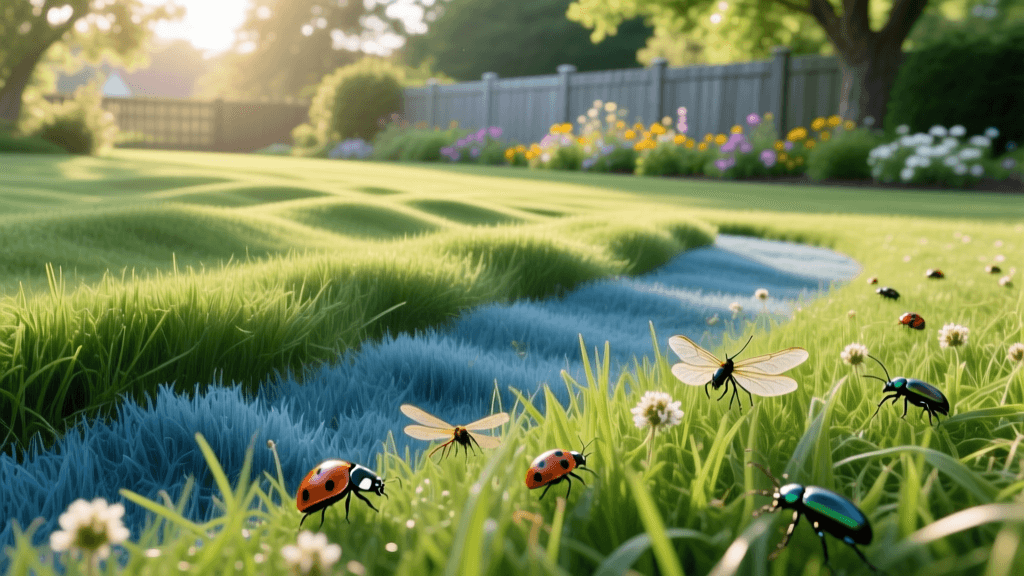
2026 Mowing Heights: Bluegrass vs Fescue for Beneficial Insects
The Intersection of Mowing Height and Biological Pest Control
As we navigate the 2026 lawn care season, the paradigm of turf management has shifted dramatically toward ecological balance. Homeowners and turf professionals alike are moving away from broad-spectrum chemical pesticides, embracing biological control methods to manage destructive pests like white grubs, chinch bugs, and sod webworms. However, the success of these bio-control agents—ranging from predatory ground beetles to entomopathogenic nematodes—relies heavily on the microclimate of your lawn. The single most influential factor in shaping this microclimate is your mowing height. Understanding the precise mowing height settings for Kentucky bluegrass versus tall fescue is no longer just about aesthetics or drought tolerance; it is a critical strategy for fostering a thriving ecosystem of beneficial insects right in your backyard.
Kentucky Bluegrass vs. Tall Fescue: Turfgrass Architecture
To optimize your lawn for bio-control, you must first understand the structural differences between these two popular cool-season grasses. Kentucky bluegrass (Poa pratensis) is a rhizomatous grass with a finer leaf blade and a dense, creeping growth habit. It naturally forms a thick thatch layer and sod, which can be highly beneficial for ground-dwelling predators if managed correctly. Tall fescue (Festuca arundinacea), on the other hand, is a bunchgrass with wider, thicker leaf blades and a deeper, more extensive root system. According to NC State TurfFiles, tall fescue's bunch-type growth means it relies on vertical tillering rather than lateral spreading, making its canopy structure distinctly different from the dense mat of Kentucky bluegrass.
These architectural differences dictate how each grass responds to mowing and, consequently, how well they shelter beneficial insects. A mowing height that is optimal for the biological pest control of tall fescue might actually be detrimental if applied to Kentucky bluegrass, potentially leading to scalping, thatch compaction, and the destruction of the very habitats your predatory insects need to survive.
Optimal Mowing Heights for Beneficial Insect Habitats (2026 Guidelines)
In 2026, the standard aesthetic mowing recommendations have been updated to reflect a more eco-conscious approach. While traditional guidelines often suggest cutting grass as short as 2.5 inches for a 'manicured' look, bio-control optimized heights prioritize canopy density, soil shading, and humidity retention. The University of Minnesota Extension consistently highlights that taller grass promotes deeper roots and better soil health, which directly correlates to a more robust soil food web.
| Grass Type | Standard Aesthetic Height | Bio-Control Optimized Height | Target Beneficial Organisms |
|---|---|---|---|
| Kentucky Bluegrass | 2.5 - 3.0 inches | 3.0 - 3.5 inches | Ground Beetles, Predatory Mites, Parasitic Wasps |
| Tall Fescue | 3.0 - 3.5 inches | 4.0 - 4.5 inches | Spiders, Entomopathogenic Nematodes, Tachinid Flies |
By maintaining Kentucky bluegrass at 3.0 to 3.5 inches, you allow the dense rhizome network to support a humid, shaded thatch layer without causing the grass to mat down and suffocate. For tall fescue, pushing the deck height to 4.0 or even 4.5 inches creates a deep, cool canopy that protects the soil surface from the intense UV radiation and heat spikes characteristic of late summer.
How Taller Mowing Heights Support Bio-Control Agents
Ground Beetles and Spiders (Predators of Grubs and Caterpillars)
Ground beetles (Carabidae) and wolf spiders are apex predators in the turfgrass ecosystem. They actively hunt white grubs, cutworms, and sod webworm larvae. These epigeal (ground-dwelling) predators are highly sensitive to desiccation. When Kentucky bluegrass is mowed below 2.5 inches, the soil surface is exposed to direct sunlight, rapidly dropping the relative humidity in the thatch layer. By keeping your bluegrass at 3.5 inches, you maintain a humid microclimate that allows these predators to forage actively during the day. In tall fescue lawns, the 4.5-inch canopy provides physical structure for wolf spiders to anchor their egg sacs and hide from avian predators, significantly boosting their population density.
Entomopathogenic Nematodes
Beneficial nematodes (such as Heterorhabditis bacteriophora and Steinernema carpocapsae) are microscopic worms applied to lawns to infect and kill grub larvae. However, nematodes are incredibly vulnerable to UV light and high soil temperatures. If your tall fescue is mowed too short, the soil surface can easily exceed 90°F on a sunny July afternoon, which is lethal to many nematode species. Maintaining a 4.0 to 4.5-inch mowing height in 2026 ensures the soil remains shaded and cool, dramatically increasing the survival rate and efficacy of these biological insecticides after application.
Parasitic Wasps and Tachinid Flies
Parasitoid wasps and tachinid flies lay their eggs inside or on turf pests like chinch bugs and armyworms. Adult parasitoids require nectar and pollen to sustain their energy levels. Taller mowing heights, particularly in tall fescue, allow for the subtle integration of micro-clovers and low-growing beneficial broadleaf plants (like creeping charlie or wild violet) without them being completely decapitated by the mower blades. According to the UC Statewide Integrated Pest Management Program, allowing a diverse, slightly taller canopy encourages the flowering of these micro-plants, providing essential food sources for adult parasitoids, thereby ensuring the next generation of pest-control agents.
The 'One-Third Rule' and Clipping Management
Regardless of whether you are managing Kentucky bluegrass or tall fescue, the golden rule of mowing remains absolute: never remove more than one-third of the grass blade in a single mowing session. If your target bio-control height for tall fescue is 4.5 inches, you must mow when the grass reaches approximately 6.75 inches. Removing more than one-third of the blade shocks the plant, causing it to shed root mass. This root die-off temporarily starves the soil microbiome, which in turn disrupts the broader food web that supports your beneficial insects.
Furthermore, always mulch your clippings. In 2026, modern mulching mowers and advanced robotic mowers (like the latest Husqvarna Automower NERA series or Worx Landroid Vision models) are equipped with AI-driven boundary detection and fine-cut mulching decks that pulverize clippings into virtually invisible particles. These decomposing clippings feed earthworms and detritivores, which aerate the soil and create pathways for predatory nematodes and beetles to move through the soil profile hunting for pests.
Seasonal Adjustments for Maximum Bio-Control Efficacy
Static mowing heights are a thing of the past. To truly leverage biological control, you must adjust your mower deck dynamically throughout the 2026 growing season:
- Early Spring: Start slightly lower (2.5 inches for KBG, 3.0 inches for TF) to allow the soil to warm up and encourage early green-up. As soil temperatures rise, beneficial insects become active, and you can transition to higher settings.
- Peak Summer: Raise the deck to the maximum bio-control heights (3.5 inches for KBG, 4.5 inches for TF). This is when heat stress is highest, and the protective canopy is most vital for preserving soil moisture and sheltering nematodes and ground beetles from the scorching sun.
- Early Fall: Maintain the summer heights during the peak grub-feeding season. This is when predatory ground beetles and applied nematodes are doing their heaviest lifting in controlling white grub populations before winter.
- Late Fall: Gradually lower the height by 0.5 inches for the final few mows of the year. This prevents the grass from matting down under winter snow, which can lead to snow mold, while still preserving the overwintering habitats for dormant beneficial insects in the lower thatch layer.
Integrating Mowing with 2026 Bio-Pesticide Applications
If you are supplementing your natural predator populations with commercial bio-pesticides, such as Bacillus thuringiensis (Bt) for caterpillars or Beauveria bassiana for grubs and chinch bugs, your mowing height plays a direct role in product efficacy. Many biological sprays are sensitive to UV degradation. Applying these treatments to a tall fescue lawn maintained at 4.5 inches allows the dense canopy to intercept and hold the spray droplets, shielding the active biological agents from direct sunlight and extending their residual activity on the leaf surface and in the thatch.
Conversely, if you must apply a liquid bio-control agent, it is best to mow your lawn immediately before application. This removes excess leaf surface area that might intercept the spray before it reaches the thatch and soil surface where the target pests (and your resident predatory beetles) reside. Always wait at least 24 to 48 hours after a liquid application before mowing again to allow the biological agents to fully integrate into the turf canopy.
Conclusion
Mastering the mowing height settings for Kentucky bluegrass and tall fescue is a foundational pillar of modern, eco-friendly lawn care. By elevating your cutting heights to 3.5 inches for bluegrass and 4.5 inches for fescue, you are doing far more than promoting deeper roots and drought resistance. You are actively engineering a sanctuary for ground beetles, parasitic wasps, and beneficial nematodes. In 2026, the most beautiful lawns are not necessarily the shortest ones; they are the ones that buzz with the quiet, invisible work of a balanced, biologically active ecosystem. Adjust your mower deck, embrace the height, and let nature's pest control agents do the heavy lifting for you.