
Landscaping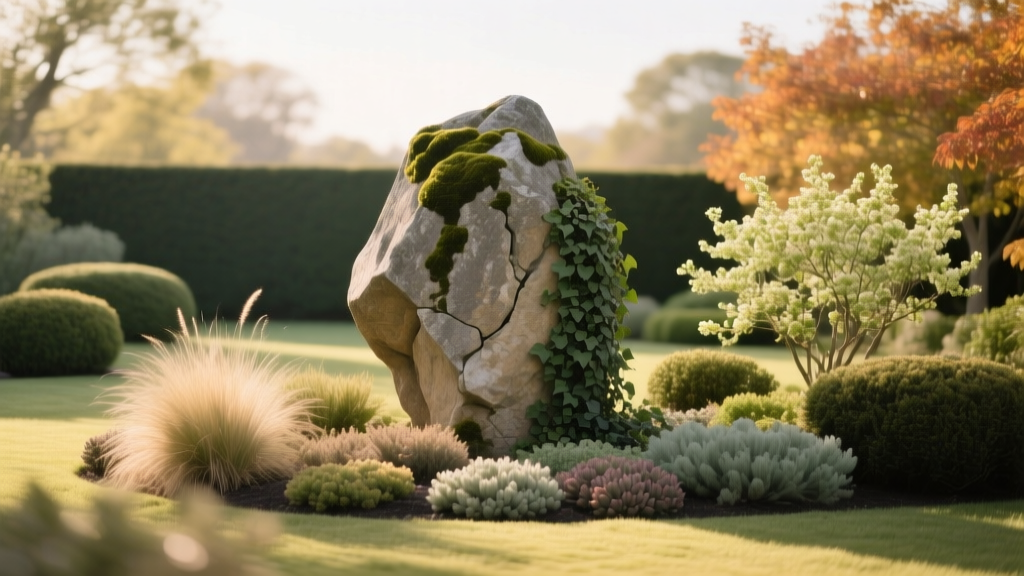
Framing Landscape Boulders: 2026 Pruning & Timing Guide
Anna KowalskiPublished
The Intersection of Hardscape and Softscape in 2026
When designing a modern garden, a massive landscape boulder—be it a striking piece of basalt, a moss-covered granite outcropping, or a layered limestone slab—serves as a powerful anchor. However, a boulder can only function as a true focal point if the surrounding softscape is meticulously managed. In 2026, the prevailing landscaping trend of 'structured wildness' relies heavily on the synergy between static stone and dynamic plant life. Without precise pruning methods and strict seasonal timing, even a 3-ton granite centerpiece will quickly be swallowed by overgrown junipers, sprawling maples, or aggressive ornamental grasses.
Highlighting a landscape boulder requires treating the surrounding flora as a living frame. This guide explores the specific pruning techniques, seasonal schedules, and plant pairings necessary to ensure your hardscaping investment remains the star of your outdoor living space throughout the year.
Strategic Plant and Boulder Pairings
Before you make a single cut, it is vital to understand how different companion plants interact with stone. Boulders possess thermal mass, absorbing heat during the day and releasing it at night, which creates unique microclimates. The plants chosen for these zones, and how they are pruned, dictate the visual success of the focal point. In 2026, landscape architects heavily favor the following pairings to maximize contrast and structural integrity.
| Boulder Type | Ideal Companion Plant | Primary Pruning Method | Optimal Timing |
|---|---|---|---|
| Granite (Smooth/Rounded) | Japanese Maple (Acer palmatum) | Crown Thinning & Windowing | Late Winter / Early Spring |
| Basalt (Columnar/Jagged) | Mugo Pine (Pinus mugo) | Candle Pinching & Shaping | Mid-Spring (May) |
| Limestone (Layered/Flat) | Feather Reed Grass (Calamagrostis) | Hard Cutback & Thinning | Late Winter (Pre-Emergence) |
| Sandstone (Warm/Rustic) | Boxwood (Buxus sempervirens) | Shearing & Structural Pruning | Early Summer & Early Fall |
Core Pruning Methods for Boulder Framing
To keep a boulder as the undisputed focal point, you must employ specific pruning methods that direct the eye toward the stone rather than allowing the plants to compete with it. According to the University of Minnesota Extension, proper pruning not only improves aesthetics but also ensures plant health by increasing light penetration and air circulation—both of which are critical when plants are situated near the heat-radiating surface of a large stone.
1. Directional Pruning and Training
Directional pruning involves selectively removing branches that grow toward the boulder or obscure its most interesting features (such as moss patches, quartz veins, or dramatic fissures). By cutting back to a lateral bud that faces away from the stone, you train the plant's future growth to reach outward and upward, creating a sweeping, asymmetrical frame. This method is particularly effective for deciduous shrubs like dogwoods or viburnums planted behind a focal boulder. The goal is to maintain a minimum clearance of 12 to 18 inches between the lowest foliage tier and the boulder's apex, ensuring the stone's silhouette remains unbroken against the sky or lawn.
2. Crown Thinning and Windowing
When a large specimen tree, such as a Japanese Maple or a Weeping Hemlock, is planted adjacent to a boulder, a dense canopy will cast deep shade, causing moss on the boulder to thrive but hiding the stone's structural beauty. Crown thinning involves the selective removal of interior crossing branches, weak wood, and secondary leaders. 'Windowing' takes this a step further by deliberately pruning out small, distinct sections of the canopy to create visual 'windows.' These gaps allow dappled sunlight to strike the boulder throughout the day, highlighting its texture and drawing the viewer's eye through the foliage directly to the stone.
3. Niwaki and Cloud Pruning Techniques
For Asian-inspired or contemporary minimalist gardens, Niwaki (Japanese garden tree pruning) is the ultimate method for framing boulders. This technique involves stripping the lower trunk and pruning the remaining foliage into distinct, floating 'clouds' or pads. By elevating the canopy of a pine or juniper, the boulder beneath it is fully exposed. The contrast between the highly disciplined, manicured softscape and the raw, natural form of the boulder creates a profound sense of Zen and intentionality.
Seasonal Pruning Timing for Maximum Impact
Timing is everything. Pruning at the wrong time of year can stimulate unwanted flush growth that obscures your boulder, or worse, invite disease that kills your framing plant entirely. The Penn State Extension emphasizes that understanding a plant's blooming cycle and dormancy period is critical for structural pruning. Here is the 2026 seasonal calendar for maintaining boulder focal points:
- Early Spring (Late February - March): This is the prime window for structural pruning of deciduous trees framing your boulders. With the branches bare, you can clearly see the sightlines to the stone. Remove any suckers or water sprouts that clutter the base of the boulder. For ornamental grasses planted around limestone or sandstone, perform a hard cutback down to 4 inches above the soil line before new green shoots emerge.
- Mid-Spring (May): Focus on conifers. If you are using Mugo Pines or Japanese Black Pines to frame a basalt column, this is the time for 'candle pinching.' Snap off half to two-thirds of the new growth candles before the needles fully elongate. This keeps the pine compact and prevents it from engulfing the top third of the boulder.
- Early Summer (June - July): Perform light, selective thinning on spring-blooming shrubs (like azaleas or rhododendrons) immediately after they finish flowering. This timing ensures you do not cut off next year's buds while opening up the center of the plant to reveal the boulder behind it. This is also the time to manage the vigorous summer growth of climbing vines, ensuring they do not spill over the stone's edges.
- Fall (September - October): Avoid heavy pruning in the fall. New growth stimulated by late-season cuts will not harden off before the first frost, leading to dieback. Limit your fall activities to the removal of dead, diseased, or damaged wood, and gently clearing fallen autumn leaves from the crevices of the boulder to prevent rot and staining.
Managing Boulder Microclimates Through Pruning
Boulders are not just visual elements; they are environmental modifiers. A large, dark-colored boulder facing south can raise the ambient temperature of the surrounding soil by several degrees, creating a 'heat island' effect. Plants situated on the south and west sides of the boulder will experience accelerated growth and higher transpiration rates.
Because of this accelerated growth, plants on the sunny side of a focal boulder will require more frequent summer pruning to maintain the desired sightlines. Conversely, plants on the north and east sides will grow more slowly and should be pruned more conservatively to avoid stressing them. In 2026, smart landscaping relies on observing these microclimates and adjusting your pruning frequency accordingly, rather than applying a blanket schedule to the entire garden bed.
Tools of the Trade for Precision Framing
When working in tight spaces around heavy, immovable stone, using the right tools prevents damage to both the plant and the boulder's surface. Scratching a prized piece of moss-covered granite with a careless swing of a steel pole saw is a costly mistake. In 2026, professionals rely on lightweight, battery-powered precision tools. Telescopic pruners with padded, non-marring tips allow you to reach over the boulder without resting the shaft against the stone. High-carbon steel bypass hand pruners, kept meticulously sharp, ensure clean cuts on the framing branches, promoting rapid healing and reducing the risk of fungal infections that could compromise your living frame.
'A boulder in a garden is a silent protagonist. The plants around it are the supporting cast. If the supporting cast overacts, the protagonist is forgotten. Pruning is the director's cue to keep the focus exactly where it belongs.' - 2026 Landscape Architecture Digest
Conclusion
Integrating a landscape boulder as a garden focal point is a significant investment in both materials and labor, with premium specimen stones costing upwards of $800 to $1,500 installed in the current 2026 market. Protecting that investment requires a shift in perspective: view your surrounding plants not just as individual specimens, but as a dynamic, living frame. By mastering directional pruning, crown thinning, and strict seasonal timing, you ensure that your boulder remains a striking, visible, and deeply impactful element of your landscape design for decades to come.

