
Landscaping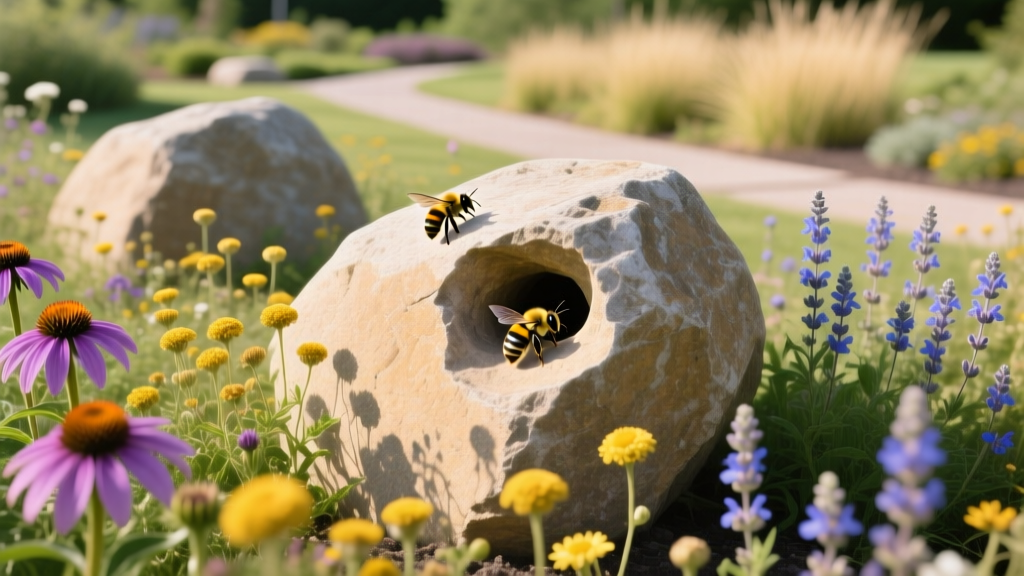
2026 Guide to Boulder Placement in Pollinator-Friendly Gardens
David ParkPublished
The Ecological Power of Hardscaping in 2026
When homeowners envision a pollinator-friendly garden, they typically picture sprawling beds of native wildflowers, buzzing bees, and fluttering butterflies. However, as we navigate the 2026 landscaping season, a critical paradigm shift is occurring in sustainable garden design. Hardscaping elements, specifically landscape boulders, are no longer viewed merely as decorative accents. Instead, they are recognized as foundational ecological tools. Strategic landscape boulder placement as a garden focal point not only elevates the visual aesthetics of your outdoor living space but also creates vital microclimates that support the life cycles of native pollinators.
Incorporating large-scale stonework into your garden design requires a balance of artistic vision and ecological awareness. By understanding how boulders interact with sunlight, soil moisture, and surrounding flora, you can transform a simple rocky outcrop into a thriving sanctuary for endangered bee species and migrating butterflies. This comprehensive guide will walk you through the principles of selecting, placing, and planting around landscape boulders to maximize both curb appeal and pollinator health in 2026.
Why Boulders Are Vital for Pollinator Health
To understand the value of a boulder, we must first understand the biology of the insects we are trying to attract. Most native bees and butterflies are ectothermic, meaning they rely on external environmental sources to regulate their body temperature. According to the Xerces Society for Invertebrate Conservation, providing thermal mass is one of the most overlooked aspects of pollinator habitat creation. Large stones and boulders absorb solar radiation during the day and slowly release that heat during the cooler morning and evening hours.
This thermal regulation is crucial in early spring when queen bumblebees emerge from hibernation and need to warm their flight muscles before foraging. Furthermore, the deep crevices and shaded undersides of partially buried boulders provide essential overwintering shelters. Solitary bees, predatory beetles, and butterflies in their chrysalis stage rely on these stable, protected micro-environments to survive freezing winter temperatures and extreme summer heatwaves. By positioning a boulder as a central focal point, you are effectively building a high-capacity insect hotel that operates entirely passively.
Selecting the Right Stone: Sustainability and Aesthetics
The environmental footprint of your hardscaping materials matters just as much as their ecological function. In 2026, sustainable landscaping heavily prioritizes locally sourced materials to reduce transportation emissions. When selecting a focal boulder, look for native stone varieties that match the geological profile of your region. For instance, granite and basalt are excellent choices for northern climates due to their high density and superior heat retention, while sandstone and limestone are ideal for softer, more naturalistic looks in temperate zones.
When visiting your local stone yard, pay attention to the stone's surface texture. Boulders with deep pitting, natural fractures, and rough surfaces are vastly superior to smooth, river-washed stones because they offer more gripping surfaces for insects and better moisture retention for adjacent mosses and creeping plants. As of 2026, expect to pay between $180 and $350 per ton for high-quality, locally quarried landscape boulders, with premium specimen stones (those with unique shapes or vibrant mineral veining) commanding upwards of $500 per ton.
Mastering Boulder Placement: The Art of the Focal Point
A common mistake in amateur landscaping is 'dropping' a boulder directly on top of the soil, making it look like an alien artifact rather than a natural formation. To create a compelling focal point, you must employ the 'Iceberg Rule.' This principle dictates that at least 15% to 25% of the boulder's total mass should be buried below the soil grade. Burying the base anchors the stone visually, making it appear as though it is a natural outcropping of bedrock pushing through the earth.
Orientation is equally critical for pollinator health. Position the broadest, flattest face of the boulder so it faces the morning sun (typically southeast). This ensures the stone warms up quickly at dawn, providing an early-morning basking spot for butterflies and bees. If you are using multiple boulders to create a larger rock garden focal point, always group them in odd numbers (three, five, or seven) and vary their sizes to mimic natural geological tumbling. Leave small gaps between grouped stones to create shaded windbreaks and additional hiding spots for ground-dwelling insects.
Pairing Boulders with Pollinator-Friendly Flora
A boulder does not exist in isolation; its true power as a focal point is realized through the plants that surround it. The stone creates distinct microclimates: the sun-baked side is hot and dry, the shaded side is cool and moist, and the base where water runoff collects is nutrient-rich and damp. By matching specific pollinator-friendly plants to these microclimates, you create a highly efficient, low-maintenance ecosystem.
| Boulder Microclimate | Recommended 2026 Native Plant | Target Pollinator | Planting Distance from Stone |
|---|---|---|---|
| Hot, Dry, Full Sun (South Face) | Purple Coneflower (Echinacea purpurea) | Native Bees, Swallowtail Butterflies | 12 - 18 inches |
| Creeping Base / Rock Crevices | Creeping Thyme (Thymus serpyllum) | Honeybees, Small Solitary Bees | 0 - 6 inches (tucked into gaps) |
| Cool, Shaded (North/East Face) | Wild Columbine (Aquilegia canadensis) | Hummingbirds, Long-tongued Bees | 10 - 15 inches |
| Moist Runoff Zone (Downslope) | Swamp Milkweed (Asclepias incarnata) | Monarch Butterflies (Host Plant) | 18 - 24 inches |
| Overwintering Shelter Zone | Little Bluestem (Schizachyrium scoparium) | Overwintering Bumblebee Queens | 24 - 30 inches |
When planting near the boulder, avoid using synthetic landscape fabrics or thick layers of dyed wood mulch, which can block ground-nesting bees from accessing the soil. Instead, use a thin layer of natural leaf litter or untreated pine needles, which decompose slowly and allow native bees to burrow.
Step-by-Step Installation and 2026 Cost Breakdown
Installing a large focal boulder is a heavy-duty task that requires proper equipment and soil preparation. The National Wildlife Federation emphasizes that habitat creation should never compromise the structural integrity of your yard or damage existing tree root systems. Follow these steps for a safe, professional-grade installation:
- Site Assessment and Utility Check: Before breaking ground, call your local utility marking service (like 811 in the US) to ensure no underground lines are in your chosen focal area.
- Excavation: Dig a hole roughly 20% deeper and 30% wider than the base of the boulder. If your soil is heavy clay, add a 4-inch base layer of crushed gravel to improve drainage and prevent frost heave from shifting the stone during winter.
- Heavy Lifting: For boulders weighing over 400 pounds, rent a compact track loader or skid steer. In 2026, daily rental rates for a standard skid steer with a grapple attachment average around $350 to $450. Always use heavy-duty nylon lifting slings rather than chains to prevent scarring the stone's natural patina.
- Positioning and Backfilling: Lower the boulder into the trench, checking the sun orientation. Backfill the gaps with a mixture of native topsoil and compost, tamping it down firmly with a hand tamper to eliminate air pockets.
- Soil Topography: Grade the surrounding soil so that it slopes slightly away from the boulder on the dry side, and creates a gentle swale on the moisture-loving side to capture rainwater runoff.
Maintenance and Long-Term Habitat Care
Once your boulder focal point is installed and planted, maintenance is remarkably minimal. However, to keep it functioning as a premium pollinator habitat, you must resist the urge to over-clean. In late autumn, leave the stems of your coneflowers and milkweeds standing; many native bees hollow out these dead stems to lay eggs. Allow fallen leaves to accumulate in the shaded crevices around the boulder's base, as this leaf litter provides crucial insulation for overwintering insects.
Avoid using any broad-spectrum pesticides or herbicides near your hardscaping focal point. Runoff from the stone can carry chemicals directly into the soil where ground-nesting bees reside. If weeds become an issue in the gravel base or rock crevices, remove them by hand or use a targeted application of horticultural vinegar. By embracing a slightly wilder, more naturalistic maintenance routine, your landscape boulder will serve as a stunning, living centerpiece that supports local biodiversity for decades to come.

