Pest Control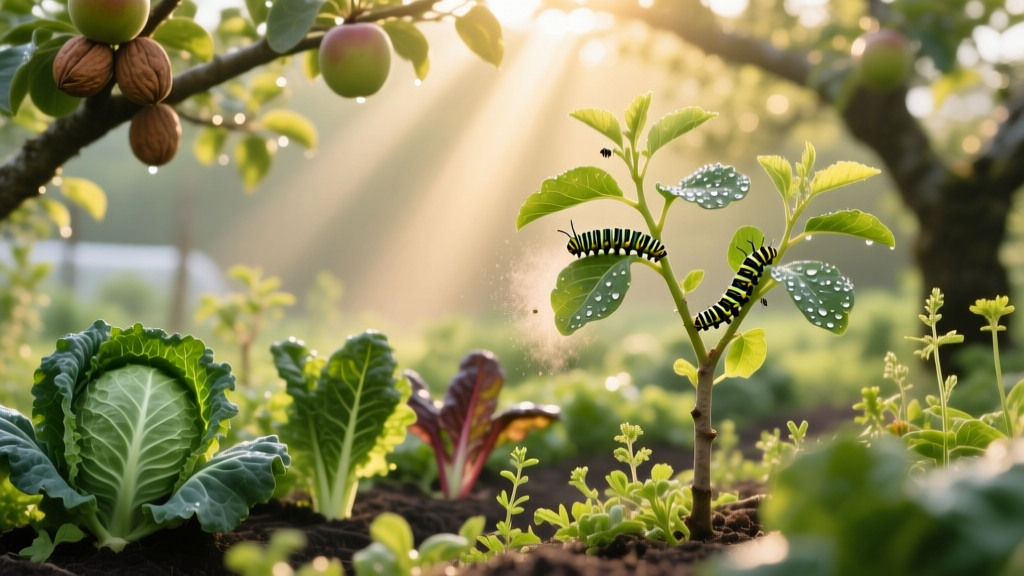
2026 Tree Planting Guide: Btk For Hornworms & Cabbage Worms
Sarah ChenPublished
The 2026 Edible Landscape: Merging Tree Planting with Understory Pest Control
As home gardeners and landscaping professionals embrace the food forest model in 2026, the integration of fruit and nut trees with annual vegetable guilds has become a cornerstone of sustainable landscape design. However, selecting the right trees and planting them correctly is only the first step in establishing a thriving polyculture. The understory crops that thrive in the dappled sunlight of your tree canopy—specifically brassicas and solanaceae—are prime targets for devastating caterpillar pests. To protect both your newly planted trees and their companion crops, mastering the application of Bacillus thuringiensis var. kurstaki (Btk) for cabbage worm and hornworm control is essential.
Strategic Tree Selection and Spacing for Pest Management
When designing an edible landscape, tree selection directly impacts the microclimate and pest pressure of the understory. In 2026, agroforestry experts recommend selecting semi-dwarf or dwarfing rootstocks for fruit trees like apples, pears, and stone fruits. These smaller canopies allow for better air circulation and crucial UV light penetration, which naturally deters the damp, stagnant conditions that favor fungal diseases and certain pest life cycles.
Proper spacing is equally critical. By planting your primary canopy trees at least 15 to 20 feet apart, you create sunny clearings or southern-facing exposure zones. These zones are where you will plant your sun-loving, caterpillar-prone companion crops like tomatoes, peppers, and cabbage. If trees are planted too densely, the resulting deep shade weakens the understory plants, making them far more susceptible to severe defoliation by hornworms and imported cabbageworms.
Best Practices for Planting in a Polyculture
- Root Zone Protection: Dig planting holes twice as wide as the root ball but no deeper. Avoid amending the backfill soil heavily with compost, which encourages roots to circle rather than expand into the native soil.
- Mulching Strategy: Apply a 3-inch layer of arborist wood chips around the tree, keeping it 6 inches away from the trunk. This mulch layer will eventually host the companion plants, but keep brassicas and tomatoes at least 3 feet from the tree trunk to prevent competition and allow for targeted Btk spraying.
- Mycorrhizal Inoculation: Dust the root ball with mycorrhizal fungi before planting. A robust fungal network helps trees and companion plants withstand the stress of minor pest damage while you implement organic controls.
Identifying the Understory Defoliators
Before applying any treatment, accurate identification is a core tenet of Integrated Pest Management (IPM). The two primary caterpillar threats to your food forest understory are the imported cabbageworm and the tomato/tobacco hornworm.
The Imported Cabbageworm (Pieris rapae)
Often seen as white butterflies fluttering around your tree guilds, the adult cabbageworm lays singular, pale yellow eggs on the undersides of brassica leaves (kale, broccoli, cauliflower). The larvae are velvety green with a faint yellow stripe down their back. According to the University of California Integrated Pest Management (UC IPM) program, these caterpillars can skeletonize a young cabbage plant in a matter of days, leaving behind copious amounts of frass (excrement) that ruins the harvest.
The Tomato and Tobacco Hornworms (Manduca spp.)
These massive, bright green caterpillars feature diagonal white stripes and a prominent horn on their rear end. They camouflage perfectly among tomato and pepper plants grown in the sunny clearings between your fruit trees. A single hornworm can consume entire branches overnight. While they do not feed on the woody tissue of your fruit trees, their presence in the immediate root zone can be alarming, and their voracious appetite can decimate the annual yields that support your landscape's ecosystem.
The Science of Bt Kurstaki (Btk)
Bacillus thuringiensis var. kurstaki is a naturally occurring soil bacterium that produces crystalline proteins (Cry toxins) during sporulation. When a susceptible caterpillar ingests foliage treated with Btk, the alkaline environment of its midgut dissolves the crystal, releasing a toxin that binds to specific gut receptors. This causes the gut wall to rupture, leading to paralysis, cessation of feeding, and death within 1 to 3 days.
Crucially, the Environmental Protection Agency (EPA) notes that Btk is highly specific. It only affects the larvae of Lepidoptera (butterflies and moths). It is completely harmless to humans, pets, birds, earthworms, and beneficial predatory insects like ladybugs and lacewings. Furthermore, Btk will not harm your trees, your soil biology, or your mycorrhizal networks, making it the ultimate tool for organic food forest management.
Step-by-Step Btk Application in Tree-Based Landscapes
Applying Btk in a mixed tree-and-vegetable landscape requires precision to ensure coverage without wasting product on non-target areas like tree trunks or woodchip mulch.
- Timing is Everything: Btk must be ingested by early-instar (young) caterpillars. Monitor your understory crops weekly. As soon as you notice small holes in leaves or spot caterpillars less than half an inch long, it is time to spray.
- Mixing the Solution: Use a dedicated pump sprayer. Fill it halfway with water, add the Btk formulation according to the label rates (detailed in the table below), agitate, and then fill the rest with water. Adding a non-ionic surfactant or horticultural spreader-sticker is highly recommended, as brassica leaves have a waxy cuticle that causes water to bead up and roll off.
- Targeted Spraying: Spray only the affected understory plants. Thoroughly coat the undersides of the leaves, as this is where cabbage worms feed and hide. There is no need to spray the bark, branches, or leaves of your fruit trees, as Btk does not control beetles, aphids, or borers that might affect the trees.
- Reapplication Schedule: Btk breaks down rapidly under UV sunlight and washes off in the rain. Reapply every 5 to 7 days, or immediately after a heavy rainfall, until the caterpillar life cycle is broken. The University of Minnesota Extension emphasizes that consistent, timely reapplication is the key to Btk success.
2026 Btk Product Comparison Chart for Edible Landscapes
Choosing the right formulation depends on the size of your food forest and the specific crops you are protecting. Below is a comparison of the top Btk products available to home growers and landscaping professionals in 2026.
| Product Name | Formulation Type | Mixing Rate (per Gallon) | Best Use Case in Food Forest |
|---|---|---|---|
| Monterey B.t. | Liquid Suspension | 1.5 fl oz | Ideal for small-scale tree guilds and quick spot-treatments on young brassicas. |
| Bonide Thuricide | Liquid Concentrate | 1.5 fl oz | Great for homeowners with mixed fruit tree and tomato understories; easy to measure. |
| Dipel DF | Dry Flowable Powder | 0.5 to 1 tsp | Best for large-acreage food forests or commercial edible landscapes; highly concentrated and cost-effective. |
Protecting Tree Roots and Soil Biology During Treatment
One of the primary concerns when managing pests near newly planted trees is the potential for soil contamination. Fortunately, Btk is a soil-borne bacterium by nature. Any overspray that lands on the woodchip mulch or the soil surface around your fruit trees will simply integrate into the existing microbial community. It does not persist in a way that harms plant roots, nor does it affect the earthworms that are vital for aerating the soil around your tree's expanding root system.
By integrating strategic tree selection, proper planting techniques, and targeted Btk applications, you can cultivate a highly productive, multi-layered edible landscape. Your fruit trees will establish deep, resilient root systems, while your understory crops remain protected from the ravages of cabbage worms and hornworms, ensuring a bountiful harvest in 2026 and beyond.