Pest Control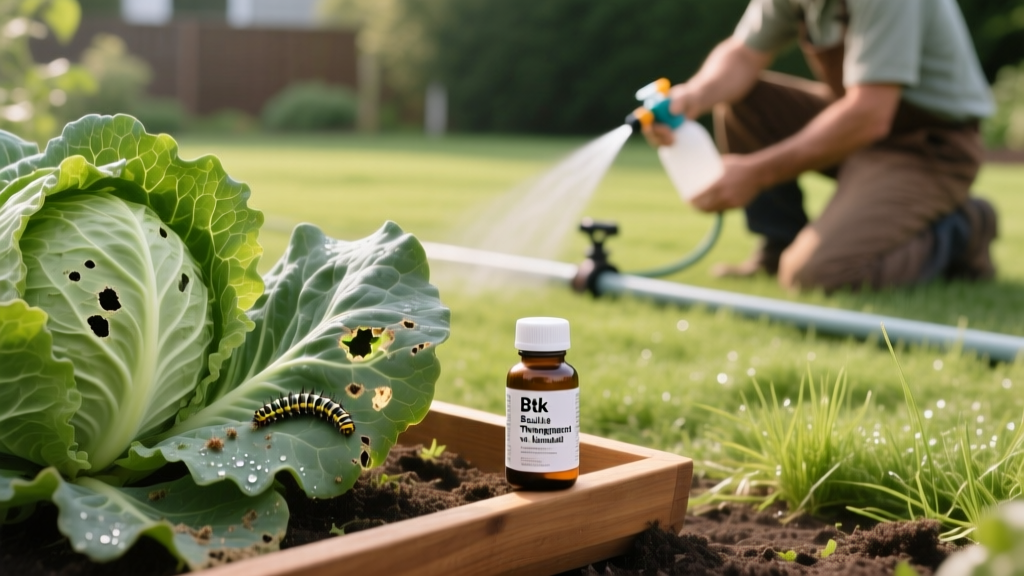
Btk For Cabbage Worms: 2026 Lawn Seeding & Aeration
Mike RodriguezPublished
The Ultimate 2026 Guide to Btk Application During Lawn Aeration and Seeding
Welcome to the 2026 growing season. For homeowners managing a mixed landscape, maintaining a pristine turf lawn alongside a productive vegetable garden requires careful planning. Integrated Pest Management (IPM) in 2026 demands that we look at the entire yard as an interconnected ecosystem. When you core aerate and overseed your lawn in the spring or early fall, you trigger a massive shift in your yard's microclimate, soil structure, and irrigation schedule. Simultaneously, your adjacent garden beds are likely under attack from voracious Lepidoptera larvae, specifically the imported cabbageworm and the tomato hornworm.
The gold standard for organic caterpillar control is Bacillus thuringiensis var. kurstaki (Btk). However, a major conflict arises: the heavy, frequent watering required for grass seed germination directly interferes with Btk application requirements. In this comprehensive guide, we will explore how to successfully coordinate your Btk pest control applications with your lawn aeration and seeding schedule, ensuring neither your turf nor your tomatoes suffer.
Understanding Btk and Its Role in 2026 IPM
Before diving into scheduling, it is vital to understand how Btk works. According to the Environmental Protection Agency (EPA), Bt is a naturally occurring soil bacterium that produces crystal proteins (Cry proteins) toxic only to specific insect larvae. When cabbage worms, cabbage loopers, or hornworms ingest treated foliage, the highly alkaline environment of their gut dissolves the crystal. This releases a toxin that paralyzes their digestive system. The pest stops feeding within hours and dies within a few days.
Crucially, Btk is completely harmless to humans, pets, pollinators, and beneficial soil organisms. This safety profile is especially important during lawn aeration. Core aeration pulls plugs of soil to the surface, exposing earthworms and beneficial microbes. You want to protect these earthworms, as they naturally aerate your soil and break down thatch. Broad-spectrum chemical pesticides would devastate this soil biology, but Btk leaves them entirely unharmed, supporting the long-term health of your newly seeded lawn.
The Aeration and Seeding Irrigation Conflict
The primary challenge of combining lawn renovation with garden pest control is water management. Newly seeded lawns require frequent, light watering—often three to four times a day—to keep the top inch of soil consistently moist until germination occurs. Most homeowners use overhead oscillating or impact sprinklers for this process. The inevitable result? Sprinkler overspray drenches your adjacent tomato plants, kale, and cabbage.
The National Pesticide Information Center (NPIC) notes that while Bt binds reasonably well to plant surfaces, heavy, repeated overhead irrigation will physically wash the bacterial spores off the leaves, rendering your pest control efforts useless. If you spray Btk in the morning and your lawn seeding irrigation kicks in at noon, you are essentially washing your time and money down the drain. Furthermore, Btk degrades under ultraviolet (UV) light, meaning its effective window on the leaf surface is already limited to about 5 to 7 days even under ideal conditions.
Top Btk Products for the 2026 Season
To combat the wash-off effect, choosing the right formulation is critical. Here are the top Btk products for 2026, tailored for mixed-landscape homeowners:
- Monterey B.t. Insect Spray: A liquid concentrate that remains a top seller in 2026. Priced around $18 to $22 for a 16-ounce bottle, it mixes easily and covers up to 4,000 square feet. It requires a thorough coating of both the top and bottom of leaves.
- Garden Safe Bt Worm & Caterpillar Killer: Widely available in both ready-to-spray and dust formulations. The dust formulation is particularly useful if you are trying to avoid liquid sprays entirely during peak lawn watering hours, as it can be applied with a duster right at the base of the plant and on lower leaves.
- Dipel Pro DF: A professional-grade dry flowable powder favored by serious organic gardeners. It contains a higher concentration of active ingredients and includes a built-in sticker agent, which helps it resist light irrigation wash-off better than standard consumer liquids.
Strategic Coordination: Timing Your Btk Sprays
To successfully manage hornworms and cabbage worms without compromising your grass seed, you must adopt a strict scheduling protocol. You need to allow Btk to dry and bind to the leaf cuticle before any water hits it. Most liquid Btk formulations require a minimum of 12 to 24 hours of dry time to achieve maximum rainfastness. Therefore, evening applications are mandatory during the seeding window.
Below is a recommended daily schedule that balances the hydration needs of your new turf with the pest control needs of your garden beds.
| Time of Day | Lawn Seeding Task | Garden Btk & Pest Task |
|---|---|---|
| 6:00 AM | First light overhead irrigation (10 mins) | Inspect leaves for worm frass (droppings) and damage |
| 10:00 AM | Second overhead irrigation (10 mins) | Apply drip-irrigation to garden beds (if needed) |
| 2:00 PM | Third overhead irrigation (10 mins) | Ensure sprinkler heads are deflected away from beds |
| 6:30 PM | Final light irrigation (if soil is dry) | Allow foliage to dry completely post-sprinkler mist |
| 8:00 PM | Irrigation system OFF for the night | Apply Btk spray to dry foliage |
Mitigating Sprinkler Overspray and Wash-Off
Even with perfect timing, morning dew and residual sprinkler mist can threaten your Btk application. To mitigate this, physical and chemical barriers are necessary.
1. Adjust Your Sprinkler Zones
During the 14 to 21 days it takes for grass seed to germinate, physically adjust your oscillating sprinklers to face away from garden beds. Use inexpensive sprinkler deflector shields to block water from drifting onto your brassicas and solanaceae crops. If possible, temporarily switch your garden beds to a drip tape irrigation system so the foliage remains entirely dry while the lawn receives overhead moisture.
2. Use a Spreader-Sticker Adjuvant
In 2026, products like Bonide Turbo Spreader Sticker or a high-quality Non-Ionic Surfactant (NIS) are essential additives when mixing liquid Btk. Cabbage and kale leaves have a thick, waxy cuticle that causes water to bead up and roll off. A spreader-sticker reduces the surface tension of the water, allowing the Btk solution to spread evenly across the waxy leaves and form a more resilient bond. This sticky residue can help the Btk survive light, incidental misting from your lawn sprinklers.
Monitoring and Reapplication Protocols
Because hornworms and cabbage worms hatch in continuous, overlapping cycles throughout the spring and late summer, a single application of Btk will not solve your problem. You must reapply Btk on a strict 5 to 7-day schedule. When coordinating with a 14-day lawn seeding watering schedule, plan your Btk applications for the evening of Day 1, Day 7, and Day 14.
Once the grass seed has successfully germinated and you transition to deeper, less frequent lawn watering (e.g., 30 minutes every other day to encourage deep root growth), the conflict with your garden pest control schedule drastically reduces. At this stage, you can return to a more flexible Btk application routine, provided you still avoid spraying immediately before a scheduled lawn irrigation cycle.
Protecting Beneficial Insects During the Transition
A core tenet of IPM is preserving beneficial predators. Braconid wasps are natural parasites of tomato hornworms. If you inspect your tomato plants and see a hornworm covered in white, rice-like cocoons, do not spray it with Btk and do not kill it. Those cocoons contain baby wasps that will emerge to populate your yard and hunt other caterpillars. Let nature do the work for you.
Furthermore, a healthy, newly aerated and seeded lawn supports a robust population of ground beetles and hunting spiders. These beneficial predators frequently migrate from the lush, moist turf into adjacent garden beds to prey on pest eggs and small larvae. By using Btk exclusively for the caterpillars, you avoid the broad-spectrum synthetic pyrethroids that would decimate these beneficial allies and disrupt the ecological balance of your newly renovated landscape.
Conclusion
Managing cabbage worms and hornworms with Btk during a lawn aeration and seeding project requires precision, but it is entirely achievable. By understanding the biological needs of both your grass seed and your bacterial insecticide, you can maintain a flawless lawn and a bountiful, pest-free garden in 2026. Stick to evening applications, utilize spreader-stickers, and zone your irrigation wisely to achieve total landscape success.