Pest Control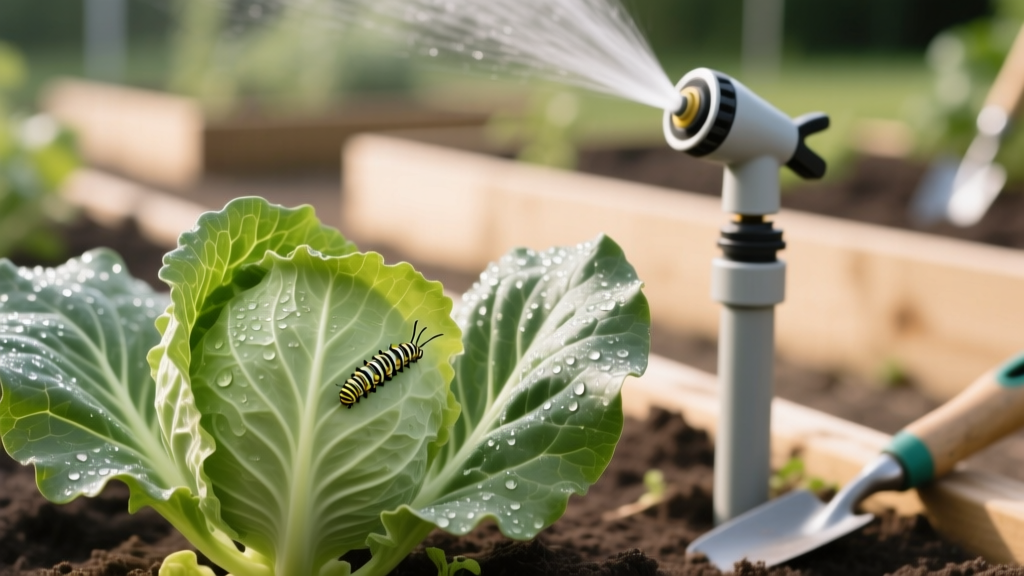
Bt Kurstaki & Sprinkler Timing For Worm Control 2026
James MillerPublished
The 2026 Guide to Btk and Irrigation Synergy
As home gardeners and urban farmers navigate the 2026 growing season, the push toward organic Integrated Pest Management (IPM) has never been stronger. Two of the most devastating caterpillars in the vegetable garden are the imported cabbageworm (Pieris rapae) and the tomato hornworm (Manduca quinquemaculata). These ravenous pests can strip a brassica bed or a tomato trellis bare in a matter of days. The gold standard for organic control remains Bacillus thuringiensis var. kurstaki (Btk), a naturally occurring soil bacterium that specifically targets the digestive systems of caterpillars. However, a major conflict arises in modern garden design: overhead sprinkler and irrigation systems. If you are applying Btk to your crops but watering them with overhead sprinklers on the wrong schedule, you are literally washing your pest control efforts down the drain. This comprehensive guide explores how to perfectly synchronize your Btk applications with your 2026 smart irrigation systems to ensure maximum efficacy against cabbage worms and hornworms.
Identifying the Threat: Cabbage Worms and Hornworms
Before adjusting your irrigation controllers, it is vital to correctly identify the damage these pests cause. Cabbage worms are the larvae of the common white butterfly. They chew large, irregular holes in the leaves of cabbage, kale, broccoli, and cauliflower, often leaving behind dark green frass (excrement) that ruins the harvestable curds. Hornworms, on the other hand, are massive, bright green caterpillars with a distinctive horn on their rear. They possess an incredible appetite and can defoliate an entire tomato, pepper, or eggplant plant overnight. Because both pests feed actively on the foliage, any biological pesticide applied to the leaves must remain intact and dry enough for the caterpillar to ingest it. This is where your irrigation strategy becomes the linchpin of your pest control success.
The Science of Btk and the Moisture Conflict
Btk works through ingestion. When a caterpillar chews on a leaf treated with Btk, it consumes the crystalline proteins (Cry toxins) produced by the bacterium. In the highly alkaline environment of the caterpillar's midgut, these crystals dissolve, bind to the gut wall, and create pores. This causes the gut to paralyze and eventually rupture, leading to the pest's death within 24 to 72 hours. According to the United States Environmental Protection Agency (EPA), Btk is exceptionally safe for humans, pets, and beneficial insects like bees and ladybugs, making it a cornerstone of organic gardening.
However, Btk is highly susceptible to environmental degradation. Ultraviolet (UV) light from the sun breaks down the proteins over time, which is why reapplication every 5 to 7 days is standard. More immediately destructive to a fresh application is physical wash-off. Btk formulations require time to dry and adhere to the waxy cuticle of the leaf surface. If an overhead sprinkler system activates before the Btk has fully dried, or if heavy overhead irrigation occurs within 24 hours of application, the bacterial spores and crystals are physically washed off the leaf and into the soil, rendering the treatment completely useless against foliage-feeding caterpillars.
Upgrading Your Irrigation Strategy for IPM
To maximize Btk retention in 2026, gardeners must evaluate their irrigation delivery methods. Not all water is created equal when it comes to pest management.
- Subsurface Drip Irrigation (SDI): The absolute best method for pest-prone crops. Water is delivered directly to the root zone below the soil surface. The foliage remains bone-dry, meaning Btk applications are never disturbed, and fungal diseases like powdery mildew are virtually eliminated.
- Surface Drip Tape and Soaker Hoses: Excellent alternatives that keep water at the base of the plant. While heavy splashing from soil impact can occasionally reach lower leaves, the vast majority of the plant canopy remains dry and receptive to Btk.
- Overhead Rotary Nozzles and Spray Heads: These traditional sprinkler systems wet the entire plant canopy. If you must use them for your vegetable beds, you must strictly manage your smart controller schedules to create 'dry windows' for pesticide application.
Smart Controller Integration: Timing is Everything
In 2026, smart irrigation controllers like the Rachio 4, Orbit B-hyve, and Hunter Hydrawise are standard equipment for efficient water management. These devices use hyper-local weather data to adjust watering schedules automatically. While great for conservation, they can inadvertently trigger a watering cycle right after you have sprayed your tomatoes with Btk. To prevent this, you must utilize the 'Zone Skip' or 'Manual Delay' features on your smart controller app. After applying Btk, immediately open your irrigation app and pause the specific zones covering your treated vegetable beds for a minimum of 24 to 48 hours. This ensures the Btk has ample time to bind to the leaf surface and withstand subsequent water exposure.
Comparative Data: Irrigation Methods and Btk Retention
The following table illustrates how different irrigation methods impact the efficacy of your Btk applications against hornworms and cabbage worms.
| Irrigation Method | Btk Wash-Off Risk | Foliage Moisture | IPM Compatibility (2026) |
|---|---|---|---|
| Subsurface Drip | Zero | Dry | Excellent |
| Surface Drip Tape | Very Low | Mostly Dry | Excellent |
| Rotary Nozzles (Overhead) | High | Wet | Poor (Requires Strict Timing) |
| Impact Sprinklers | Severe | Heavy Wet | Not Recommended for Treated Beds |
The Role of Surfactants and Proper Mixing
Because cabbage leaves have a notoriously thick, waxy cuticle, Btk droplets can easily bead up and roll off the leaf edge, even without a sprinkler system running. To combat this, modern IPM protocols recommend adding an organic, non-ionic surfactant or a few drops of pure castile soap to your Btk tank mix. The surfactant breaks the surface tension of the water, allowing the Btk solution to spread evenly across the leaf surface and adhere more tightly. When mixed properly, a surfactant-enhanced Btk application becomes significantly more resistant to light wash-off from morning dew or accidental sprinkler drift. Always check the label of your specific 2026 Btk formulation (such as Monterey B.t. or Bonide Thuricide) for exact mixing ratios, but a standard rate is typically 1 to 2 tablespoons of Btk per gallon of water, plus 1/2 teaspoon of surfactant.
Step-by-Step Application and Watering Protocol
To achieve total control over hornworms and cabbage worms without sacrificing your garden's hydration needs, follow this precise protocol:
- Inspect and Identify: Walk your garden in the early morning. Look for the white butterflies hovering over brassicas or the chewed, missing leaves on your tomatoes. Check the undersides of leaves for small green caterpillars and frass.
- Pre-Water the Soil: If your soil is dry, run your drip or overhead irrigation system the evening before you plan to spray. This ensures the plants are well-hydrated and the soil profile is charged, eliminating the need for immediate follow-up watering.
- Pause the Smart Controller: Open your irrigation app and set a 48-hour manual delay on the zones containing your target crops.
- Mix and Apply: Mix your Btk and surfactant in a pump sprayer. Agitate the tank thoroughly. Spray the foliage until runoff, paying special attention to the undersides of the leaves, as this is where cabbage worms prefer to hide and feed. According to the University of California Statewide Integrated Pest Management Program (UC IPM), thorough coverage is critical because Btk has no systemic activity; the pest must eat the treated leaf surface.
- Monitor and Reapply: Btk degrades under UV light. Plan to reapply every 5 to 7 days, or immediately after a natural rain event exceeding 0.5 inches. Always coordinate your reapplication with your irrigation schedule, ensuring the leaves are dry before spraying and remain dry for 24 hours afterward.
Conclusion: Mastering the Balance of Water and Pest Control
Effective pest management in the 2026 garden is not just about choosing the right organic pesticide; it is about understanding how that pesticide interacts with your garden's entire ecosystem, including your water delivery systems. Bt kurstaki remains an unparalleled, environmentally safe tool for eradicating cabbage worms and hornworms, but its success is entirely dependent on proper application and retention. By transitioning to drip irrigation where possible, utilizing surfactants to improve leaf adhesion, and leveraging smart irrigation controllers to create strategic dry windows, you can ensure that your Btk applications stay exactly where they belong: on the leaves, protecting your harvest from destructive caterpillars. Master this synergy between water management and biological control, and your vegetable garden will thrive, yielding pristine, worm-free crops all season long.