Pest Control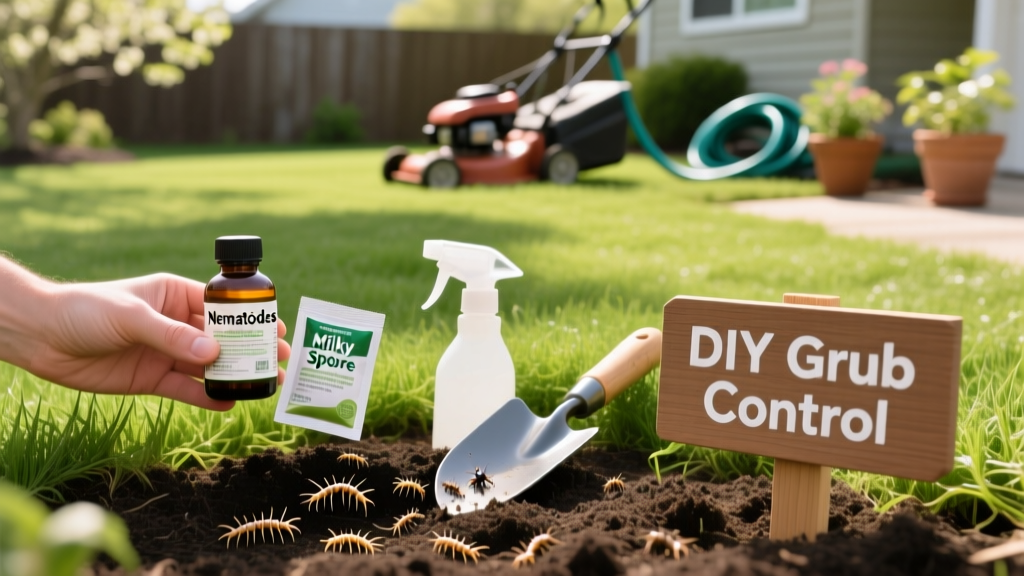
Budget-Friendly DIY Grub Control Solutions for Lawns
Mike RodriguezPublished
The Hidden Cost of Grub Damage
White grubs are the immature, larval stage of various scarab beetles, including Japanese beetles, June bugs, masked chafers, and European chafers. These C-shaped, cream-colored pests feed aggressively on grassroots just below the soil surface. If left unchecked, a severe grub infestation can destroy an entire lawn in a matter of weeks, leaving behind spongy, brown, and easily detachable patches of dead turf. Furthermore, grubs attract secondary pests like skunks, raccoons, and crows, which will tear up your lawn to feast on the larvae.
Professional pest control services often charge between $150 and $300 per application for chemical grub control. For a standard-sized lawn, this can become a massive annual expense. Fortunately, as a homeowner, you can implement highly effective, budget-friendly DIY grub control strategies that leverage biological warfare, botanical remedies, and smart cultural practices. According to Penn State Extension, a healthy lawn can tolerate a few grubs, but populations exceeding five to ten per square foot warrant immediate intervention. Here is how you can tackle the problem without breaking the bank.
Diagnosing the Problem on a Dime
Before spending money on any treatment, you must confirm that grubs are the actual culprit. Brown patches can also be caused by drought, fungal diseases, or dog urine. Use these two free diagnostic methods to confirm a grub infestation:
1. The Tug Test
Walk to the edge of a damaged, brown patch where it meets the green, healthy grass. Grab a handful of turf and pull gently. If the grass rolls up like a loose carpet with little to no root resistance, grubs have likely severed the root system. Examine the top two inches of soil for white, C-shaped larvae.
2. The Soapy Flush Test
Mix two tablespoons of liquid dish soap (lemon-scented works exceptionally well) into a gallon of water. Pour this solution over a one-square-foot area of the lawn's margin. The soap irritates the grubs, forcing them to the surface within 5 to 10 minutes. Count the grubs that emerge. If you see more than 5 to 10 grubs per square foot, treatment is necessary. This method is highly recommended by the Ohio State University Extension for accurate population sampling.
Top Budget-Friendly Biological Controls
Synthetic chemicals like imidacloprid or chlorantraniliprole are effective but can be expensive and harmful to non-target organisms. Biological controls offer a safer, highly effective, and surprisingly affordable DIY alternative.
Beneficial Nematodes (Heterorhabditis bacteriophora)
Beneficial nematodes are microscopic, unsegmented roundworms that naturally occur in soil. For grub control, you specifically need the Heterorhabditis bacteriophora (Hb) strain, which actively hunts and infects grub larvae with a lethal bacteria.
- Cost: Approximately $35 to $50 for a pack of 10 million nematodes, which covers about 2,000 to 3,000 square feet.
- Timing: Apply in late summer or early fall when grubs are young, small, and actively feeding near the surface. Soil temperatures must be above 60°F.
- Application: Mix the nematodes with water in a hose-end sprayer. Crucially, use distilled or dechlorinated water, as chlorine kills nematodes. Apply in the late afternoon or evening to avoid UV radiation.
- Follow-up: Water the lawn lightly immediately after application to wash the nematodes into the soil, and keep the soil consistently moist for the next 10 days.
Pro Tip: Always store live nematodes in the refrigerator immediately upon arrival. They are living organisms and will expire if left in a hot mailbox or garage.
Milky Spore Disease (Paenibacillus popilliae)
Milky spore is a naturally occurring bacterium that specifically targets Japanese beetle grubs. When a grub ingests the spores, the bacteria multiply inside its gut, eventually killing the pest and releasing billions of new spores into the soil.
- Cost: Around $40 for a 40-ounce bag of granular milky spore, covering up to 10,000 square feet. While the upfront cost is slightly higher, it is a one-time investment.
- Longevity: Once established in the soil, milky spore provides continuous grub control for 10 to 15 years.
- Application: Using a lawn spreader or by hand, apply one teaspoon of milky spore powder every four feet in a grid pattern across your lawn. Water it in lightly to settle the spores into the thatch layer.
- Limitations: Milky spore is highly specific. It will not control the larvae of June bugs or European chafers. Furthermore, it takes 1 to 3 years to fully establish in the soil, making it a long-term preventative strategy rather than an immediate curative one.
Botanical Remedies: Neem Oil
For early-stage grubs or as a supplementary treatment, cold-pressed Neem oil containing azadirachtin can act as a powerful growth regulator and antifeedant. When ingested by young grubs, azadirachtin disrupts their hormonal systems, preventing them from molting and eventually leading to starvation.
Neem oil concentrate is incredibly budget-friendly, often costing less than $20 for a bottle that can make dozens of gallons of spray. Mix 2 tablespoons of pure neem oil and 1 teaspoon of mild liquid soap (as an emulsifier) per gallon of water. Drench the affected areas of the soil thoroughly in the evening. While neem oil will not eradicate a severe, mature grub infestation on its own, it is an excellent, cheap tool for integrated pest management (IPM) in the early stages of the grub life cycle.
Free Cultural Prevention Strategies
The most cost-effective pest control strategy is a robust, healthy lawn that can naturally outcompete and tolerate pest pressure. The University of California IPM emphasizes that cultural practices are the foundation of long-term turf health.
Strategic Watering Practices
Grubs thrive in consistently moist, shallow topsoil. If you water your lawn frequently and lightly, you encourage shallow grassroots and create the perfect nursery for beetle eggs. Instead, water your lawn deeply and infrequently. Aim for 1 to 1.5 inches of water per week, applied in one or two deep sessions. This forces grass roots to grow deep into the soil profile where grubs cannot reach them, while allowing the top inch of soil to dry out, which naturally desiccates beetle eggs and young larvae.
Mowing High and Leaving Clippings
Set your mower deck to a height of 3 to 4 inches. Taller grass shades the soil, reducing surface temperatures and conserving moisture deep in the root zone. Additionally, taller turf is more resilient to root pruning by grubs. Leave the grass clippings on the lawn; as they decompose, they return valuable nitrogen to the soil, saving you money on synthetic fertilizers while promoting a dense, aggressive root system that grubs struggle to destroy.
Thatch Management
A thatch layer thicker than half an inch acts as a barrier, preventing water, biological controls, and nutrients from reaching the soil. It also provides a warm, moist haven for egg-laying beetles. Core aeration, which can be done by renting an aerator for $50 to $80 a day (split the cost with a neighbor to halve the price), breaks up compaction and reduces thatch, making the soil environment less hospitable to grubs.
Cost Comparison: DIY vs. Professional Treatments
Understanding the financial impact of your choices is crucial for budget-conscious lawn care. Below is a comparison of common grub control methods based on a standard 5,000-square-foot lawn.
| Treatment Method | Target Pests | Est. Cost (5,000 sq ft) | Longevity | Best Application Time |
|---|---|---|---|---|
| Professional Chemical Service | All White Grubs | $150 - $250 | 1 Season | Spring / Early Summer |
| DIY Beneficial Nematodes (Hb) | All White Grubs | $60 - $90 | 1 - 2 Seasons | Late Summer / Early Fall |
| DIY Milky Spore Granules | Japanese Beetles Only | $20 - $30 | 10 - 15 Years | Spring / Fall |
| DIY Neem Oil Drench | Young Larvae / Eggs | $5 - $10 | Weeks (Requires Reapplication) | Mid-Summer |
| Cultural Practices (Aeration) | Preventative | $40 (Shared Rental) | Annual Maintenance | Early Fall / Spring |
When to Call the Professionals
While budget-friendly DIY solutions are incredibly effective for preventative care and moderate infestations, there are times when professional intervention is justified. If your lawn is suffering from a catastrophic infestation (more than 15-20 grubs per square foot) and the turf is detaching en masse, biological controls like nematodes may not act fast enough to save the remaining grass. In these extreme curative scenarios, a professional application of a fast-acting synthetic insecticide like trichlorfon might be necessary to halt the destruction immediately.
However, for the vast majority of homeowners, integrating beneficial nematodes, establishing milky spore, and adhering to deep-watering cultural practices will keep grub populations well below damaging thresholds. By leveraging these budget-friendly DIY solutions, you not only protect your wallet but also foster a safer, more ecologically balanced environment for your family, pets, and local wildlife.