Gardening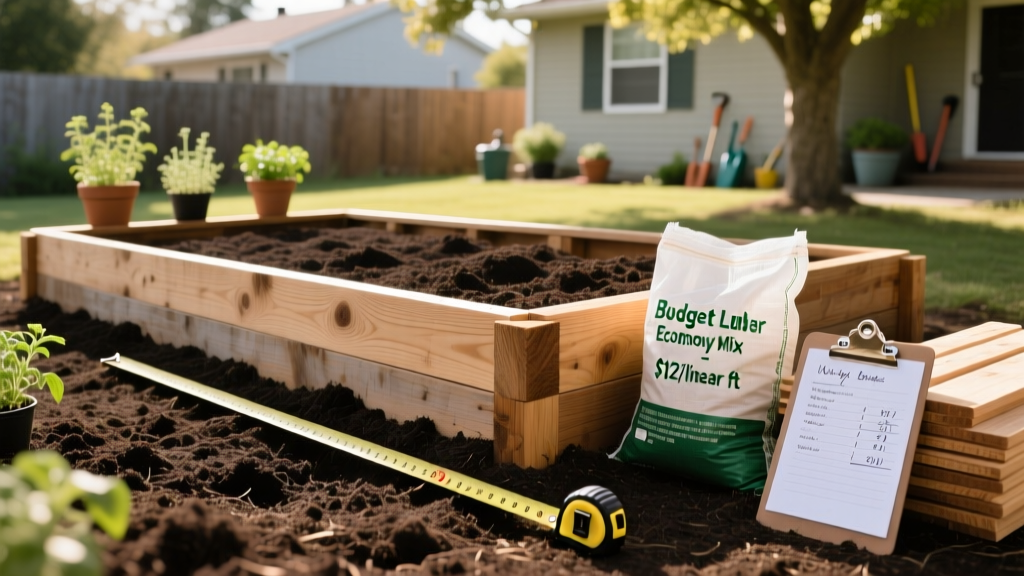
Budget Raised Bed Gardening: Costs, Materials, and Soil
Emily WatsonPublished
Starting a vegetable garden is often pitched as a way to save money on groceries, but a quick trip to the hardware store can quickly shatter that illusion. Between the cost of lumber, specialized soils, and fertilizers, the startup costs for a single raised garden bed can easily exceed two hundred dollars. However, with strategic planning, smart material sourcing, and a bit of horticultural know-how, you can build a highly productive raised bed for a fraction of the retail price.
This comprehensive cost and budgeting guide breaks down the exact expenses of raised bed construction, compares material lifespans, and reveals expert strategies for filling your beds with nutrient-rich soil without draining your bank account.
Strategic Sizing: Why 4x8 Feet is the Budget Sweet Spot
When budgeting for a raised bed, dimensions dictate your waste and your wallet. The most cost-effective size for a raised garden bed is 4 feet wide by 8 feet long. This is not an arbitrary gardening rule; it is based on the standard dimensions of construction lumber sold in North America. Boards are typically sold in 8-foot lengths. By building a 4x8 bed, you utilize exactly four 8-foot boards with zero offcuts, eliminating material waste.
Furthermore, a 4-foot width ensures you can reach the center of the bed from either side without stepping on the soil, which prevents compaction and maintains the structural integrity of your expensive soil mix. For depth, a 12-inch bed (using two stacked 2x6 boards per side) provides ample room for most vegetable root systems while keeping soil volume requirements manageable.
Material Breakdown: Lumber and Alternatives
The frame of your raised bed is your largest upfront structural expense. While cedar is the traditional favorite for its natural rot resistance, it is rarely the most budget-friendly option. Below is a comparison of common raised bed materials based on a standard 4x8 foot, 12-inch deep configuration.
| Material | Estimated Cost | Lifespan | Budget Verdict |
|---|---|---|---|
| Untreated Pine | $40 - $60 | 3-5 Years | Best upfront cost |
| Cedar or Redwood | $150 - $250 | 10-15 Years | Best long-term ROI |
| Corrugated Metal | $120 - $180 | 20+ Years | High upfront, low maintenance |
| Recycled HDPE | $200 - $300 | 50+ Years | Poor budget choice |
If your budget is strictly under fifty dollars, untreated pine is your best option. To extend the life of pine without using toxic chemical treatments, line the interior walls with heavy-duty builder's plastic or apply a coat of raw linseed oil to the wood before assembly. This simple ten-dollar upgrade can add years to the lifespan of cheap lumber.
The Hidden Costs: Hardware and Weed Barriers
Many gardeners forget to budget for the hardware required to hold the bed together. Standard nails will eventually rust and pull out as the wet soil expands and contracts. You must budget for exterior-grade screws. A single box of 3-inch Deckmate or Grip-Rite exterior wood screws costs around $8 to $12 and is more than enough to secure a 4x8 bed.
Additionally, avoid the temptation to buy expensive rolls of commercial landscape fabric for the bottom of your bed. Instead, use free or cheap cardboard. Collect boxes from local appliance stores or grocery stores, remove all plastic tape, and lay them flat over the grass before building. Cardboard effectively smothers existing weeds and grass, and it will naturally decompose over the first year, allowing earthworms to migrate into your raised bed.
The Biggest Expense: Soil Volume and Budget Fills
The most shocking expense for new gardeners is the soil. A standard 4x8 foot bed that is 12 inches deep requires exactly 32 cubic feet of soil. If you purchase bagged raised bed soil at an average of $6 per 1.5 cubic foot bag, you will need 22 bags, costing over $130 just to fill a single box.
To avoid this trap, you must transition from bagged soil to bulk soil. Most local landscape supply yards sell a topsoil and compost blend by the cubic yard. One cubic yard equals 27 cubic feet and typically costs between $30 and $50, depending on your region. You will need roughly 1.2 cubic yards to fill a 4x8 bed. Even with a $50 delivery fee, buying in bulk cuts your soil costs by more than half.
The 50/50 Budget Soil Recipe
Popular gardening books often recommend Mel's Mix (one-third peat moss, one-third vermiculite, one-third compost) for raised beds. While effective, vermiculite and peat moss are expensive and environmentally contentious. A much more budget-friendly alternative is the 50/50 mix.
- 50% Screened Topsoil: Provides the mineral base and structural bulk.
- 50% Organic Compost: Provides nutrients, microbial life, and moisture retention.
According to the Oregon State University Extension Service, utilizing bulk municipal compost mixed with native topsoil is significantly more cost-effective than purchasing bagged potting mixes, while still providing adequate drainage and nutrient retention for most vegetable crops when amended properly with basic organic fertilizers.
To bridge the gap between cheap topsoil and premium potting mixes, add two cups of organic granular fertilizer (such as Espoma Garden-tone) and a few scoops of worm castings per square foot. This provides the slow-release nutrients your plants need without the premium price tag of pre-mixed bagged soils.
The Hugelkultur Method: A Zero-Cost Soil Filler
If you are building a raised bed that is 18 inches or deeper, filling the entire volume with topsoil and compost is a massive waste of money. Most vegetable roots only occupy the top 12 inches of soil. You can utilize the German permaculture technique known as Hugelkultur to fill the bottom third of your bed for absolutely free.
Before adding any soil, fill the bottom 6 to 8 inches of your raised bed with rotting logs, fallen branches, twigs, and dried leaves. This woody debris acts like a sponge, absorbing excess water during heavy spring rains and slowly releasing it back into the soil during dry summer spells. As the wood breaks down over the years, it feeds the soil microbiome and slightly warms the bed from below, extending your growing season. By using yard waste to displace the bottom 25% of your soil volume, you instantly save $20 to $40 per bed.
Sourcing Free and Cheap Soil Amendments
Even with a 50/50 bulk soil mix, you will need to amend your soil annually as organic matter decomposes and plants consume nutrients. Instead of buying bagged compost every spring, tap into local, free resources:
- Arborist Wood Chips: Services like ChipDrop connect homeowners with local arborists looking to dump loads of wood chips for free. Use these as a thick mulch layer on top of your soil to retain moisture and suppress weeds.
- Municipal Compost: Many city waste management facilities offer free or deeply discounted compost made from curbside yard waste. While it may contain trace weed seeds, a layer of wood chip mulch on top will prevent them from germinating.
- Coffee Grounds: Local coffee shops are often thrilled to give away their spent espresso grounds. While they should not be applied directly to plant stems due to acidity, they are an excellent, free addition to your compost pile or a light top-dressing for acid-loving plants like tomatoes and peppers.
Long-Term ROI: Maintaining Soil Fertility for Pennies
The ultimate budget gardening strategy is protecting your initial soil investment. Leaving soil bare over the winter leads to nutrient leaching and erosion. Instead, invest $10 in a packet of winter rye or crimson clover seeds in early autumn. These cover crops act as a living mulch, scavenging leftover nitrogen and preventing weeds. In the spring, simply chop the cover crop down with a weed whacker or shears and leave it on the soil surface to decompose. This practice, known as chop-and-drop, returns massive amounts of free organic matter directly back into your raised bed, drastically reducing the amount of compost you need to purchase the following year.
Final Thoughts on Garden Budgeting
Building a raised garden bed on a budget requires trading convenience for resourcefulness. By sticking to standard lumber dimensions, utilizing the Hugelkultur method to reduce soil volume, buying in bulk, and sourcing free local amendments, you can establish a thriving vegetable garden for under $75. The initial setup takes a bit more sweat equity, but the long-term return on investment will yield hundreds of dollars in fresh, organic produce for years to come.
