Home & Garden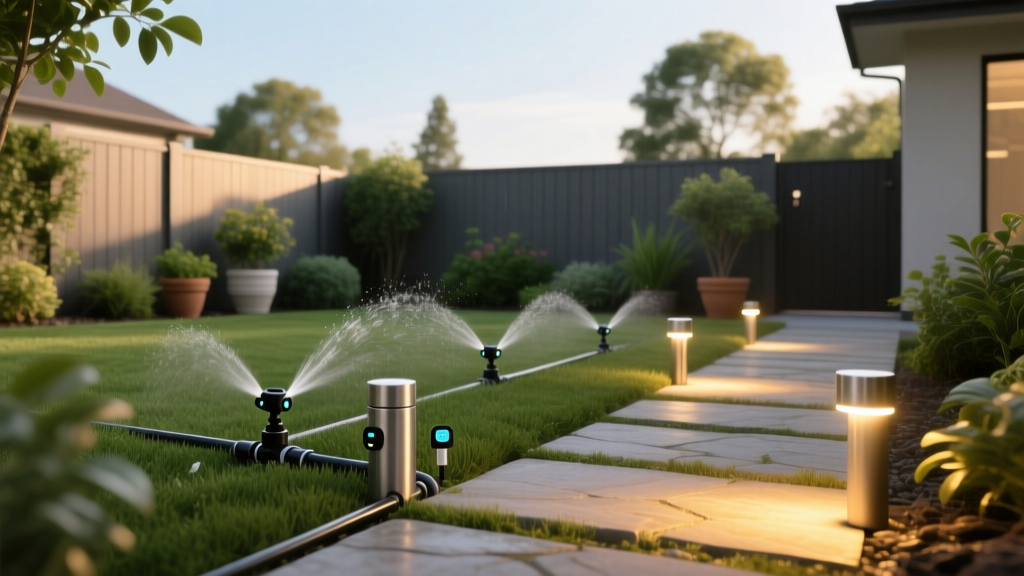
Cost Guide: Budgeting Smart Irrigation and Outdoor Lighting
James MillerPublished
Transforming Your Outdoor Space on a Budget
Bridging the gap between indoor comfort and outdoor beauty requires more than just comfortable patio furniture and a few potted plants. Modern homeowners are increasingly looking toward smart home integration and energy-efficient landscaping to create seamless, sustainable outdoor living spaces. However, upgrading your yard with smart irrigation and low-voltage LED lighting can seem like a daunting financial investment. Without a clear budget, costs can quickly spiral out of control due to hidden labor fees, incompatible technology, and improper material sizing.
This comprehensive cost and budgeting guide breaks down the exact expenses associated with installing smart irrigation controllers, soil moisture sensors, and energy-efficient outdoor lighting. Whether you are planning a complete landscape overhaul or a phased weekend DIY project, understanding the baseline costs, product pricing, and long-term return on investment (ROI) will help you make informed decisions that save money and protect the environment.
Breaking Down Smart Irrigation Costs
Traditional sprinkler systems operate on rigid timers, often watering your lawn during rainstorms or peak heat hours, leading to massive water waste and inflated utility bills. Smart irrigation systems use local weather data, soil moisture levels, and evapotranspiration rates to optimize watering schedules automatically.
Smart Controllers and Hubs
The brain of your smart irrigation system is the Wi-Fi-enabled controller. Prices vary based on the number of zones and the sophistication of the weather algorithms.
- Rachio 3 Smart Sprinkler Controller: Widely considered the gold standard for smart watering, the 8-zone model retails for approximately $229, while the 16-zone version costs around $279. It integrates seamlessly with Alexa, Google Home, and Apple HomeKit.
- Orbit B-hyve XR: A more budget-friendly option that supports both Wi-Fi and Bluetooth, allowing for manual control even if your internet goes down. The 8-zone indoor/outdoor model typically costs between $130 and $150.
- Netro Sprite: A compact, entry-level smart controller priced around $100 to $120, ideal for smaller urban gardens with 4 to 8 zones.
Sensors and Valve Upgrades
To maximize the efficiency of your smart controller, you need accurate environmental data. While many controllers use hyper-local weather stations, adding physical sensors provides ground-truth accuracy.
- Rain and Freeze Sensors: A basic wireless rain sensor costs between $30 and $50. This is a mandatory code requirement in many municipalities and acts as a fail-safe to prevent watering during freezing conditions.
- Soil Moisture Sensors: Devices like the Toro Precision Soil Sensor ($60 to $80) measure the actual volumetric water content in your root zone, preventing overwatering in shaded or poorly draining areas.
- Flow Sensors: Priced between $100 and $150, these devices monitor water usage in real-time and can automatically shut off your main valve if a pipe breaks or a sprinkler head is sheared off by a lawnmower.
Trenching, Wiring, and Labor
If you are retrofitting an existing system, you may only need to swap the controller and mount a sensor, which takes a DIYer about two hours. However, if you are installing new valves or running new sensor wires, trenching is required. Professional landscapers typically charge $8 to $12 per linear foot for trenching and pipe installation. For a standard 5,000-square-foot lawn requiring 300 feet of new trenching, expect to pay $2,400 to $3,600 in labor and materials. DIYers can rent a walk-behind trencher for about $75 to $100 per day, significantly reducing costs but requiring intense physical labor.
Budgeting for Energy-Efficient Outdoor Lighting
Outdoor lighting extends the usability of your patio and garden into the evening hours while enhancing home security. Transitioning from traditional halogen or incandescent fixtures to low-voltage LED and smart lighting drastically reduces energy consumption and maintenance costs.
LED Fixtures vs. Halogen
While traditional halogen path lights might only cost $15 to $20 per fixture, they consume 35 to 50 watts each and require frequent bulb replacements. Integrated LED fixtures cost more upfront—typically $35 to $75 per fixture for high-quality brass or copper models from brands like Kichler or WAC Lighting—but they consume only 3 to 5 watts and boast a lifespan of 40,000 to 50,000 hours.
Transformers and Wiring
Low-voltage lighting requires a transformer to step down your home's 120V electricity to a safe 12V or 15V. You must calculate the total wattage of all your fixtures and add a 20% buffer to determine the transformer size.
- 300-Watt LED Transformer: A high-quality, multi-tap transformer with a built-in photocell and smart timer costs between $120 and $180.
- Low-Voltage Wire: For runs under 50 feet, 14-gauge wire ($0.40 per foot) is sufficient. For longer runs to prevent voltage drop, upgrade to 12-gauge wire ($0.60 per foot) or 10-gauge wire ($0.90 per foot) for the main trunk lines.
Smart Lighting Integration
For homeowners wanting app-based control, color changing, and motion activation, smart outdoor lighting is the way to go. The Philips Hue Outdoor line offers excellent integration but commands a premium, with a single smart pathway light costing upwards of $100. Alternatively, the Ring Smart Lighting ecosystem offers motion-activated pathway lights and spotlights for $30 to $50 each, though they require the Ring Bridge ($50) to connect to your Wi-Fi network.
Cost Comparison: Traditional vs. Smart Systems
To understand the true financial impact of these upgrades, it is essential to look beyond the initial purchase price and consider the long-term operational costs. The following table outlines the estimated costs for a standard 5,000-square-foot suburban lawn and garden setup.
| Upgrade Component | Traditional System Cost | Smart/Efficient System Cost | Estimated Annual Savings |
|---|---|---|---|
| Irrigation Controller | $60 (Standard Timer) | $250 (Wi-Fi Smart Controller) | $150 - $250 (Water Bill) |
| Path Lighting (10 fixtures) | $200 (Halogen) | $500 (Integrated LED) | $80 - $120 (Electricity) |
| Transformer & Timer | $80 (Mechanical) | $150 (Smart Multi-Tap) | $20 - $40 (Energy Waste) |
| Sensors (Rain/Soil) | $0 (None) | $90 (Rain + Soil Sensor) | $50 - $100 (Overwatering) |
| Total Upfront Cost | $340 | $990 | $300 - $510 / Year |
Long-Term ROI and Utility Savings
The upfront premium for smart and efficient systems is quickly offset by utility savings and municipal rebates. According to the Environmental Protection Agency (EPA) WaterSense program, homes with automatically adjusting smart irrigation controllers can save an average of 7,600 gallons of water annually. In regions with tiered water pricing or drought surcharges, this translates to significant financial relief during the peak summer months.
Furthermore, the U.S. Department of Energy reports that LED lighting uses at least 75% less energy, and lasts 25 times longer, than incandescent lighting. When you factor in the cost of hiring a landscaper to replace burned-out halogen bulbs ($75 to $100 per service call), the ROI on integrated LED fixtures is often realized within the first two years of installation.
Pro Tip: Before purchasing your smart irrigation controller, check your local municipal water provider's website. Many cities offer rebates ranging from $50 to $150 for installing EPA WaterSense-certified smart controllers, effectively cutting your upfront hardware costs in half.
Hidden Costs to Watch Out For
When drafting your budget, be sure to account for these frequently overlooked expenses:
- Wi-Fi Range Extenders: Smart controllers and lighting hubs require a stable 2.4GHz Wi-Fi signal. If your router is on the opposite side of your home, you may need an outdoor-rated Wi-Fi extender ($50 to $100) or a mesh network node.
- Winterization and Blowouts: If you live in a freezing climate, your smart irrigation system must be winterized using an air compressor. Professional blowout services cost $75 to $150 per autumn.
- Permit Fees: While swapping a controller rarely requires a permit, trenching new mainlines or hardwiring a new 120V outdoor transformer may require an electrical or plumbing permit, costing $50 to $200 depending on your local jurisdiction.
- Anti-Siphon Valves: Upgrading old, leaking inline valves to modern anti-siphon valves is crucial for preventing backflow contamination. Budget $40 to $60 per valve, plus PVC primer and cement.
Step-by-Step Budgeting Plan
To avoid financial strain, tackle your outdoor living upgrades in strategic phases.
Phase 1: The Brain and the Bulbs (Spring)
Start by upgrading your irrigation controller and swapping out high-traffic halogen bulbs for drop-in LED replacements. This phase requires minimal trenching and offers immediate water and energy savings. Budget: $300 - $450.
Phase 2: Sensor Integration and Hardscape Lighting (Summer)
Install soil moisture sensors in problematic garden beds and run low-voltage wiring for patio and pathway lighting. Utilize the long summer evenings to test lighting angles and sensor accuracy. Budget: $400 - $700.
Phase 3: Full System Automation (Autumn)
Add flow sensors, smart lighting hubs, and Wi-Fi extenders. Autumn is also the ideal time to audit your system, adjust sprinkler head alignments, and prepare the smart controller for winter dormancy. Budget: $200 - $400.
Conclusion
Budgeting for smart irrigation and outdoor lighting is an exercise in balancing upfront capital with long-term ecological and financial sustainability. By selecting the right Wi-Fi controllers, utilizing low-voltage LED fixtures, and taking advantage of municipal rebates, you can create a stunning, energy-efficient outdoor living space that pays for itself over time. Plan your phases carefully, measure your wire runs accurately, and let smart technology handle the heavy lifting of landscape maintenance.
