Gardening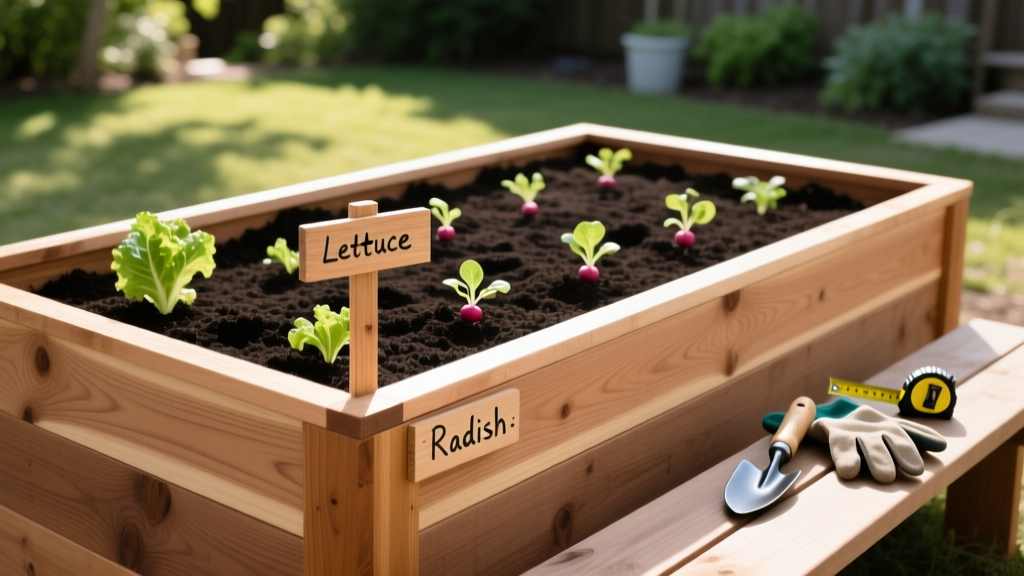
Easy Guide: Build a 4x8 Cedar Raised Bed for Veggies
Sarah ChenPublished
Introduction to Raised Bed Gardening
Building a raised bed is one of the most rewarding weekend projects for any home gardener. Raised beds offer superior drainage, warmer soil in the spring, and a clear barrier against encroaching weeds and lawn grass. While you can construct raised beds from various materials, a 4x8-foot frame made from Western Red Cedar remains the gold standard for vegetable gardening. This comprehensive, practical guide will walk you through the exact steps, tools, and materials needed to build a durable cedar raised bed, along with the precise soil calculations required to fill it for a bountiful harvest.
Why Choose Western Red Cedar?
When selecting lumber for a garden bed that will be in constant contact with moist soil, rot resistance is paramount. Pressure-treated pine is cheaper, but many gardeners prefer to avoid the chemicals used in the treatment process when growing edible crops. Western Red Cedar is naturally resistant to rot, decay, and insect attacks. According to Cornell University's Department of Horticulture, Western Red Cedar contains natural oils called thujaplicins, which act as a built-in fungicide and insect repellent. This means your cedar bed can easily last 10 to 15 years without any chemical sealants, making it a safe and long-lasting investment for your vegetable garden.
Tools and Materials Needed
Before heading to the lumber yard, gather the following tools and materials. The estimated costs are based on national averages for standard home improvement stores.
Materials List & Estimated Costs
- (4) 2x6x8 Western Red Cedar Boards: These will form the long and short sides of the bed. (Approx. $18-$25 each | Total: $72-$100)
- (1) 2x4x8 Western Red Cedar Board: This will be cut into corner braces and a center cross-support. (Approx. $8-$12)
- (1) Box of #10 3-inch Exterior Wood Screws: Star-drive (Torx) screws like GRK Fasteners are highly recommended to prevent stripping. (Approx. $15)
- (1) Box of #8 2-inch Exterior Wood Screws: Used for attaching the corner braces. (Approx. $10)
- Landscaping Fabric (Optional): To line the bottom if you have severe weed or gopher issues. (Approx. $20)
Total Estimated Material Cost: $105 - $157
Tools Required
- Miter saw or circular saw
- Power drill/driver with Torx and Phillips bits
- Tape measure and speed square
- 4-foot carpenter's level
- Shovel and steel rake
- Safety glasses and work gloves
Step-by-Step Construction Guide
Step 1: Cut the Corner Braces and Cross-Support
Take your 2x4x8 cedar board and cut it into four 10-inch lengths. These will serve as your internal corner braces. From the remaining wood, cut one 4-foot length; this will be your center cross-support. The cross-support is absolutely critical for an 8-foot long bed. Without it, the outward pressure of 1.5 cubic yards of wet soil will cause the long sides to bow outward and eventually split the screws over time.
Step 2: Assemble the Short and Long Sides
Lay two 8-foot boards parallel to each other on a flat surface like a driveway or lawn. Measure and mark the center point of the boards (at the 4-foot mark). Place your 4-foot 2x4 cross-support horizontally across the center mark, flush with the top edge of the 8-foot boards. Secure the cross-support using four 3-inch exterior screws driven through the outside of the 2x6 boards into the ends of the 2x4. Repeat this process for the second set of 8-foot boards.
Step 3: Join the Corners
Stand one of your assembled long sides upright. Take a 10-inch 2x4 corner brace and place it vertically inside the end of the long side, ensuring it is perfectly flush with the top and bottom edges. Secure it with three 2-inch screws driven through the outside of the 2x6 into the 2x4 brace. Next, slide a short 4-foot board into place, butting it against the corner brace. Drive three 3-inch screws through the short board into the corner brace. Repeat this for all four corners until the rectangular frame is fully assembled.
Step 4: Placement and Leveling
According to the Utah State University Extension, a raised bed width of 4 feet is ideal because it allows the average gardener to reach the center from either side without stepping on the soil, which prevents compaction. Move your assembled 4x8 frame to its permanent location. Ensure the site receives at least 6 to 8 hours of direct sunlight daily. Use a shovel to dig a shallow trench (about 1 inch deep) along the perimeter where the bed will sit. This helps lock the bed in place and prevents soil from washing out the bottom. Place the bed in the trench and use your 4-foot level to check all sides. Adjust the soil beneath the frame until the entire structure is perfectly level.
Filling Your New Raised Bed
A 4x8-foot raised bed built with two stacked 2x6 boards will have an internal height of roughly 10.5 inches (the actual width of a 2x6 is 5.5 inches). To calculate the volume: 4 feet x 8 feet x 0.875 feet = 28 cubic feet. You will need approximately 1.1 cubic yards of soil to fill the bed to about an inch below the rim.
Do not fill your raised bed with native garden soil or heavy topsoil, as it will compact heavily in a confined space and restrict root growth. Instead, use a lightweight, nutrient-dense blend. Below is a comparison chart of common soil amendments to help you formulate the perfect mix.
| Soil Component | Recommended % | Primary Purpose | Est. Cost per Cu Ft |
|---|---|---|---|
| High-Quality Compost | 30% | Provides slow-release nutrients and beneficial microbes. | $1.50 - $2.50 |
| Coconut Coir | 30% | Retains moisture while ensuring excellent drainage and aeration. | $1.00 - $1.80 |
| Coarse Vermiculite | 20% | Lightens the soil texture and holds water/nutrients for roots. | $2.50 - $3.50 |
| Peat Moss | Alternative to Coir | Acidifies soil slightly and retains moisture (less sustainable). | $0.80 - $1.20 |
| Worm Castings | 5% | Premium organic fertilizer and soil structure enhancer. | $4.00 - $6.00 |
Mixing and Filling Instructions
For the best results, mix your soil components on a tarp or in a wheelbarrow before adding them to the bed. This ensures an even distribution of nutrients and moisture-retaining materials. As you shovel the mix into the cedar frame, water it lightly every few inches. This helps settle the soil and eliminates large air pockets. Leave about 1 to 2 inches of space at the top of the bed to allow for mulch application and to prevent soil runoff during heavy rains.
Maintenance and Longevity Tips
While Western Red Cedar is naturally rot-resistant, you can extend its lifespan even further with a few simple maintenance steps. Once a year, preferably in early spring before planting, apply a coat of raw, food-safe linseed oil to the exterior and interior walls of the bed. This replenishes the wood's natural oils, prevents UV graying, and adds an extra layer of moisture protection. Additionally, avoid using synthetic chemical fertilizers directly against the wood walls, as salt buildup can accelerate the degradation of the wood fibers. Instead, broadcast organic fertilizers evenly across the soil surface and water them in. By following these practical construction and maintenance steps, your 4x8 cedar raised bed will serve as the productive centerpiece of your vegetable garden for well over a decade.
