Gardening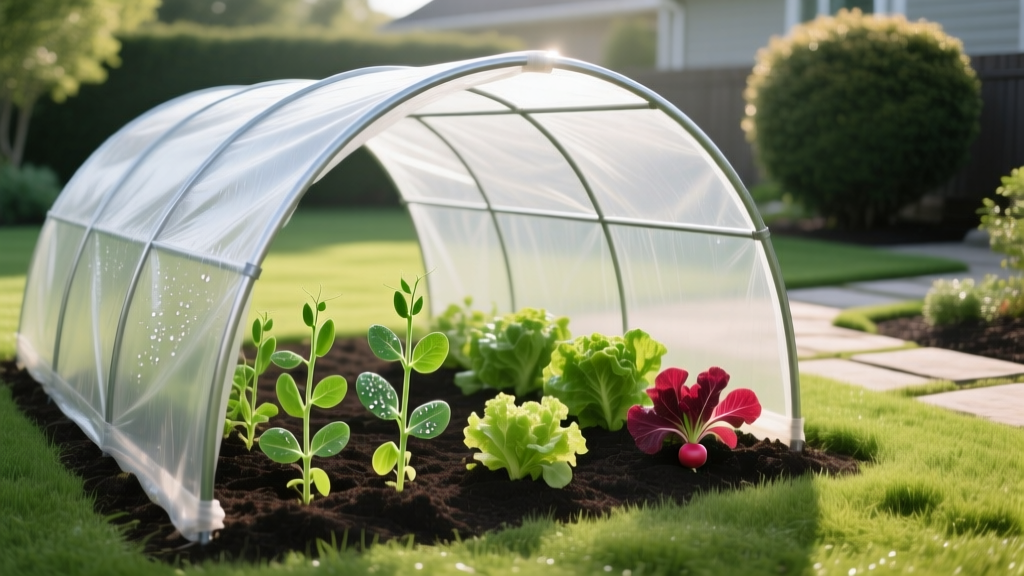
Building A Simple Hoop House For Early Spring Vegetable...
Why Hoop Houses Extend the Growing Season
A hoop house—also known as a high tunnel—is a simple, unheated, plastic-covered structure that passively captures solar energy to warm soil and air. Unlike greenhouses, it lacks active heating or ventilation systems, relying instead on passive thermal mass and manual venting. For early spring vegetable production, hoop houses raise average soil temperatures by 6–10°F compared to open fields (University of Vermont Extension, 2021). This modest but consistent warmth allows direct-seeded crops like spinach and radishes to germinate 10–14 days earlier and transplanted brassicas to establish roots without frost shock. Crucially, hoop houses also reduce wind desiccation and protect tender seedlings from late-spring hail—a documented risk in the Midwest Corn Belt.
Design and Construction Essentials
Constructing a functional hoop house begins with site selection: choose level, well-drained ground with full southern exposure and minimal tree canopy. A standard 12-foot-wide × 24-foot-long unit accommodates two 30-inch-wide raised beds with 24-inch access paths between them. The frame is typically built from 1-inch-diameter galvanized steel conduit bent into 6-foot-radius arcs spaced 4 feet apart. End walls use treated 2×4 lumber anchored to concrete footings set at least 18 inches deep in USDA Zone 5 and colder.
Material Specifications and Sourcing
Use 6-mil UV-stabilized polyethylene greenhouse film rated for ≥4 years of outdoor exposure. Reinforce corners and door openings with polyester strapping rated at 150 lbs tensile strength. Ventilation is achieved through roll-up side curtains—installed using spring-loaded bungee cords—and a double-hinged end-wall door measuring 36 inches wide × 78 inches tall.
Soil Preparation Inside the Tunnel
Before covering the frame, amend native soil with 2 inches of composted dairy manure (tested for pathogens at <10 CFU/g E. coli) and incorporate using a broadfork—not a rototiller—to preserve soil structure. Conduct a pre-plant soil test through your local extension lab; target pH 6.2–6.8, phosphorus 30–50 ppm (Bray-1), and potassium 180–220 ppm. At Cornell University’s Long Island Horticultural Research & Extension Center, trials showed hoop-house soils averaged 1.8°C warmer at 4-inch depth than adjacent field plots from March 15 through May 10.
Early Spring Crop Selection and Planting Schedule
Select cold-tolerant, short-season vegetables proven to thrive under low-light, high-humidity conditions. Prioritize varieties bred for tunnel production—such as ‘Mercury’ spinach, ‘Purple Top White Globe’ turnips, and ‘Bolero’ carrots—over standard field types. Avoid warm-season crops like tomatoes until after the last frost date, even inside the tunnel.
Zone-Specific Planting Windows
Planting dates vary significantly by USDA hardiness zone due to differing base temperatures and frost probabilities. The following schedule reflects recommendations validated across Cooperative Extension trials in New York, Ohio, and Oregon:
- USDA Zone 3b (e.g., Fargo, ND): Direct-seed spinach March 20–April 5; transplant kale April 15–25
- USDA Zone 5a (e.g., Des Moines, IA): Direct-seed radishes March 10–20; transplant lettuce March 25–April 10
- USDA Zone 7a (e.g., Richmond, VA): Direct-seed arugula February 28–March 15; transplant broccoli March 1–15
- USDA Zone 9b (e.g., San Diego, CA): Direct-seed mâche October 15–November 30 (for winter/spring harvest)
Spacing is critical to airflow and disease prevention. Maintain these in-tunnel distances:
- Spinach: 4 inches between plants, 12 inches between rows
- Kale: 15 inches between plants, 24 inches between rows
- Carrots: 1 inch between seeds, thinned to 3 inches, with 12-inch row spacing
- Lettuce (butterhead): 10 inches between plants, 15 inches between rows
- Radishes: 1 inch between seeds, thinned to 2 inches, with 6-inch row spacing
Yield Performance and Harvest Management
Hoop houses consistently increase early-season yields over open-field production. Data from the University of Minnesota Extension’s 2020–2022 multi-site trial across seven counties showed:
“Spinach grown under high tunnels harvested 3.2 lb/10 ft² in April versus 1.1 lb/10 ft² in open fields—nearly a threefold increase in marketable yield before field planting even begins.” — University of Minnesota Extension, 2022
Harvest timing must be precise. Spinach bolts rapidly once daily highs exceed 72°F for three consecutive days; begin cutting when outer leaves reach 4–6 inches long. Carrots develop optimal sweetness when harvested at ¾ inch diameter—measured with calipers—not by calendar date. Use sanitized harvest knives and place produce directly into chilled, food-grade bins to maintain shelf life.
Soil Health and Rotation Protocols
Continuous cropping in a fixed hoop house footprint risks pathogen buildup and nutrient depletion. Implement a strict four-year rotation: Year 1—leafy greens; Year 2—roots (carrots, radishes); Year 3—brassicas (kale, broccoli); Year 4—legumes (peas, fava beans) to fix nitrogen. Between rotations, solarize soil by covering moistened beds with clear 6-mil poly for six weeks when ambient air exceeds 85°F for ≥8 hours daily—proven to reduce Verticillium dahliae inoculum by 92% (RHS Wisley Trials, 2019).
Monitor organic matter annually. At the Rodale Institute’s Pennsylvania farm, hoop-house plots maintained 5.4% SOM after five years using cover-crop interseeding (‘Balkan’ vetch sown between spinach rows in early April) and annual compost top-dressing of ½ inch.
Water management is equally vital. Drip tape with 0.25-gph emitters spaced every 6 inches delivers water directly to root zones, reducing foliar moisture and downy mildew incidence. Run emitters for 30 minutes every other day in March, increasing to daily 45-minute cycles in April as evapotranspiration rises.
Record all inputs and harvests in a physical logbook or digital spreadsheet. Note soil temperature at 4-inch depth each morning, along with vent position (fully open, half-rolled, closed) and precipitation. These data inform future planting decisions and are required for Organic Certification renewal through the Pennsylvania Department of Agriculture.
Sanitation prevents carryover disease. After final harvest, remove all plant debris, wash drip tape with 3% hydrogen peroxide solution, and disinfect tools with 10% bleach. Replace poly film every third season—or sooner if light transmission drops below 75%, measured with a quantum sensor calibrated to PAR (photosynthetically active radiation).
Success hinges on observation—not just installation. Walk the tunnel at dawn and dusk weekly to check for condensation patterns, insect activity, and leaf discoloration. Early detection of aphids on kale petioles or powdery mildew on spinach undersides allows targeted intervention with OMRI-listed potassium bicarbonate sprays, avoiding broad-spectrum impacts.
At Michigan State University’s Southwest Michigan Research and Extension Center, growers using consistent recordkeeping and soil testing increased first-harvest yields by 27% over three growing seasons compared to those relying solely on calendar-based schedules.
The Royal Horticultural Society advises against overcrowding beyond recommended spacings—even for “cut-and-come-again” crops—as reduced airflow elevates humidity above 85%, triggering Botrytis cinerea outbreaks on mature lettuce heads.
For growers in USDA Zones 4–6, prioritize succession planting every 10 days for spinach and lettuce to extend harvest windows. A single 12×24-foot hoop house can yield up to 140 pounds of mixed spring greens—enough to supply a 20-member CSA share group for six weeks.
| Crop | Days to Maturity (Tunnel) | Avg. Yield per 10 ft² | Optimal Harvest Window |
|---|---|---|---|
| Spinach | 38–42 days | 3.2 lb | April 10–May 20 |
| Kale (‘Winterbor’) | 52–58 days | 4.7 lb | April 25–June 15 |
| Carrots (‘Nantes’) | 65–70 days | 2.9 lb | May 10–June 30 |
Always consult your county’s Cooperative Extension office for localized frost-date maps and soil-test interpretation. In Oregon, the OSU Extension Service offers free hoop-house design review for small farms; in Ohio, the Ohio State University South Centers provides on-farm technical assistance for tunnel ventilation calibration.
Remember: a hoop house amplifies what you already do well in the garden—it does not replace sound soil stewardship, attentive scouting, or timely harvest. Its power lies in precision timing, not passive protection.
