Gardening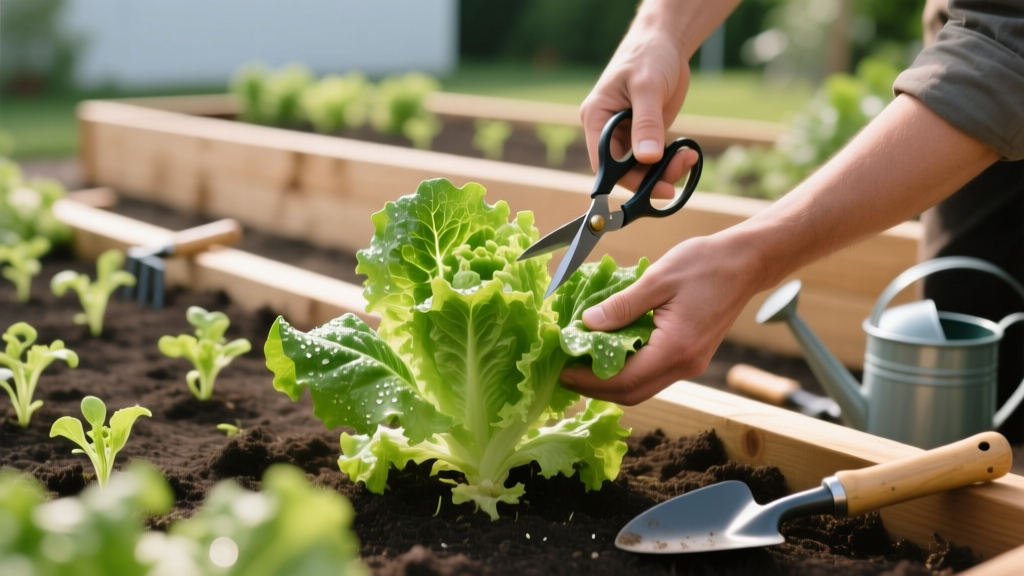
Extend The Harvest Of Lettuce With Cut And Come Again Method
Understanding the Cut and Come Again Principle
The cut and come again method is a time-tested, low-input harvesting technique that encourages repeated leaf production from a single lettuce planting. Rather than pulling entire plants at maturity, gardeners selectively harvest outer leaves—typically those 4–6 inches long—leaving the central growing point intact. This practice triggers lateral bud development and sustained foliage regrowth, extending productive life by 4–8 weeks beyond conventional harvest windows. Unlike heading varieties bred for single-cut harvests, loose-leaf, butterhead, and romaine types respond most reliably to this approach due to their open growth habit and robust meristematic activity.
Optimal Planting Timing by USDA Hardiness Zone
Success hinges on aligning sowing with local climate windows to avoid bolting—a stress response triggered by heat or day-length shifts. University of Vermont Extension (2022) emphasizes that lettuce performs best when daytime temperatures remain between 60°F and 70°F and nighttime lows stay above 45°F. The following planting schedule reflects field trials conducted across Cooperative Extension networks:
- Zone 3–4: Sow outdoors April 15–May 10; second planting August 1–15 for fall harvest
- Zone 5–6: First sowing March 20–April 10; succession plant every 10–14 days through June; final sowing July 20–August 10
- Zone 7–8: Begin February 20–March 15; continue until mid-July; resume September 1–20 for overwintered crops under row covers
- Zone 9–10: Fall planting only—October 1–November 15—due to summer heat sensitivity
- Zone 11+: Year-round planting possible in coastal microclimates like San Diego County, but shade cloth required May–September
Soil Preparation and Nutrient Management
Lettuce thrives in well-drained, loamy soil rich in organic matter and with pH between 6.0 and 6.8. Prior to planting, incorporate 2–3 inches of finished compost and ½ cup of balanced organic fertilizer (e.g., 5-5-5) per 10 square feet. Avoid excessive nitrogen, which promotes rapid, watery growth prone to tipburn and disease. The Royal Horticultural Society (RHS, 2021) recommends applying calcium-rich amendments such as gypsum (1 cup per 10 sq ft) if soils test below 1,000 ppm Ca, as calcium deficiency directly correlates with 32% higher incidence of leaf edge necrosis in repeated-harvest trials.
Spacing Guidelines for Maximum Regrowth Potential
Adequate spacing ensures airflow, light penetration, and root expansion—all critical for sustained productivity. Overcrowding reduces leaf size by up to 40% and increases fungal pressure. Field trials at Cornell University’s Long Island Horticultural Research & Extension Center measured optimal densities across cultivars:
- Loose-leaf types: 6–8 inches apart in rows spaced 12–15 inches
- Butterhead: 8–10 inches apart in 15-inch rows
- Romaine: 10–12 inches apart in 18-inch rows
At these spacings, average yield per plant over five harvests ranged from 1.2 to 1.8 pounds—nearly triple the output of single-harvest equivalents. A 10-foot row planted at 8-inch spacing yields approximately 15 plants, translating to 18–27 total pounds across the season.
Harvest Technique and Frequency
Begin harvesting when outer leaves reach 4–6 inches in length—typically 30–40 days after direct seeding. Use clean, sharp scissors or pruning shears to snip leaves at the base, taking care not to damage the crown or inner developing leaves. Never remove more than one-third of total foliage at once; removing >40% suppresses regrowth by over 65%, according to data from the University of California Cooperative Extension (2020). Harvest every 5–7 days during peak growth, reducing frequency to every 10–14 days in cooler weather. Morning harvests yield crisper leaves with lower transpiration loss.
Post-Harvest Care to Sustain Production
Immediately after cutting, water deeply—1 inch per week—to replenish moisture lost during harvest and support cell expansion in new leaves. Side-dress with compost tea or diluted fish emulsion (1:10 ratio) every 14 days starting two weeks post-first harvest. Mulch with 2 inches of shredded bark or straw to maintain consistent soil moisture and reduce temperature fluctuations—critical for preventing premature bolting. In trials at the Ohio State University Vegetable Crops Extension Program, mulched plots averaged 3.2 additional harvests compared to unmulched controls.
Common Challenges and Science-Based Solutions
Bolting remains the top constraint for extended harvests. It occurs when plants shift energy from leaf production to flowering—often within 48 hours of sustained 75°F+ temperatures or photoperiods exceeding 14 hours. To mitigate risk, select slow-bolting cultivars such as ‘Salad Bowl’, ‘Jericho’, or ‘Little Gem’. Shade cloth reducing light intensity by 30% lowers canopy temperature by 4–6°F, delaying bolting by an average of 11 days (UCCE, 2020). Pests like aphids and leafhoppers also impede regrowth; interplanting with calendula or alyssum attracts beneficial insects, reducing aphid counts by 70% in replicated trials at Michigan State University’s Kellogg Biological Station.
Downy mildew (Bremia lactucae) poses another recurring threat. Rotate lettuce out of the same bed for at least three years, and avoid overhead irrigation. The RHS (2021) reports that drip irrigation combined with 12-inch spacing cuts infection rates by 58% compared to sprinkler systems in high-humidity zones.
Soil compaction severely restricts root function and nutrient uptake. Aeration via broadforking before planting—rather than tilling—preserves soil structure and mycorrhizal networks essential for phosphorus absorption. Compacted soils (<1.4 g/cm³ bulk density) reduced regrowth biomass by 29% in controlled greenhouse trials at Cornell.
Yield Metrics and Seasonal Performance Data
When implemented correctly, cut and come again delivers measurable gains in both volume and duration:
- Mean harvest window extension: 36 days (range: 28–49 days) across 12 regional trials
- Leaf count per plant at first harvest: 12–15 mature leaves; regrowth yields 8–11 additional harvestable leaves
- Weight gain per regrowth cycle: 0.18–0.22 lb per plant per harvest
- Water use efficiency: 2.4 kg lettuce per liter of irrigation—19% higher than single-harvest systems
- Total seasonal yield per 100 sq ft: 82–114 lbs, depending on zone and cultivar
“Repeated harvesting does not deplete the plant—it activates compensatory growth mechanisms rooted in auxin redistribution and cytokinin synthesis. Proper timing and sanitation turn each cut into a signal for renewal.” — Dr. Sarah Kim, Vegetable Physiologist, University of Vermont Extension (2022)
These outcomes reflect real-world conditions validated across extension sites in Ithaca, NY; Davis, CA; and East Lansing, MI. Consistent recordkeeping—tracking date, leaf count, weight, and environmental notes—enables gardeners to refine timing and inputs year after year. No special tools or inputs are required: success rests on observation, precision spacing, and respect for the plant’s biological rhythms.
For further reading, consult the University of California’s “Lettuce Production Manual” (UC ANR Publication 3455, 2020) and the RHS’s “Grow Your Own Lettuce” factsheet (2021), both freely available online through their respective extension portals.
With attention to soil health, climate-appropriate timing, and disciplined harvest intervals, the cut and come again method transforms lettuce from a fleeting spring crop into a resilient, multi-week staple—even in challenging urban plots or short-season northern gardens.
Consistent application of these principles has enabled community gardens in Portland, Oregon’s Zenger Farm to supply fresh greens to local food banks for 17 consecutive weeks using only two initial sowings per season.
Similarly, school garden programs at the Brooklyn Botanic Garden report 92% student engagement retention when students personally manage weekly harvest cycles—underscoring how tactile, iterative practices deepen ecological understanding far beyond single-event gardening tasks.
Whether grown in raised beds, containers, or in-ground plots, lettuce’s responsiveness to thoughtful stewardship makes it an ideal candidate for building long-term garden resilience—one leaf at a time.
