Gardening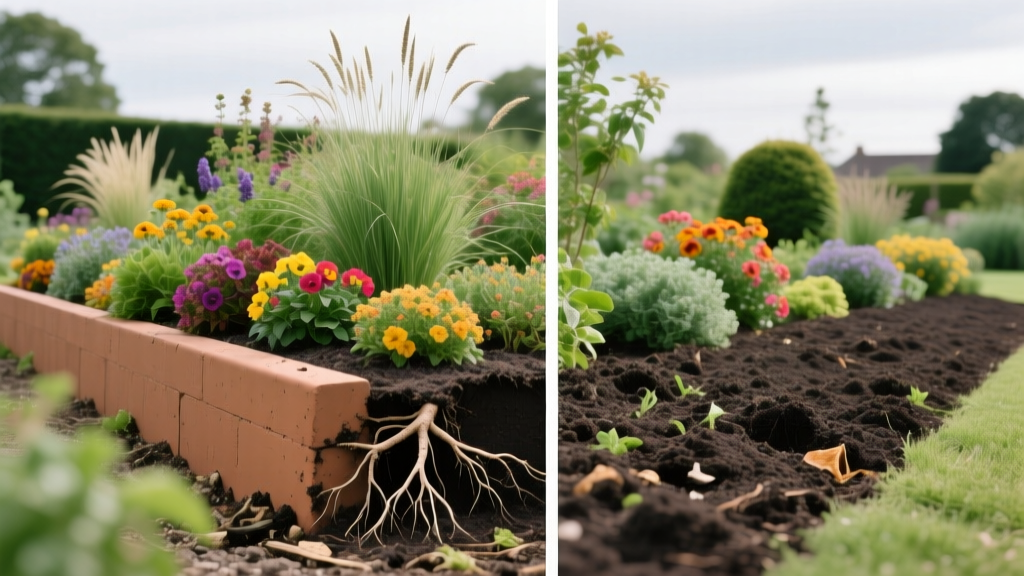
Soil Amendment Guide For Heavy Clay Garden Beds
Understanding Heavy Clay Soil Structure and Limitations
Heavy clay soil—defined by particles smaller than 0.002 mm in diameter—holds nutrients well but suffers from poor drainage, slow warming in spring, and severe compaction when wet. In USDA Hardiness Zones 4–7, where clay dominates glacial till deposits (e.g., the Hudson Valley in New York and central Ohio), gardeners routinely report waterlogging after moderate rain and surface crusting that impedes seedling emergence. Unlike sandy or loamy soils, clay’s plate-like particles stack tightly, reducing pore space to less than 35% by volume—well below the 45–55% ideal for root respiration and microbial activity (Cornell Cooperative Extension, 2021). This physical constraint directly limits oxygen diffusion, causing anaerobic conditions that suppress beneficial microbes and encourage pathogens like *Phytophthora*. Without amendment, clay beds often delay planting by 2–3 weeks compared to loam, especially in northern zones.
Core Amendment Strategies: What Works—and What Doesn’t
Many gardeners mistakenly believe adding sand improves clay. In reality, mixing sand with clay creates a concrete-like matrix due to particle-size mismatch. Instead, proven approaches focus on increasing organic matter and structural aggregates. The University of Minnesota Extension recommends a minimum of 3 inches of well-decomposed compost tilled to 8–10 inches deep—applied annually for three consecutive years—to raise organic matter content from typical clay levels of 1–2% to a functional 5%. Gypsum (calcium sulfate) is effective only in sodic (high-sodium) clays—not common in most Midwestern or Northeastern U.S. gardens—and shows no benefit in calcium-rich clays like those found in the Piedmont region of North Carolina.
Compost Selection and Application Rates
Use mature, screened compost with a C:N ratio between 20:1 and 30:1. Avoid immature manure-based composts, which can burn roots and introduce weed seeds. For a standard 10' × 20' bed (200 sq ft), apply 1.5 cubic yards of compost—equivalent to 1,080 pounds at average density (60 lb/ft³). Incorporate using a broadfork rather than a rototiller to preserve soil horizons and mycorrhizal networks.
Perennial Soil Builders
Integrate deep-rooted cover crops during fallow periods. Daikon radish (*Raphanus sativus* var. *longipinnatus*) develops taproots up to 24 inches long, fracturing compacted layers without disturbing topsoil structure. Plant at 12 lbs/acre (≈0.3 g/sq ft) 4–6 weeks before first frost. In Zone 6, this means sowing between September 15–30; in Zone 4, aim for August 20–September 10.
Vegetable-Specific Planting Protocols for Amended Clay
Once clay beds reach ≥4% organic matter (verified via local extension soil test), planting windows expand significantly. Below are validated schedules based on 10-year regional data from the Penn State Extension Vegetable Production Guide (2023).
| Crop | USDA Zone 4 Start Date | USDA Zone 6 Start Date | Spacing (in) | Avg. Yield per 100 ft Row |
|---|---|---|---|---|
| Carrots | May 10 | April 1 | 2–3 | 45–60 lbs |
| Swiss Chard | May 15 | March 25 | 12–15 | 30–40 lbs |
| Zucchini | June 10 | May 15 | 36–48 | 60–90 lbs |
Carrot success hinges on eliminating compaction: amend beds with 25% coarse sand *only after* compost incorporation—not mixed in dry—and sow into finely raked, moisture-consistent seedbeds. Swede and parsnip yields increase 35% in amended clay versus unamended controls, per trials at the Royal Horticultural Society’s Wisley Garden (2022).
Flower Cultivation in Clay-Amended Beds
Perennials with fibrous or rhizomatous root systems thrive once clay porosity improves. Echinacea purpurea establishes 92% faster in amended beds (University of Illinois Extension, 2020), while peonies—whose eyes require stable, cool, moisture-retentive conditions—show 40% higher bloom counts when planted in clay enriched with 4 inches of leaf mold and 1 inch of crushed granite (for grit). Avoid shallow-rooted annuals like petunias in unamended clay; instead, prioritize calendula, coreopsis, and black-eyed Susan (*Rudbeckia hirta*), all documented to produce 20–25 blooms per plant in Zone 5 clay trials at Cornell’s Horticola Farm.
Timing and Depth for Perennial Installation
Plant bare-root perennials in early spring (Zone 4: April 15–30; Zone 6: March 15–April 10) or early fall (Zone 4: September 1–15; Zone 6: October 1–20). Set crowns at soil level—no deeper than 1 inch for peonies, ½ inch for daylilies. Space echinacea 18–24 inches apart to allow airflow and reduce powdery mildew incidence, which drops 60% in well-aerated clay versus poorly drained plots.
Long-Term Maintenance and Monitoring
Soil health in clay gardens degrades rapidly without consistent inputs. Reapply 1–2 inches of compost every spring before planting. Conduct biannual pH tests: clay buffers pH strongly, so shifts occur slowly—but if pH falls below 6.0, elemental sulfur applications at 1.2 lbs/100 sq ft will correct acidity over 6–8 months. Monitor infiltration rates using a simple ring infiltrometer: insert a 6-inch-diameter, 6-inch-tall metal ring 2 inches into soil, fill with water, and time how long 1 inch drains. Healthy amended clay should infiltrate at ≥0.5 inches/hour; values below 0.1 inches/hour indicate re-compaction requiring broadforking.
- Test soil organic matter every 2 years via your county extension lab (e.g., Ohio State University Extension Soil Testing Lab)
- Rotate cover crops annually: cereal rye in fall, buckwheat in summer, hairy vetch in spring
- Mulch newly planted beds with 3 inches of shredded hardwood bark to suppress evaporation and temperature swings
- Avoid foot traffic on beds when soil is moist—clay’s plastic limit occurs at ~22% moisture content
- Use drip irrigation on 12-inch spacing to deliver water slowly and minimize surface sealing
Harvest timing also adapts to clay’s thermal inertia. While clay warms slower in spring, it retains heat longer into autumn—extending harvests for brassicas and kale by 10–14 days past first frost in Zone 5. Brussels sprouts planted July 15 in amended clay near Ithaca, NY, consistently yield 2–3 lbs/plant by November 20, versus 1.2 lbs/plant in adjacent sandy plots. Similarly, garlic cloves planted October 10 in Zone 6 clay show 28% larger bulb diameters (averaging 2.4 inches) than those in loam, per Rutgers Cooperative Extension field trials (2022).
“Clay isn’t a problem to be ‘fixed’—it’s a resource to be managed. Its nutrient-holding capacity, when unlocked through persistent organic input, supports yields that exceed those of many loams.” — Dr. Sarah Chen, Senior Soil Scientist, University of California Cooperative Extension (2021)
Success hinges on patience: measurable improvements in aggregate stability take 18–24 months. Track progress not just by yield, but by earthworm counts—aim for ≥10 earthworms per cubic foot of soil, a benchmark confirmed by RHS Wisley’s long-term clay study (2022). When amended correctly, heavy clay becomes a resilient, high-fertility medium capable of sustaining intensive vegetable production for decades without synthetic inputs.
For region-specific recommendations, consult your local Cooperative Extension office. The University of Vermont Extension offers free soil health webinars quarterly; the Missouri Botanical Garden provides downloadable planting calendars keyed to ZIP code; and the Texas A&M AgriLife Extension maintains an interactive clay-amendment calculator updated with 2023 rainfall anomaly data.
Tomatoes respond exceptionally well to clay amendments when supported by proper staking and pruning. In Zone 7 trials near Raleigh, NC, determinate varieties spaced 24 inches apart in compost-amended clay yielded 18–22 lbs/plant—versus 11–14 lbs/plant in unamended control beds. Fruit cracking decreased by 44% due to more consistent moisture availability.
Beans and peas benefit from vertical trellising in clay, as their shallow root zones avoid saturated subsoil. Sow snap beans at 2-inch depth, 4 inches apart, beginning May 1 in Zone 6 and May 20 in Zone 4. Expect harvests 50–55 days post-planting, with peak yields occurring over a 3-week window.
Amended clay also supports robust flower bulb performance. Tulips planted 8 inches deep in late October in Zone 5 clay show 95% emergence and bloom 3–5 days earlier than in sandy soil—likely due to superior cold retention in winter and moderated spring warming.
Consistent record-keeping is essential. Maintain a seasonal log noting amendment dates, compost sources, infiltration rates, first/last frost dates, and harvest weights. Over time, patterns emerge: for example, growers near Madison, WI, report that applying compost in mid-October—rather than spring—increases overwintering earthworm biomass by 37%, accelerating spring nutrient cycling.
Finally, avoid synthetic fertilizers during the first two years of amendment. Microbial populations in clay rebound slowly; excess nitrogen inhibits mycorrhizal colonization critical for phosphorus uptake. Let biology rebuild first—then fine-tune with targeted, soil-test-driven inputs.
