Tree Care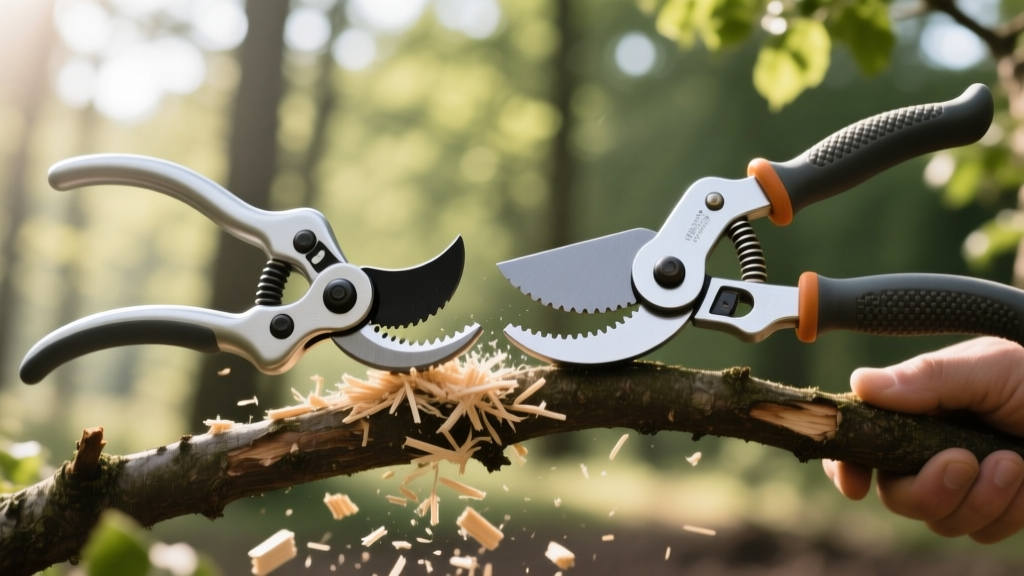
Bypass vs. Anvil Loppers: Best Tool for Tree Pruning
Sarah ChenPublished
The Importance of the Right Pruning Tool in Tree Care
Pruning is one of the most critical practices in tree care, influencing everything from structural integrity and fruit production to disease resistance and aesthetic form. However, the biological impact of pruning is entirely dependent on the quality of the cut. Using dull, inappropriate, or poorly designed tools can tear bark, crush the cambium layer, and leave jagged wounds that take years to close. These compromised wounds become prime entry points for wood-decaying fungi and boring insects.
When tackling branches that are too thick for hand pruners (typically those between 1 and 2.5 inches in diameter), arborists and home gardeners reach for loppers. The two primary designs on the market are bypass loppers and anvil loppers. While both tools provide the mechanical leverage needed to sever thick wood, their cutting mechanisms interact with living tree tissue in vastly different ways. Understanding the distinction between Product A (Bypass) and Product B (Anvil) is essential for anyone serious about long-term tree health.
Bypass Loppers: The Surgeon’s Scalpel for Live Wood
Bypass loppers operate on a scissor-like mechanism. They feature two curved blades that pass closely by one another during the cut. The upper blade is sharpened and beveled, while the lower blade acts as a thicker, hooked counter-blade that holds the branch in place and provides a surface for the sharp blade to slide against.
Pros of Bypass Loppers
- Clean, Flush Cuts: The slicing action severs wood fibers cleanly without crushing them, which is vital for preserving the branch collar.
- Close Proximity Cutting: The narrow, curved hook of the lower blade allows you to get right up against the trunk or parent branch without damaging the bark.
- Live Wood Performance: They excel at cutting live, green, and sappy wood, slicing through the cambium and xylem layers with minimal resistance.
Cons of Bypass Loppers
- Vulnerability to Hard Wood: If used on extremely hard, dead, or frozen wood, the blades can twist or separate, causing the tool to jam or the edge to chip.
- Maintenance Heavy: The precise alignment of the two blades requires regular cleaning, oiling, and occasional tightening of the pivot bolt.
Anvil Loppers: The Heavy-Duty Crusher for Deadwood
Anvil loppers utilize a knife-on-chopping-block mechanism. They feature a single, straight, sharpened upper blade that comes down directly onto a wide, flat metal base known as the 'anvil'. The anvil is typically made of softer metal or features a replaceable plastic insert to absorb the impact of the sharp blade.
Pros of Anvil Loppers
- Immense Crushing Power: The direct downward force makes anvil loppers exceptional for chopping through dead, dry, and brittle branches that would snap or twist in a bypass tool.
- Durability: Because the blades do not slide past each other, there is less risk of blade misalignment when cutting stubborn, hard wood.
- Less Effort on Deadwood: They require less lateral wrist strength when tackling thick, desiccated limbs.
Cons of Anvil Loppers
- Tissue Crushing: The wide anvil base crushes the bark and cambium layer before the blade fully severs the wood. On live trees, this causes extensive cellular damage well beyond the cut site.
- Bulky Head Design: The wide anvil makes it nearly impossible to make a flush cut near the branch collar, often leaving unsightly and dangerous stubs.
Head-to-Head Comparison: Bypass vs. Anvil Loppers
To visualize how these tools perform across different tree care scenarios, review the comparison chart below:
| Feature | Bypass Loppers | Anvil Loppers |
|---|---|---|
| Cutting Action | Slicing (Scissor-like) | Crushing (Knife-on-block) |
| Best Wood Type | Live, green, growing wood | Dead, dry, brittle wood |
| Wound Quality | Smooth, clean, minimal bark tearing | Crushed edges, high cambium damage |
| Branch Collar Access | Excellent (narrow hook) | Poor (bulky anvil base) |
| Max Recommended Size | Up to 2 inches (depending on model) | Up to 2.5 inches (dead wood only) |
| Tree Health Impact | Promotes rapid callus growth | Invites dieback and fungal pathogens |
The Biology of Tree Wounds and Tool Selection
To understand why arborists overwhelmingly prefer bypass tools for live trees, one must understand how trees react to injury. Unlike humans, trees do not 'heal' by regenerating damaged tissue. Instead, they 'seal' through a process known as the Compartmentalization of Decay in Trees (CODIT). When a branch is removed, the tree must build chemical and physical barriers to wall off the wound and prevent decay from spreading into the main trunk.
According to the International Society of Arboriculture (ISA), proper pruning cuts must be made just outside the branch bark ridge and branch collar. A bypass lopper's slicing action leaves the cells around the collar intact and ready to generate callus tissue. Conversely, an anvil lopper crushes the bark against the wood. This crushing destroys the specialized cells required for compartmentalization, effectively killing the tissue back several inches from the cut. The resulting dead stub cannot be sealed by the tree, eventually rotting and creating a hollow cavity in the trunk.
'Trees do not heal; they seal. Proper pruning cuts allow a tree to effectively compartmentalize decay, whereas crushed bark from improper tools invites disease and structural failure.'
Essential Pruning Techniques for Tree Health
Even with the correct bypass loppers in hand, technique is paramount. When removing live branches that are thicker than 1.5 inches, the weight of the branch can cause the bark to tear down the trunk before the cut is finished. To prevent this, the Arbor Day Foundation recommends the 'Three-Cut Method':
- The Undercut: Make a shallow cut on the underside of the branch, about 6 to 12 inches away from the trunk. This severs the bark and prevents tearing.
- The Relief Cut: Move an inch or two further out on the branch and cut completely through from the top. This removes the heavy weight of the limb.
- The Final Collar Cut: Using your bypass loppers or a pruning saw, make a clean, precise cut just outside the branch collar. Do not cut flush against the trunk, and do not leave a long stub.
While bypass loppers are excellent for the final collar cut on smaller branches, branches exceeding 2 inches in diameter should generally be transitioned to a high-quality pruning saw to avoid over-stressing the lopper's pivot bolt.
Key Features to Look For When Buying
If you are investing in a pair of bypass loppers for your landscape, prioritize the following features to ensure longevity and ease of use:
- Compound Action or Ratcheting Mechanisms: These gears multiply your hand strength, allowing you to cut 2-inch hardwood branches with a fraction of the effort.
- High-Carbon Steel Blades: Carbon steel holds a razor-sharp edge much longer than stainless steel, though it requires wiping down after use to prevent rust.
- Telescopic Handles: Aluminum telescopic handles allow you to reach higher into the canopy without a ladder, while keeping the tool lightweight.
- Replaceable Parts: Premium brands offer replacement blades, springs, and bumper cushions, turning a one-time purchase into a lifelong tool.
Maintaining Your Loppers for Longevity
A dull bypass lopper is just as dangerous to a tree as an anvil lopper, as it will tear and strip bark rather than slice it. After every pruning session, wipe the blades with a cloth soaked in isopropyl alcohol to remove sticky tree sap and potential fungal spores. Sanitizing your tools is especially crucial when pruning trees susceptible to contagious diseases like Fire Blight or Oak Wilt, as noted by Penn State Extension.
Periodically apply a few drops of machine oil to the pivot joint to maintain smooth action. When the blade begins to drag or crush the wood fibers, use a diamond hand file to sharpen the beveled edge, always following the original factory angle. By maintaining your bypass loppers and reserving anvil tools strictly for deadwood removal, you ensure your trees remain vigorous, structurally sound, and beautiful for decades to come.