Gardening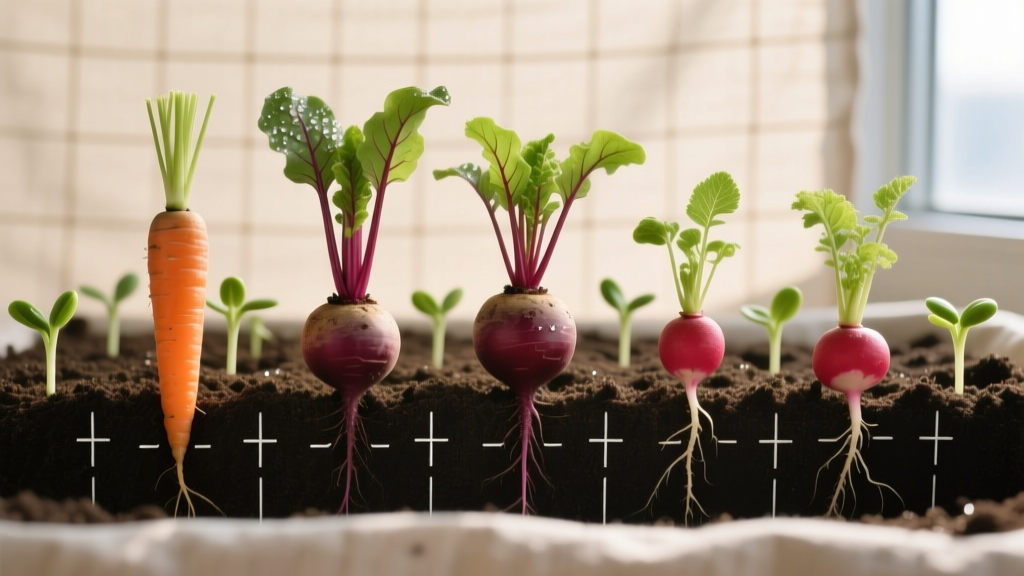
2026 Root Veggie Spacing: Aeration & Seeding Guide
Robert HayesPublished
Introduction to Root Crop Success in 2026
Welcome to the 2026 growing season, where the focus on soil health and precision agriculture has reached the home garden. When it comes to root vegetables like carrots, beets, and radishes, the secret to a bountiful harvest lies beneath the surface. Unlike fruiting crops that rely heavily on foliar feeding and trellising, root crops are entirely dependent on the physical structure of the soil. If your soil is compacted, your carrots will fork, your beets will remain stunted, and your radishes will become pithy and overly spicy. This comprehensive guide bridges the critical gap between deep soil aeration and precise seeding techniques, ensuring your root vegetables have the exact environment and spacing they need to thrive this year.
The Science of Soil Aeration for Root Crops
Root vegetables require a loose, friable soil profile to expand uniformly. Soil compaction increases penetration resistance, forcing the growing taproot to expend excess energy navigating hardpans, which often results in deformed or undersized produce. According to the Cornell University Soil Health initiative, maintaining optimal soil structure is paramount for root crop development. Compacted soils also suffer from poor drainage and reduced oxygen levels, which can lead to root rot and stunted cellular expansion.
Deep Aeration Techniques and Tools
For the 2026 season, market gardeners and serious home growers are moving away from traditional rotary tillers for root crop beds. While tillers break up the top few inches of soil, they often create a "tiller pan" or hardpan just below the tines, which is disastrous for long carrots. Instead, deep aeration using a broadfork is the gold standard.
- Broadforking: Using a heavy-duty broadfork (such as the Meadow Creature Vardo), plunge the tines 12 to 18 inches into the soil and gently pull back to fracture the subsoil without inverting the soil layers. This preserves the soil microbiome while allowing deep root penetration.
- Organic Matter Integration: After broadforking, apply a 1-inch layer of fully finished, screened compost. Avoid using raw manure or high-nitrogen fertilizers, which cause carrots to fork and develop excessive hairy side roots.
- Sand and Coco Coir: For heavy clay soils, incorporating coarse builder's sand and coco coir in a 20/80 ratio with your native soil can dramatically improve aeration and drainage for the upcoming seeding phase.
Seedbed Preparation: Bridging Aeration and Seeding
Once the deep soil is aerated, the top 2 inches must be refined into a fine tilth. Root vegetable seeds, particularly carrots, are incredibly small and lack the energy reserves to push through large soil clods. Use a stirrup hoe or a wire rake to break up surface crusts. A highly recommended technique for 2026 is the "false seedbed." Prepare your fully aerated bed two weeks before your intended seeding date, water it lightly, and allow the first flush of weeds to germinate. Right before seeding, lightly flame-weed or scrape the top half-inch of soil with a wire weeder. This eliminates early weed competition, which is crucial because root crops cannot compete with aggressive weeds during their vulnerable seedling stage.
Precise Seeding and Spacing Guidelines
Proper spacing is the above-ground counterpart to below-ground aeration. Even in perfectly aerated soil, overcrowded roots will compete for water and nutrients, resulting in a diminished harvest. The University of Minnesota Extension emphasizes that precise spacing reduces the need for aggressive thinning, which can disturb the delicate roots of neighboring seedlings. Below is the definitive 2026 spacing and seeding chart for the three most popular root crops.
| Crop Variety | Seed Depth | Row Spacing | In-Row Spacing | Days to Maturity |
|---|---|---|---|---|
| Carrots (Nantes type) | 1/4 inch | 12 - 18 inches | 2 - 3 inches | 65 - 75 days |
| Beets (Detroit type) | 1/2 inch | 12 - 18 inches | 3 - 4 inches | 55 - 65 days |
| Radishes (Globe type) | 1/2 inch | 8 - 12 inches | 1 - 2 inches | 25 - 30 days |
Carrots: The Patience Game
Carrot seeds are notoriously slow to germinate, often taking 14 to 21 days. They must be seeded shallowly, no deeper than 1/4 inch, and the soil surface must be kept consistently moist. Because of the tight 2-inch in-row spacing, hand-seeding is highly inefficient. In 2026, utilizing pelleted carrot seeds is highly recommended. Pelleting coats the tiny seeds in a clay-based binder, increasing their size and allowing for precision seeding. As noted by the experts at Johnny's Selected Seeds, pelleted seeds dramatically reduce seed waste and minimize the back-breaking labor of thinning.
Beets: Managing Seed Clusters
Unlike carrots, what appears to be a single beet seed is actually a dried fruit cluster containing two to five individual seeds. This means that even if you space your drops perfectly, multiple seedlings will emerge from a single spot. Thinning is absolutely mandatory for beets. Wait until the seedlings are 2 inches tall and use small scissors to snip the weaker seedlings at the soil line. Pulling them can damage the taproots of the remaining plants. If you prefer to avoid thinning, look for "monogerm" beet varieties, which have been bred to produce only one seed per fruit cluster.
Radishes: The Quick Turnaround
Radishes are the sprinters of the root vegetable world. They require less deep aeration than carrots, as their taproots are relatively short, but they still demand loose soil to form perfect globes. Because they mature in under a month, radishes are an excellent crop to interplant or use as a marker row when seeding slower-germinating carrots. Ensure they are spaced at least 1 inch apart; overcrowded radishes will produce lush green tops but fail to bulb at the base.
Modern Seeding Technology for Precision
To achieve the exact spacings outlined above, modern gardeners are investing in precision seeders. The Jang JP-1 seeder remains the industry standard for 2026, featuring interchangeable rollers that allow you to dial in the exact spacing for pelleted carrots and raw radish seeds. For smaller gardens, the EarthWay 1001-B seeder offers an affordable, lightweight alternative that glides smoothly over well-aerated beds. Using a mechanical seeder ensures uniform depth and spacing, optimizing the aerated soil profile you worked so hard to create.
Post-Seeding Soil Care and Maintenance
After seeding, the goal is to maintain soil moisture without destroying the soil structure. Avoid heavy overhead watering, which can cause surface crusting and negate your aeration efforts. Instead, use a fine misting nozzle or drip irrigation. Once the seedlings have established their first true leaves, apply a very thin layer of fine compost or grass clippings to retain moisture. Remember, the synergy between deep soil aeration and precise, uncrowded seeding is the ultimate formula for growing straight, sweet, and robust root vegetables in 2026.
