Gardening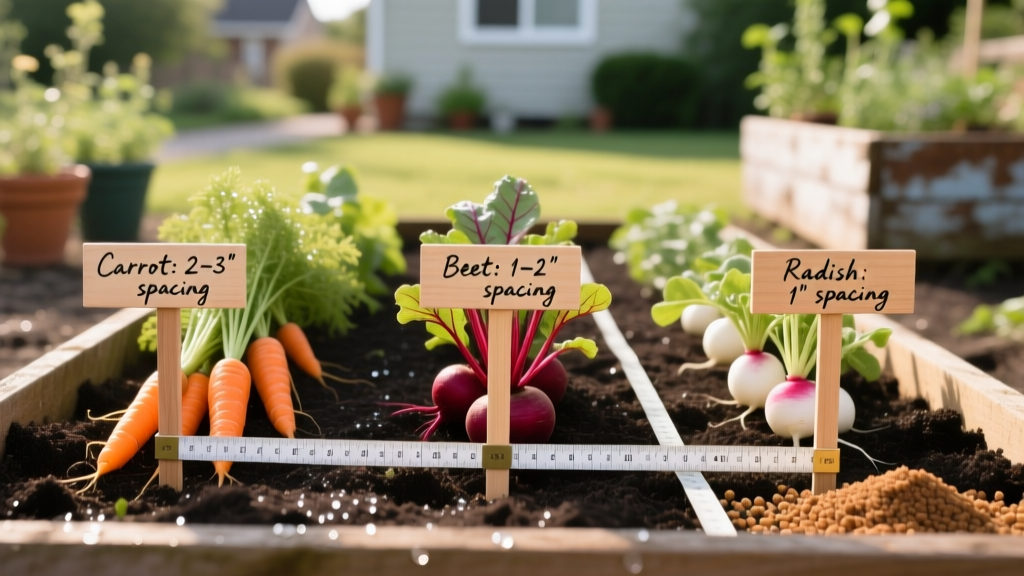
Carrot, Beet & Radish Spacing and Fertilizer Guide 2026
James MillerPublished
The Intersection of Spacing and Soil Nutrition
As we enter the 2026 growing season, home gardeners are increasingly realizing that the secret to massive, sweet, and crisp root vegetables lies not just in the seeds you buy, but in the spatial geometry of your garden beds. Growing carrots, beets, and radishes requires a delicate balance between proper plant spacing and precise fertilizer scheduling. When root crops are crowded, they compete fiercely for below-ground nutrients, leading to stunted growth, forked roots, and woody textures. Conversely, applying heavy fertilizers to improperly spaced beds can result in excessive top growth at the expense of the actual root.
In this comprehensive 2026 guide, we will break down the exact spacing requirements for carrots, beets, and radishes, and pair them with a scientifically backed fertilizer schedule. By understanding how root architecture interacts with soil nutrients, you can maximize your harvest and avoid the most common pitfalls of root crop cultivation.
Exact Spacing Requirements for Root Crops
Before discussing fertilizer types, we must establish the physical footprint of your crops. Root vegetables need adequate lateral space to expand their taproots or tuberous hypocotyls without touching neighboring plants. According to the University of Minnesota Extension, proper thinning is arguably the most critical step in carrot production, directly impacting how efficiently the plants uptake applied fertilizers.
| Crop | Initial Seed Spacing | Final Thinning Distance | Row Spacing | Primary Root Type |
|---|---|---|---|---|
| Carrots | 1/4 to 1/2 inch | 2 to 3 inches | 12 to 18 inches | Deep Taproot |
| Beets | 1/2 inch | 3 to 4 inches | 12 to 18 inches | Swollen Hypocotyl |
| Radishes | 1/2 inch | 1 to 2 inches | 8 to 12 inches | True Root/Tuber |
Pro Tip for 2026: To achieve perfect initial spacing and reduce the need for aggressive thinning later, consider using pelleted seeds or seed tape. These products are pre-spaced and coated in a clay-based material that often contains a mild, starter-dose of mycorrhizal fungi to aid in early phosphorus uptake.
Choosing the Right Fertilizer for Taproots and Tubers
The fundamental rule of root crop fertilization is to limit Nitrogen (N) and prioritize Phosphorus (P) and Potassium (K). Nitrogen promotes lush, green, leafy top growth. While a beet or carrot needs some foliage to photosynthesize, an excess of nitrogen will give you beautiful, towering green tops and tiny, spindly roots. Furthermore, high nitrogen levels in the soil can cause carrots to fork and develop multiple hairy side-roots.
Ideal N-P-K Ratios
Look for fertilizers with an N-P-K ratio where the first number is significantly lower than the second and third. Ideal ratios for root vegetables include 3-4-4, 2-4-4, or 5-10-10.
- Phosphorus (P): Essential for early root establishment, cell division, and the development of a strong, singular taproot.
- Potassium (K): Crucial for water regulation, disease resistance, and the synthesis of sugars and starches, which gives carrots and beets their signature sweetness.
Top Fertilizer Recommendations for 2026
Based on current market availability and organic certification standards, here are the top performers for root beds this year:
- Espoma Organic Root-tone (3-4-4): A slow-release granular fertilizer fortified with beneficial soil microbes. Excellent for mixing into the soil prior to sowing. (Approx. $16 for 4 lbs).
- Dr. Earth Organic Root Zone (2-4-4): Contains a robust blend of fish bone meal and kelp, providing a massive dose of trace minerals and phosphorus without the risk of nitrogen burn. (Approx. $18 for 4 lbs).
- FoxFarm Happy Frog Fruit & Flower (6-4-4): While slightly higher in nitrogen, this is an excellent choice for a mid-season side-dressing for beets, which are heavier feeders than carrots. (Approx. $22 for 4 lbs).
The 2026 Root Vegetable Fertilizer Schedule
Timing your fertilizer applications to match the growth stages of your root crops is just as important as the spacing. Here is a step-by-step schedule to follow this season.
Phase 1: Bed Preparation (2 Weeks Before Sowing)
Root vegetables require loose, friable soil free of rocks and heavy clay clumps. Two weeks before planting, amend your bed with 2 to 3 inches of well-aged compost. Never use fresh manure. As noted by Penn State Extension, fresh manure or high-nitrogen fertilizers applied right before planting will cause severe forking in carrots and scab-like blemishes on beets. Incorporate a granular, low-nitrogen root fertilizer (like Espoma Root-tone) at a rate of 1 cup per 10 square feet, working it into the top 6 inches of soil.
Phase 2: Sowing and Germination (Weeks 1-3)
Do not apply any fertilizer during germination. Carrots, in particular, can take 14 to 21 days to emerge. Keep the seedbed consistently moist. The nutrients from the Phase 1 soil prep are more than enough to support the seedlings until they develop their first true leaves.
Phase 3: Thinning and First Side-Dress (Weeks 4-5)
Once the seedlings are 2 to 3 inches tall, it is time to thin them to their final spacing (refer to the table above). Use a pair of micro-snips to cut the unwanted seedlings at the soil line. Pulling them out can disturb the delicate root hairs of the neighboring plants you want to keep, causing them to fork.
Immediately after thinning, apply a liquid kelp or fish emulsion fertilizer (diluted to half-strength). This provides a gentle boost of trace minerals and potassium to help the remaining plants recover from the thinning shock and begin the root-bulking process.
Phase 4: Root Bulking (Weeks 6-8)
For carrots and radishes, no further fertilization is usually necessary if your soil was properly prepped. Radishes mature so quickly (often in 25-30 days) that they will have already finished bulking. However, beets are a longer-season crop (50-70 days). When your beet tops are lush and the shoulders of the roots begin to push above the soil line, apply a second side-dressing of a granular 2-4-4 or 3-4-4 fertilizer. Scratch it lightly into the soil surface about 3 inches away from the base of the plants and water it in deeply.
How Spacing Dictates Fertilizer Application Rates
Many gardeners fail to realize that plant spacing directly alters how you should apply fertilizer. If you are utilizing intensive, wide-row planting a method popularized by Mel Bartholomew where plants are grown in dense, equidistant grids rather than traditional rows), broadcasting granular fertilizer can be tricky without hitting the foliage, which can cause burn.
For wide-row spacing, liquid fertilizers applied via a watering can or hose-end sprayer are vastly superior. They penetrate the soil immediately and reach the root zone without getting trapped in the dense canopy of closely spaced beet or carrot greens. Conversely, if you are using traditional 18-inch row spacing, side-dressing with granular fertilizers in a shallow trench 2 inches to the side of the row is the most efficient method.
Avoiding Common Root Crop Fertilizer Mistakes
Even with perfect spacing, a few common fertilizer errors can ruin a 2026 root crop harvest:
- Ignoring Soil by The Old Farmer's Almanac, radishes grown in soil with a pH below 6.0 are highly susceptible to boron deficiency, which causes the roots to become hollow and black-hearted. If a soil test reveals high alkalinity, you will need to amend with elemental sulfur in the fall prior to your spring planting.
Conclusion
Mastering the cultivation of carrots, beets, and radishes in 2026 requires a shift in perspective. You must view spacing and fertilization not as two separate tasks, but as a single, unified system of below-ground resource management. By adhering to strict thinning distances, utilizing low-nitrogen/high-phosphorus organic fertilizers, and timing your applications to the specific bulking stages of each crop, you will pull straight, sweet, and massive root vegetables from the earth all season long. Prepare your beds, calibrate your seed spacing, and let the science of soil nutrition do the heavy lifting this year.
