Gardening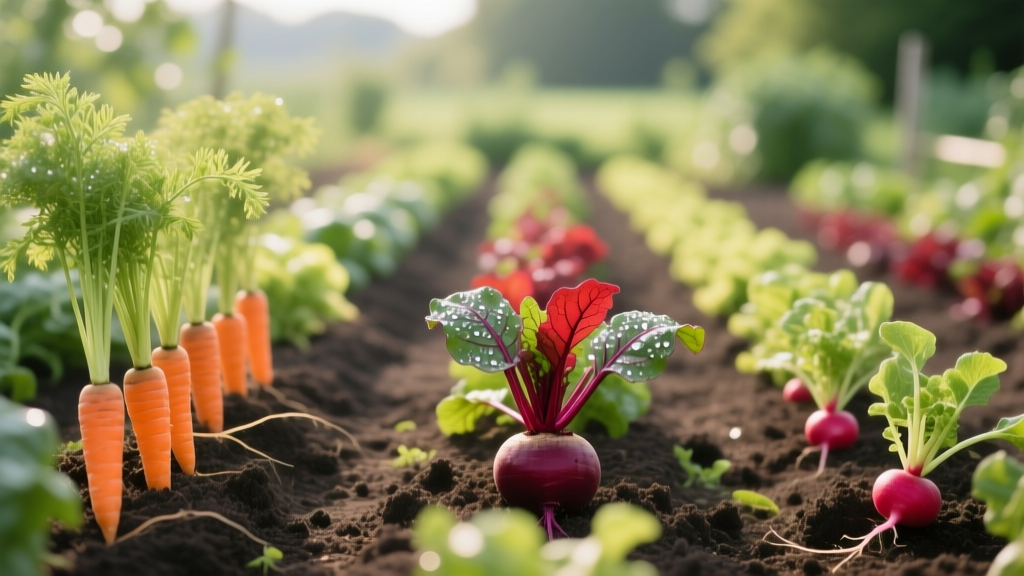
Foodscaping Root Veggies: 2026 Carrot, Beet & Radish Spacing Guide
James MillerPublished
The Evolution of Edible Landscaping in 2026
Edible landscaping, often referred to as foodscaping, has completely transformed how homeowners approach their front and back yards. In 2026, the rigid boundaries between ornamental flower beds and traditional vegetable patches have dissolved. Modern gardeners are no longer hiding their vegetables in the backyard; they are showcasing them as premier landscape features. While leafy greens and fruiting plants like tomatoes often steal the spotlight, root vegetables offer a unique, underutilized aesthetic. Because the primary harvest is hidden beneath the soil, the foliage of root crops must work overtime to provide visual interest. When properly spaced and integrated, the fern-like fronds of carrots, the striking ruby-veined leaves of beets, and the lush, mounding greens of radishes can create a stunning, multi-textured edible tapestry.
Why Root Vegetables? The Hidden Foliage Appeal
Integrating root vegetables into an ornamental landscape requires a shift in perspective. You are designing with foliage texture and color first, and harvest second. Carrots provide a delicate, airy texture that mimics ornamental grasses or ferns. Beets offer broad, structural leaves with vibrant stem colors ranging from deep crimson to bright gold. Radishes serve as rapid-growing, low-lying ground covers that can fill bare spots in a garden bed while suppressing weeds. According to the University of Minnesota Extension, successful edible landscaping relies on matching the cultural requirements of ornamentals and edibles, ensuring that both thrive in the same shared space without competing aggressively for resources.
Soil Preparation for Unobstructed Root Growth
Before you can worry about aesthetic spacing, you must address the foundation of root vegetable success: the soil. Root crops require loose, well-draining, and stone-free soil to develop straight, unblemished taproots. In 2026, the trend has moved heavily toward no-till and minimal-disturbance soil building, but root vegetables remain the exception where deep, initial mechanical loosening is highly beneficial.
- Deep Tilth: Loosen the soil to a depth of at least 12 to 15 inches. Any compacted layers or hidden rocks will cause carrots to fork and beets to become misshapen.
- Organic Matter: Incorporate well-aged, screened compost. Avoid fresh manure or high-nitrogen fertilizers, as excess nitrogen promotes lush, beautiful top growth but results in stunted, hairy, or forked roots.
- pH Levels: Aim for a slightly acidic to neutral pH between 6.0 and 7.0. Beets, in particular, are sensitive to boron deficiency in alkaline soils, which can cause internal black spots.
Mastering Spacing for Aesthetics and Yield
Proper spacing is the most critical factor in root vegetable cultivation. Overcrowding leads to competition for water and nutrients, resulting in undersized roots and increased susceptibility to fungal diseases due to poor air circulation. In a foodscaping context, spacing also dictates the visual rhythm of your garden beds.
Carrots: The Delicate Border
Carrots (Daucus carota) are slow to germinate and require meticulous spacing. The University of Minnesota Extension notes that carrots require consistent moisture during germination and careful thinning to produce marketable roots. For foodscaping, use carrots as a front-of-the-border edging plant. Their lacy foliage softens the edges of walkways and retaining walls.
- Seed Sowing: Sow seeds 1/4 inch deep. To avoid the tedious task of thinning, utilize modern pelleted seeds or biodegradable seed tapes, which are widely available and highly popular in 2026 for precision planting.
- In-Row Spacing: Thin seedlings to 2 to 3 inches apart. This allows the shoulders of the carrots to expand without touching.
- Between-Row Spacing: If planting in a traditional grid, keep rows 12 to 18 inches apart. In a foodscape bed, plant in staggered, triangular blocks 3 inches apart for a denser, more natural look.
Beets: The Structural Mid-Ground
Beets (Beta vulgaris) are dual-purpose crops; you can harvest the tender young greens for salads and the mature roots for roasting. Their bold foliage makes them excellent mid-ground or focal-point plants in an edible landscape. Varieties like 'Bull's Blood' offer deep purple leaves that rival any ornamental coleus, while 'Chioggia' and 'Touchstone Gold' provide striking color contrasts beneath the soil. According to NC State Extension, beets are relatively cold-tolerant and can be planted early in the spring or late in the summer for a fall harvest.
- Seed Sowing: Beet seeds are actually dried fruit clusters containing multiple seeds. Expect multiple seedlings to emerge from a single planting.
- In-Row Spacing: Thin aggressively to 3 to 4 inches apart. Do not skip thinning; crowded beets will fail to bulb properly.
- Between-Row Spacing: Maintain 12 to 18 inches between rows or planting blocks to allow the broad leaves to drape gracefully without smothering neighboring plants.
Radishes: The Rapid Gap-Filler
Radishes (Raphanus sativus) are the sprinters of the garden. Maturing in as little as 25 to 30 days, they are the ultimate succession crop and living mulch. In foodscaping, radishes are used to fill temporary gaps between slower-growing perennials or ornamental shrubs. Their low, mounding habit and bright green leaves provide a clean, uniform understory.
- Seed Sowing: Sow seeds 1/2 inch deep directly into the garden bed.
- In-Row Spacing: Thin small spring varieties to 1 to 2 inches apart. Larger winter varieties (like Daikon or Watermelon radishes) require 4 to 6 inches of space.
- Between-Row Spacing: Space rows 6 to 12 inches apart. Because they mature so quickly, you can interplant radishes directly alongside slow-germinating carrots to mark the rows and break up soil crusting.
Root Vegetable Spacing & Design Matrix
| Vegetable | In-Row Spacing | Between-Row Spacing | Foliage Aesthetic | Foodscaping Role |
|---|---|---|---|---|
| Carrots | 2 - 3 inches | 12 - 18 inches | Fine, fern-like, airy green | Front border, pathway edging |
| Beets | 3 - 4 inches | 12 - 18 inches | Broad, structural, ruby/gold veins | Mid-ground focal point, color contrast |
| Spring Radishes | 1 - 2 inches | 6 - 12 inches | Low, mounding, bright green | Living mulch, temporary gap filler |
| Winter Radishes | 4 - 6 inches | 12 - 18 inches | Large, lobed, slightly bristly | Structural understory, late-season bulk |
Companion Planting and Ornamental Integration
To elevate your root vegetable foodscape, integrate them with beneficial companion plants that deter pests and attract pollinators. Because root crops do not require pollination to form their edible taproots, the goal of companion planting here is primarily pest management and aesthetic layering.
Interplant your carrot blocks with French Marigolds (Tagetes patula). Marigolds release compounds from their roots that suppress root-knot nematodes, a common pest that causes deformed carrots and beets. The bright orange and yellow blooms of the marigolds also provide a stunning visual contrast against the deep green and purple foliage of the root crops. For beets, surround them with Sweet Alyssum, a low-growing flowering plant that attracts predatory hoverflies, which feed on aphids that occasionally bother beet greens. Avoid planting root vegetables near tall, dense crops like sunflowers or large brassicas, which will cast too much shade and stunt root development.
Succession Sowing for Continuous Landscape Color
A well-designed foodscape never looks bare. Radishes and spring carrots have a relatively short harvest window. If you pull them all at once, you are left with empty, unsightly patches of dirt. To maintain the aesthetic integrity of your landscape, practice succession sowing. Plant short rows or small blocks of radishes and carrots every 10 to 14 days throughout the spring and early summer. As one block is harvested, immediately amend the small pocket of soil with a handful of compost and transplant a heat-tolerant ornamental annual, such as a zinnia or a culinary basil, to keep the bed looking full and vibrant. By late summer, transition to planting winter radishes and overwintering carrots, ensuring your edible landscape remains dynamic and productive well into the cooler months of 2026.
Final Thoughts on Edible Root Design
Foodscaping with carrots, beets, and radishes proves that a highly productive vegetable garden does not have to sacrifice curb appeal. By respecting the precise spacing requirements of these root crops and leveraging their unique foliage textures, you can create a landscape that feeds both the body and the soul. The key is to view your garden beds as a living canvas, where every inch of soil is intentionally designed, planted, and maintained for maximum beauty and yield.
