Gardening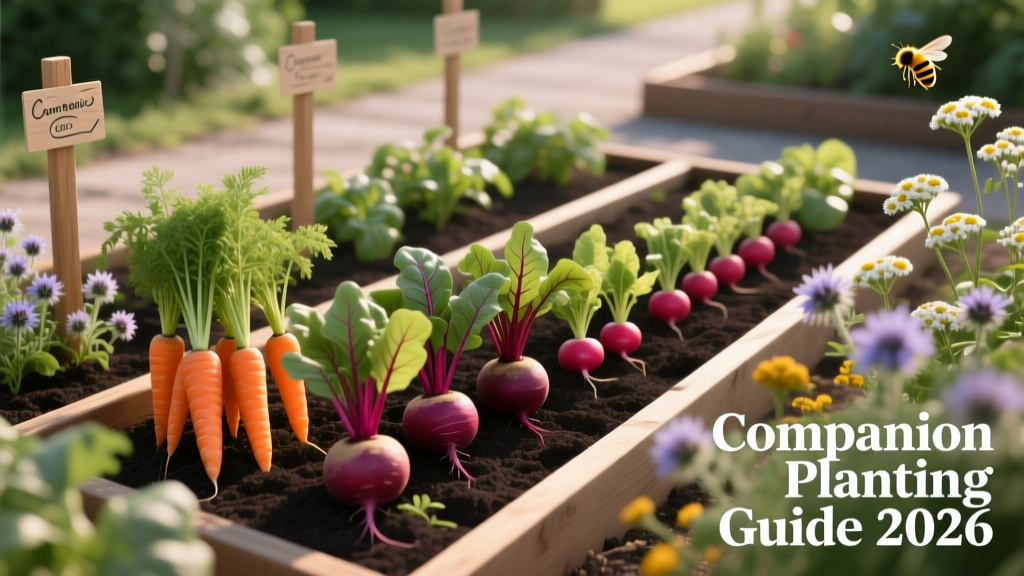
Pollinator-Friendly Root Vegetable Spacing Guide 2026
Robert HayesPublished
Introduction to Pollinator-Friendly Root Gardening in 2026
As we navigate the 2026 gardening season, the intersection of sustainable food production and ecological stewardship has never been more critical. While many gardeners focus on above-ground crops like tomatoes and squash when designing for pollinators, the underground world of root vegetables offers a unique, often overlooked opportunity to support local ecosystems. Carrots, beets, and radishes are staples of the home garden, but growing them successfully requires precise spacing. When we combine optimal root vegetable spacing with pollinator-friendly garden design, we create a resilient micro-ecosystem that maximizes yields, deters pests naturally, and provides vital habitat for native bees, hoverflies, and beneficial wasps.
In this comprehensive guide, we will explore how to properly space your root crops to prevent disease without resorting to chemical interventions, how to integrate shallow-rooted pollinator companions, and why letting a few of your root vegetables 'bolt' to seed is one of the best things you can do for your local pollinator population.
The Hidden Link Between Root Spacing and Pollinator Health
At first glance, the distance between two carrots might seem unrelated to the health of a bumblebee. However, proper spacing is the foundation of a chemical-free garden. Overcrowded root crops suffer from poor air circulation, leading to fungal issues like Alternaria leaf blight and powdery mildew. When gardeners panic at the sight of fungal disease, they often reach for broad-spectrum fungicides or pesticides, which are devastating to pollinator populations.
By adhering to strict, scientifically backed spacing guidelines, you ensure robust plant health through airflow and resource competition management. According to the University of Minnesota Extension, proper thinning and spacing are the most effective cultural controls for preventing disease in root crops. A healthy, disease-free garden eliminates the need for disruptive sprays, keeping your local pollinator habitat safe and toxic-free.
2026 Master Spacing and Companion Chart
Below is the definitive spacing and companion planting chart for the 2026 season. This table balances the subterranean needs of the root crops with the above-ground needs of pollinator-attracting companion plants.
| Crop | Seed Depth | In-Row Spacing | Row Spacing | Ideal Pollinator Companion |
|---|---|---|---|---|
| Carrots | 1/4 inch | 2 to 3 inches | 12 to 18 inches | Sweet Alyssum (Lobularia maritima) |
| Beets | 1/2 inch | 3 to 4 inches | 12 to 18 inches | Borage (Borago officinalis) |
| Radishes | 1/2 inch | 1 to 2 inches | 8 to 12 inches | Calendula (Calendula officinalis) |
Carrots: Deep Taproots and Shallow Companions
Carrots require loose, friable soil to develop long, straight taproots. Because they are slow to germinate and grow, weed competition is a major issue. The recommended in-row spacing is 2 to 3 inches after thinning. If you leave them closer than 2 inches, the roots will become stunted and forked. If spaced too far apart, weeds will fill the gaps, and the soil surface will dry out rapidly.
The Pollinator Strategy: Because carrots have deep taproots and fern-like foliage that occupies the upper vertical space, the soil surface around them is perfect for shallow-rooted, ground-covering pollinator plants. Sweet alyssum is the ultimate companion here. It forms a low, living mulch that retains soil moisture for the carrots while emitting a sweet nectar that attracts hoverflies. The larvae of hoverflies are voracious predators of aphids, providing natural pest control without the need for insecticidal soaps that could harm foraging bees.
Beets: Earthzone Management and Mining Bees
Beets are unique because each 'seed' is actually a dried fruit cluster containing multiple true seeds. This means thinning is absolutely mandatory. Space your beet seedlings 3 to 4 inches apart in the row, with rows spaced 12 to 18 inches apart. This wider row spacing allows you to walk through the bed for harvesting and weeding without compacting the soil, which is crucial for root expansion.
The Pollinator Strategy: Beets thrive in rich, organic soil, which is also the preferred nesting habitat for many ground-nesting native bees, such as mining bees (Andrena species). To protect these vital pollinators, avoid deep tilling in your beet beds. Instead, practice a no-till approach by top-dressing with 2 inches of high-quality compost in early spring. Plant borage in the wider row aisles. Borage is a pollinator powerhouse, refilling its nectar reservoirs every few minutes, making it a constant draw for honeybees and native solitary bees throughout the 2026 summer.
Radishes: Fast Canopies and Trap Cropping
Radishes are the sprinters of the garden. They germinate in days and are ready to harvest in under a month. Space them 1 to 2 inches apart. Because of their rapid growth, radishes are often used to break up compacted soil. However, their fast-expanding canopy can shade out smaller, slower-growing companions if not managed correctly.
The Pollinator Strategy: Use radishes as a 'trap crop' and a pollinator bridge. Flea beetles love radish leaves, often drawing them away from more vulnerable crops. More importantly, if you plant a succession of radishes every two weeks, you can intentionally let the final spring planting bolt (go to seed). Radish flowers are highly attractive to early-season solitary bees and beneficial parasitic wasps. Interplant your radish borders with calendula, which provides a secondary nectar source and its sticky stems can trap small pests, further protecting the garden ecosystem.
The Magic of Bolting: A Pollinator Feast
In traditional gardening, a root vegetable 'bolting' (prematurely flowering and going to seed) is considered a failure. In a pollinator-friendly garden design, bolting is a celebrated event. Root vegetables belong to several plant families that produce highly specialized, pollinator-friendly flower structures.
- Carrots and Parsnips (Apiaceae Family): These produce large, flat umbels. According to beneficial insect conservation guidelines from The Xerces Society, umbel flowers are perfectly structured for small beneficial insects like parasitic wasps and tachinid flies, which lack the long mouthparts needed to access deep, tubular flowers. These tiny wasps are essential for controlling caterpillar populations in your brassica beds.
- Radishes and Turnips (Brassicaceae Family): These produce clusters of small, cross-shaped flowers that are incredibly rich in nectar. They bloom early in the season, providing a critical food source for native bees emerging from winter dormancy when few other flowers are available.
- Beets and Chard (Amaranthaceae Family): While wind-pollinated, the towering, architectural seed stalks of bolting beets provide excellent perching and nesting sites for solitary wasps and predatory insects.
Design Tip for 2026: Dedicate a specific 'pollinator pillar' in your raised beds. Allow three carrots, two beets, and four radishes to bolt entirely. Stake them as they grow tall, creating a vertical, flowering centerpiece that draws pollinators directly into the heart of your vegetable garden.
Soil Preparation: Protecting Ground-Nesting Habitats
Proper spacing is useless if the soil structure prevents root penetration. Carrots and beets require deep, loose soil. However, traditional rototilling destroys the mycorrhizal fungal networks and crushes the underground nesting tunnels of native bees. Approximately 70% of native bee species nest in the ground, and they require undisturbed, well-draining soil to thrive.
For your 2026 root crop beds, transition to broadforking. A broadfork aerates the soil deeply without inverting the soil layers. This preserves the nesting habitats of ground-nesting bees while creating the loose tilth required for long, straight carrots. Top-dress the beds with a 50/50 mix of aged leaf mold and vermicompost. This provides the necessary phosphorus and potassium for root development without the excess nitrogen that causes hairy, forked carrots and excessive leafy top growth at the expense of the root.
Conclusion
Designing a garden that feeds both your family and the local ecosystem requires a shift in perspective. By adhering to precise spacing guidelines for carrots, beets, and radishes, you naturally eliminate the conditions that foster disease, thereby protecting pollinators from harmful chemical interventions. By integrating shallow-rooted companions like sweet alyssum and borage, and by embracing the wild, beautiful chaos of bolting root crops, your 2026 garden will become a thriving hub of biodiversity. As noted by The Xerces Society, every square foot of pesticide-free, thoughtfully planted habitat makes a measurable difference in the survival of vital pollinator species. Grab your broadfork, measure your spacing, and let your root garden bloom.
