Gardening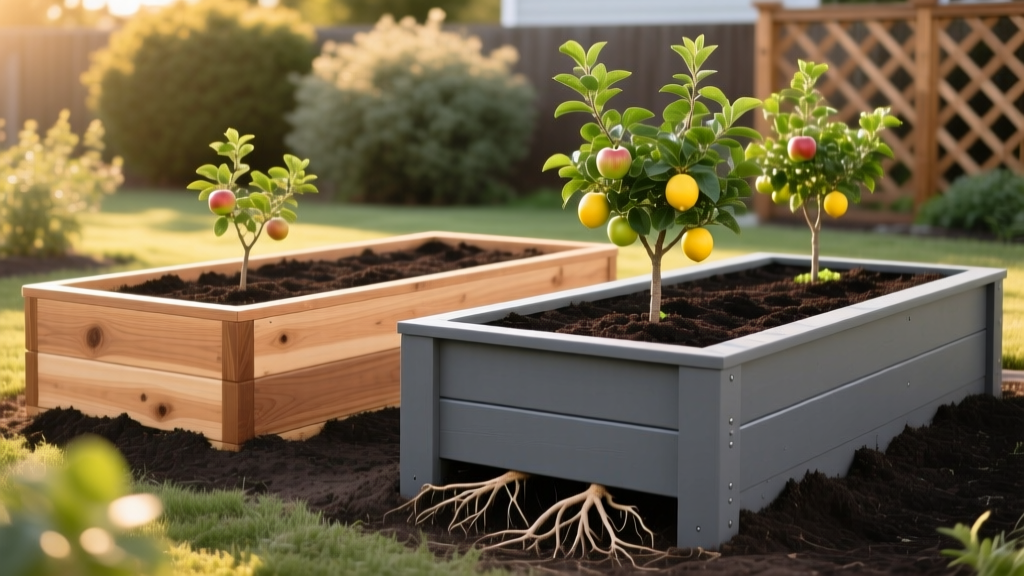
Cedar vs Composite Raised Beds for Fruit Trees 2026
Mike RodriguezPublished
Introduction to Tree Planting in Raised Beds
Growing fruit trees in raised beds has become a dominant trend in urban and suburban gardening as we move through 2026. For homeowners dealing with heavy clay compaction, poor native drainage, or limited yard space, elevated planting offers a controlled environment that promotes vigorous root health. However, planting trees in raised beds is fundamentally different from growing shallow-rooted annual vegetables. Trees require massive soil volumes, deep structural support to withstand lateral root expansion, and materials that can endure decades of constant moisture exposure.
When selecting a raised bed kit specifically for tree planting, the debate almost always narrows down to two premium materials: natural cedar wood and engineered composite. Both offer distinct advantages for arboriculture, but their cost, longevity, and structural behaviors vary wildly. In this comprehensive guide, we break down the exact costs, expected lifespans, and horticultural impacts of cedar versus composite raised bed kits for fruit tree cultivation in 2026.
Why Plant Trees in Raised Beds?
Before comparing materials, it is crucial to understand why raised beds are beneficial for tree selection and planting. According to the University of Minnesota Extension, fruit trees require exceptional soil drainage to prevent root asphyxiation and soil-borne diseases like Phytophthora. In native soils that retain water, dwarf fruit trees often fail to thrive. A raised bed elevates the root crown above the natural grade, ensuring that excess water drains away from the sensitive graft union.
Furthermore, raised beds allow gardeners to bypass native soil contaminants and customize the soil profile for specific fruiting needs. Blueberries, for instance, require highly acidic soil (pH 4.5 to 5.5), which is nearly impossible to maintain long-term in native alkaline clay. A contained raised bed makes pH management effortless.
Cedar Raised Bed Kits: Natural Beauty and Breathability
Western Red Cedar and Alaskan Yellow Cedar remain the gold standards for natural garden beds. Cedar contains natural oils called thujaplicins, which act as built-in fungicides and insect repellents, allowing the wood to resist rot without the need for chemical pressure treatments that could leach into your fruit tree's root zone.
2026 Pricing and Availability
In 2026, sustainable forestry certifications and increased global demand for natural timber have stabilized cedar prices at a premium tier. A standard deep-tier cedar kit (measuring 4 feet by 8 feet, with a 24-inch depth necessary for tree roots) typically costs between $350 and $550. While this is an investment, it is often more accessible than high-end composite alternatives.
Longevity and Maintenance
When used for shallow vegetable beds that dry out frequently, cedar can last 15 to 20 years. However, tree beds are different. The dense, moisture-retentive soil required for fruit trees keeps the cedar walls perpetually damp. In these conditions, expect a cedar kit to last 10 to 15 years before the bottom boards begin to soften and require replacement. To maximize longevity, experts recommend lining the interior walls with heavy-duty HDPE plastic to separate the wet soil from the wood, while ensuring the bottom remains open for drainage.
Pros for Tree Planting
- Thermal Insulation: Wood is a natural insulator. It protects the tree's peripheral roots from extreme summer heat and winter freeze-thaw cycles.
- Breathability: Cedar allows minor gas exchange through the soil profile, promoting a healthy microbiome around the tree's feeder roots.
- Aesthetic Integration: Natural wood weathers to a beautiful silver-gray that blends seamlessly into orchard and garden landscapes.
Composite Raised Bed Kits: The Long-Term Investment
Modern composite raised beds in 2026 are marvels of material engineering. Unlike early-generation plastic lumber that warped and faded, today's composite kits are manufactured from advanced high-density polyethylene (HDPE) blends, recycled wood fibers, and UV-inhibiting resins. They are designed to mimic the texture of wood while offering the indestructibility of stone.
2026 Pricing and Availability
Composite kits carry a higher upfront cost. A deep 4x8x24-inch composite kit from premium brands will generally range from $600 to $950 in 2026. The interlocking corner joints and reinforced side braces required to hold back the immense weight of wet tree soil add to the manufacturing cost.
Longevity and Maintenance
Composite materials are entirely impervious to rot, fungal decay, and termite damage. You can expect a high-quality composite raised bed to last 30 to 50 years, effectively outliving the productive lifespan of most dwarf fruit trees. Maintenance is virtually zero; an occasional power wash is all that is needed to keep the exterior looking pristine.
Pros for Tree Planting
- Structural Rigidity: As a tree's trunk expands and its lateral roots push outward, composite walls will not bow, splinter, or burst like aging wood.
- Zero Chemical Leaching: Premium 2026 composite materials are certified safe for organic food production, ensuring no microplastics or toxins enter your fruit harvest.
- Pest Resistance: Termites, carpenter ants, and rodents cannot burrow into or nest within composite walls.
Head-to-Head Comparison: Cedar vs. Composite
The following table summarizes the critical differences between cedar and composite kits specifically for the demanding environment of deep-rooted tree planting.
| Feature | Cedar Wood Kits | Composite Kits |
|---|---|---|
| 2026 Avg Cost (4x8x24") | $350 - $550 | $600 - $950 |
| Expected Longevity | 10 - 15 Years (in wet soil) | 30 - 50+ Years |
| Root Pressure Tolerance | Moderate (May bow over time) | High (Rigid and reinforced) |
| Soil Insulation | Excellent (Protects roots) | Poor (Can conduct heat) |
| Maintenance Required | Annual inspection, optional sealing | None (Occasional washing) |
| Interior Lining Needed? | Yes (To prevent rot) | No (Impervious to moisture) |
Best Trees for Raised Bed Planting in 2026
Not all trees are suited for the confined space of a raised bed. Standard-sized fruit trees will quickly outgrow a 4x8 footprint, leading to stunted growth and structural instability. The Royal Horticultural Society (RHS) strongly recommends selecting trees grafted onto dwarfing or semi-dwarfing rootstocks for confined spaces.
- Dwarf Apples (M.9 or G.11 Rootstock): These rootstocks restrict the tree's mature height to 8-10 feet and naturally adapt to containerized or raised bed environments while producing full-sized fruit.
- Columnar Cherries and Peaches: Bred specifically for narrow spaces, columnar varieties grow straight up with minimal lateral branching, making them perfect for the corners of raised beds.
- Figs (Celeste or Brown Turkey): Figs thrive in the warm, well-drained soil of a raised bed. Restricting their root space actually encourages heavier fruiting rather than excessive vegetative growth.
Soil Preparation: The Hugelkultur Method for Deep Beds
A 4x8 raised bed that is 24 inches deep holds 64 cubic feet of soil—nearly 2.4 cubic yards. Filling this entirely with premium bagged potting mix in 2026 would cost upwards of $600 and create a dense, poorly draining environment. Instead, arborists recommend a modified Hugelkultur base.
Fill the bottom 12 inches of your cedar or composite bed with decaying logs, wood chips, and dried leaves. This mimics the natural forest floor, retains moisture during summer droughts, and slowly feeds the tree's deep taproots. The top 12 inches should be a high-quality loam-based mix: 50% screened topsoil, 30% organic compost, and 20% coarse pine bark or perlite for aeration. The Oregon State University Extension Service notes that layered soil profiles in raised beds drastically improve deep root penetration and water retention.
Crucial Step: Anchoring Trees in Raised Beds
When you plant a tree in the native ground, its lateral roots spread up to 20 feet in every direction to anchor it against high winds. In a 4x8 raised bed, those roots hit the cedar or composite walls within four feet. This creates a severe windthrow risk; the tree acts as a sail, and the restricted root ball can easily twist and tear inside the bed during a storm.
Expert Tip: During the assembly of your raised bed kit, install heavy-duty stainless steel eye bolts into the interior corner braces. Once the tree is planted, use flexible, wide-strapped tree ties to secure the lower trunk to these anchor points. This internal guying system stabilizes the tree without requiring ugly external stakes that ruin the garden's aesthetic.
Conclusion
Choosing between cedar and composite raised bed kits for fruit trees ultimately depends on your budget, timeline, and maintenance preferences. If you prioritize natural insulation, lower upfront costs, and a traditional orchard aesthetic, cedar remains a phenomenal choice, provided you line the interior to protect against moisture. However, if you view your garden as a multi-decade investment and want a zero-maintenance, indestructible structure capable of withstanding immense root pressure, the 2026 generation of composite kits is well worth the premium. By pairing the right material with dwarfing rootstocks and a Hugelkultur soil base, your elevated orchard will yield bountiful harvests for years to come.
