Gardening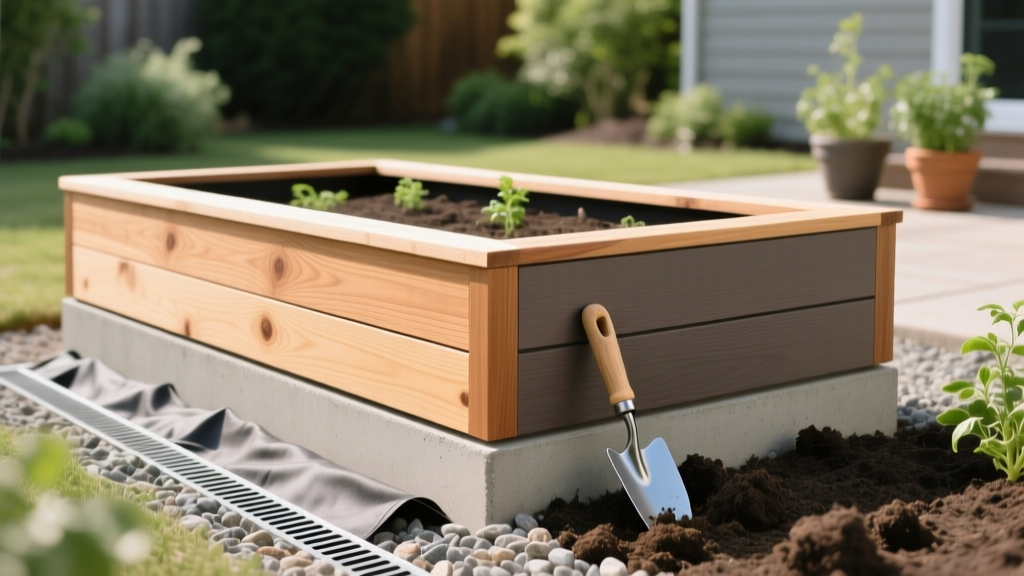
Cedar vs Composite Raised Beds 2026: Cost & French Drains
Sarah ChenPublished
The 2026 Gardening Reality: Why Drainage Dictates Material Choice
As we move through the 2026 growing season, the push for backyard food security and high-yield vegetable gardening has made raised bed kits more popular than ever. However, a critical mistake many homeowners make is focusing solely on the aesthetic or upfront cost of the bed material while entirely ignoring subsurface water management. Whether you are growing heavy-feeding tomatoes or delicate root vegetables, the soil profile at the bottom of your bed is just as important as the surface. This is where the debate between cedar and composite raised bed kits intersects directly with French drain installation. If your yard suffers from poor percolation, heavy clay soils, or a high water table, the material you choose for your raised beds will either survive or fail based entirely on how well you manage hydrostatic pressure and runoff. In this comprehensive guide, we will analyze the cost, longevity, and moisture dynamics of cedar versus composite raised beds in 2026, specifically through the lens of French drain integration and advanced water management.
The Material Breakdown: Cedar vs. Composite in Wet Environments
Natural Cedar: Breathability vs. Biological Decay
Western Red Cedar and Alaskan Yellow Cedar remain premium choices in 2026 for gardeners who prefer natural, untreated materials. Cedar contains natural tannins and oils that provide a baseline resistance to rot and insect damage. From a moisture management perspective, cedar is a breathable material. It allows for a slight exchange of moisture and air through the wood grain, which can help the outer edges of your soil dry out after heavy rainfall. However, this breathability is a double-edged sword. If a cedar raised bed is placed directly on poorly draining soil without a proper French drain system to intercept subsurface water, the bottom boards will act like a wick. Capillary action will draw saturated soil moisture directly into the end-grain of the wood, accelerating the growth of wood-decaying fungi. Without a French drain to lower the local water table, even premium cedar will succumb to structural rot at the base within three to five years.
Modern Composite: Immunity to Rot vs. The Bathtub Effect
The 2026 generation of composite raised bed kits—typically manufactured from high-density polyethylene (HDPE) blended with recycled wood flour or rice hulls—offers complete immunity to biological rot. You could submerge the bottom half of a composite bed in a swamp, and the material itself would not degrade. However, this impermeability creates a severe drainage challenge known as the 'bathtub effect.' Because composite walls do not breathe or wick moisture, any water that enters the bed from rainfall or irrigation is trapped inside. If the underlying native soil is compacted clay and lacks a French drain to pull water away, the bottom six inches of your raised bed will become an anaerobic, waterlogged swamp. This lack of oxygen will quickly lead to root rot and denitrification, starving your plants of essential nutrients. Therefore, while composite wins the battle against material decay, it demands a far more rigorous internal and external drainage strategy.
2026 Cost & Longevity Analysis: Factoring in Drainage Infrastructure
When budgeting for a raised bed project in 2026, you must look beyond the price of the kit itself. The true cost of ownership includes the earthwork, drainage aggregates, and French drain installation required to protect your investment. Below is a comparative cost and longevity breakdown for a standard 4x8 foot raised bed installation in a yard with moderate-to-poor natural drainage.
| Cost & Longevity Factor | Western Red Cedar Kit (4x8) | Recycled HDPE Composite Kit (4x8) |
|---|---|---|
| Upfront Kit Cost (2026 Avg) | $280 - $350 | $320 - $450 |
| French Drain Trenching & Materials | $150 - $200 | $150 - $200 |
| Internal Gravel Base Layer | $40 (Optional but recommended) | $80 (Mandatory for anaerobic prevention) |
| Expected Lifespan (With French Drain) | 12 - 18 Years | 25+ Years (Effectively permanent) |
| Expected Lifespan (Without Drainage) | 3 - 5 Years (Base rot) | 25+ Years (Material survives, soil fails) |
| 10-Year Maintenance Cost | $60 (Sealing, board replacement) | $0 (Zero material maintenance) |
As the data illustrates, composite requires a higher initial investment, particularly when factoring in the mandatory internal gravel base to prevent soil saturation. Cedar is slightly cheaper upfront but requires ongoing maintenance and a perfectly functioning French drain to reach its maximum lifespan.
The Science of Subsurface Water: Why French Drains are Non-Negotiable
According to research published by the University of Minnesota Extension, proper soil drainage is the single most critical factor in raised bed vegetable production. When water pools beneath a raised bed, it creates upward hydrostatic pressure. During freeze-thaw cycles in early spring, this trapped water expands, pushing upward against the bottom of the bed and causing frost heave, which can bow the walls of both cedar and composite kits. A French drain intercepts this subsurface water before it can exert pressure or saturate the root zone. By creating a path of least resistance using perforated pipe and washed drainage gravel, you effectively lower the localized water table, ensuring that gravity pulls excess moisture away from your garden beds and toward a designated daylighting area or dry well.
Step-by-Step: Installing a French Drain for Raised Bed Integration
To protect your raised bed investment, the French drain must be installed before the beds are placed and filled. Follow these 2026 best practices for a high-performance drainage system:
- Step 1: Site Assessment and Trenching. Map out the perimeter of your raised bed layout. Dig a trench that is 12 to 18 inches deep and 10 inches wide, positioned just outside the footprint of where the raised beds will sit. Ensure the trench maintains a minimum slope of 1/8 inch per foot toward your designated drainage exit (daylight).
- Step 2: Base Preparation and Fabric. Tamp the soil at the bottom of the trench. Line the trench with a high-quality, non-woven geotextile landscape fabric. Avoid woven weed barriers, as they clog easily with fine silt. The fabric should be wide enough to drape over the edges of the trench and wrap completely around the gravel fill later.
- Step 3: Gravel Base and Pipe Placement. Add a 2-inch layer of washed, angular 3/4-inch drainage gravel. Place a 4-inch corrugated or rigid PVC perforated pipe on top of the gravel. Critical 2026 Best Practice: Ensure the perforations (holes) are facing downward. This allows water to rise into the pipe from the saturated gravel bed below, preventing soil from washing directly into the pipe through the top holes.
- Step 4: Backfilling and Wrapping. Cover the pipe with an additional 4 to 6 inches of drainage gravel. Fold the excess landscape fabric over the top of the gravel to create a 'burrito' wrap, completely sealing the aggregate from the surrounding native soil. Top off with native soil or mulch to grade level.
Material-Specific Drainage Strategies
Optimizing Cedar Beds with French Drains
Even with a French drain installed, you must prevent the cedar wood from sitting in constant moisture. When placing your cedar kit, elevate the bottom sill plate by one inch using composite shims or a bed of coarse gravel. This air gap ensures that the wood never wicks moisture directly from the earth. Furthermore, treat the exterior and the bottom two inches of the interior cedar boards with a raw linseed oil or a specialized, plant-safe wood sealer approved for 2026 organic gardening standards. The French drain will handle the bulk water, but the air gap and sealer will handle the ambient dampness, easily extending the life of your cedar beds well past the 15-year mark.
Optimizing Composite Beds and Preventing the Bathtub Effect
Because composite walls are entirely impermeable, your French drain must be paired with an internal drainage strategy. The Oregon State University Extension Service emphasizes the importance of soil stratification in raised beds to prevent perched water tables. For composite beds, lay down a 3-inch layer of coarse gravel or pumice at the very bottom of the bed, directly on top of the native soil (which is now protected by the French drain below). Place a layer of landscape fabric over this internal gravel, and then add your high-quality topsoil and compost mix. This internal reservoir catches excess irrigation and rainfall, holding it away from the primary root zone while the French drain below slowly pulls the hydrostatic pressure away from the bed's footprint. This dual-drainage approach guarantees that your composite beds will remain structurally sound and agriculturally productive for decades.
Final Verdict for the 2026 Season
Choosing between cedar and composite raised bed kits ultimately comes down to your budget, your aesthetic preferences, and your willingness to manage water. If you choose cedar, you are investing in a natural, breathable ecosystem that requires a meticulously installed French drain and minor annual maintenance to prevent biological decay. If you choose composite, you are investing in a permanent, rot-proof structure that demands a robust French drain combined with an internal gravel base to prevent anaerobic soil conditions. Regardless of the material you select, ignoring subsurface drainage is a guaranteed path to gardening failure. By integrating a properly sloped French drain system into your 2026 garden build, you secure the longevity of your materials and the health of your harvest for years to come.
