Lawn Care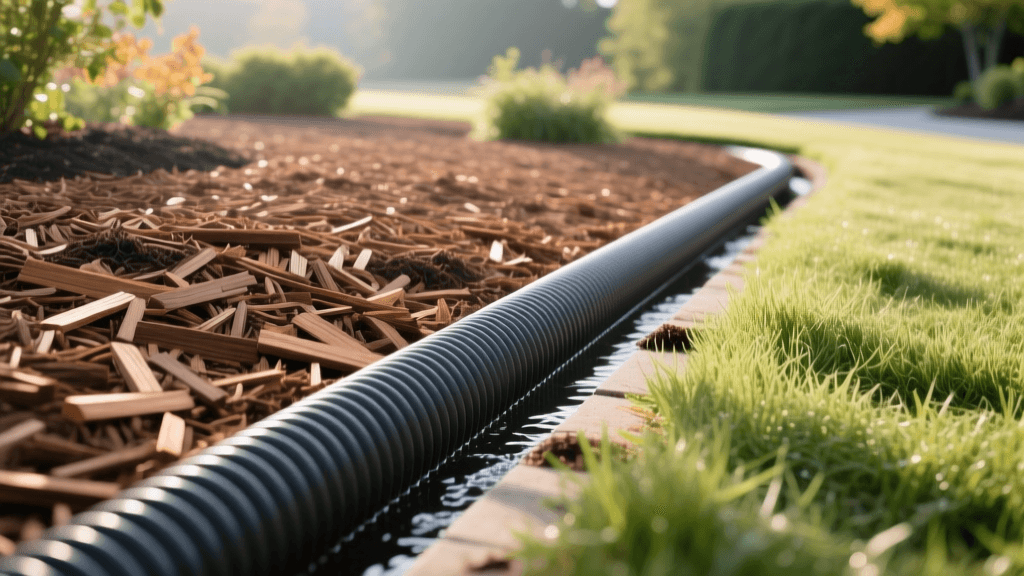
Best Mulch for Drainage Borders: Cedar vs Hardwood 2026
The Critical Intersection of Mulch and Landscape Drainage
In 2026, extreme weather patterns and heavy localized downpours have made residential landscape drainage more critical than ever. Homeowners and landscape professionals are increasingly installing landscape drainage pipes—such as corrugated HDPE tubing, PVC French drains, and specialized systems like the NDS Ez-Flow—along lawn bed borders to manage runoff. However, a frequently overlooked component of these drainage systems is the mulch applied directly above and around them. The choice between cedar mulch and hardwood mulch for lawn bed borders is no longer just an aesthetic or horticultural decision; it is a vital structural choice that impacts water percolation, pipe longevity, and landscape fabric integrity.
When you install a drainage pipe in a bed border, the mulch layer acts as the primary filter and moisture regulator before water ever reaches the pipe's weep holes or the surrounding landscape fabric. Choosing the wrong mulch can lead to rapid decomposition, sludge buildup, and catastrophic clogging of your drainage infrastructure. In this comprehensive 2026 guide, we evaluate cedar versus hardwood mulch specifically through the lens of landscape drainage pipe performance, helping you protect your yard's water flow and your investment in drainage infrastructure.
Understanding Landscape Drainage Pipes in Bed Borders
Lawn bed borders are naturally situated at the edges of turfgrass areas, making them the ideal pathways for routing landscape drainage pipes. These pipes collect surface water and shallow subsurface runoff, channeling it away from foundations and low-lying lawn areas. According to the University of Minnesota Extension, proper yard drainage relies heavily on the permeability of the layers above the pipe. If the top layer (mulch) and the intermediate layer (landscape fabric and gravel) become compacted or clogged, the entire drainage system fails, leading to waterlogged turf and root rot.
Most modern drainage pipes feature perforations or slotted weep holes designed to let water in while keeping soil out. These holes are typically wrapped in a geotextile landscape fabric or a specialized drainage sock. The mulch you place on top of this system dictates how much organic debris, tannins, and decomposed matter will eventually be pushed down into the fabric and pipe during heavy 2026 spring rains.
Cedar Mulch: Performance Over Drainage Zones
Cedar mulch is harvested from cedar trees and is highly prized for its natural aromatic oils, which act as a deterrent to many insects and fungi. From a drainage perspective, cedar's most significant advantage is its exceptionally slow decomposition rate. Because cedar resists rot, it maintains its structural integrity for years, meaning it does not quickly break down into fine organic particles that can clog landscape drainage pipes.
Pros of Cedar for Drainage Borders
- Low Sludge Production: Cedar breaks down very slowly, minimizing the amount of organic "sludge" that washes down into the drainage pipe's weep holes.
- Excellent Percolation: The chunky, fibrous nature of cedar mulch allows water to pass through rapidly without pooling on the surface, ensuring water reaches the French drain efficiently.
- Matting Resistance: Unlike some mulches that form an impermeable crust, cedar resists matting, maintaining surface permeability even after heavy compaction from foot traffic or lawnmower tires near the border.
Cons of Cedar for Drainage Borders
- Cost: In 2026, cedar mulch prices have risen, averaging $55 to $65 per cubic yard, making it a premium investment for large drainage border projects.
- Initial Hydrophobicity: Extremely dry, new cedar mulch can sometimes repel water initially. However, once properly watered in, it maintains excellent flow rates.
Hardwood Mulch: The Decomposition Dilemma
Hardwood mulch, typically shredded from oak, ash, or maple pallets and tree clearing debris, is the most common and economical mulch used in American landscapes. It provides a rich, dark aesthetic that contrasts beautifully with green turfgrass. However, when placed over landscape drainage pipes, hardwood mulch presents several distinct hydrological challenges.
Pros of Hardwood for Drainage Borders
- Cost-Effective: Hardwood mulch remains budget-friendly in 2026, generally costing between $30 and $40 per cubic yard.
- Soil Amendment: As it breaks down, hardwood adds valuable organic matter to the border soil, improving the long-term health of nearby shrubs and perennials.
Cons of Hardwood for Drainage Borders
- Rapid Decomposition: Hardwood breaks down relatively quickly. As it decays, it turns into a fine, muddy sludge that is easily washed downward during rainstorms.
- Fabric Clogging: This organic sludge is the primary enemy of geotextile landscape fabrics. Once the fabric clogs, water cannot reach the drainage pipe, rendering the system useless.
- Matting and Crusting: Shredded hardwood tends to interlock and mat together over time, creating a semi-impermeable crust that forces water to sheet over the surface rather than percolating down into the drainage pipe.
2026 Head-to-Head Comparison: Cedar vs. Hardwood
To help landscape professionals and homeowners make data-driven decisions, we have compiled a comparison table focusing strictly on how these mulches interact with landscape drainage infrastructure in the current year.
| Feature | Cedar Mulch | Hardwood Mulch |
|---|---|---|
| Decomposition Rate | Very Slow (3-5 years) | Fast (1-2 years) |
| Sludge Production | Minimal | High |
| Risk of Fabric Clogging | Low | High |
| Water Percolation Rate | High | Moderate (Decreases as it mats) |
| 2026 Avg. Cost (per cu. yd.) | $55 - $65 | $30 - $40 |
| Maintenance Over Drain Pipes | Low (Fluffing rarely needed) | High (Requires frequent fluffing/replacement) |
The Sludge Factor: Protecting Your Landscape Fabric
The most critical point of failure in any landscape drainage pipe system is the geotextile fabric. According to research highlighted by Penn State Extension, improper mulching techniques and the use of rapidly decaying organic materials can severely compromise soil hydrology and drainage layers. When hardwood mulch decomposes, it creates a humus-rich sludge. During heavy rains, this sludge is pushed through the top layer of soil and directly into the pores of the landscape fabric wrapping your French drain.
Once the fabric's pores are blocked by hardwood sludge, the drainage pipe becomes "blind." Water pools above the pipe, leading to saturated bed borders, dying turfgrass edges, and potential foundation water intrusion. Cedar mulch, by contrast, acts as a coarse biological filter. Its large, slow-decaying particles trap larger debris while allowing clean water to pass through to the pipe below, significantly extending the lifespan of your drainage system.
Best Practices for Mulching Over Drainage Pipes in 2026
If you are installing or maintaining landscape drainage pipes in your lawn bed borders this year, follow these expert best practices to ensure optimal water flow:
- Use a Gravel Envelope: Never lay landscape fabric and mulch directly on top of a bare dirt trench with a pipe. Always surround the corrugated or PVC drainage pipe with a 2-to-3-inch envelope of clean, washed drainage gravel (typically 3/4-inch crushed stone). This creates a void space that prevents soil and mulch sludge from collapsing into the pipe weep holes.
- Choose the Right Fabric: In 2026, commercial-grade non-woven geotextile fabrics are preferred over cheap woven tarps. Non-woven fabrics allow water to pass through in multiple directions while resisting the fine particulate clogging caused by hardwood mulch.
- Keep Mulch Depth Optimal: The University of Wisconsin-Madison Extension recommends maintaining a mulch depth of 2 to 3 inches. Piling mulch too high (creating "mulch volcanoes") over drainage borders adds unnecessary weight, compacts the soil below, and restricts the lateral flow of water into the drainage pipe trench.
- Fluff Annually: If you must use hardwood mulch for aesthetic reasons, you must aggressively rake and fluff the mulch every spring to break up the impermeable crust that forms, ensuring water can reach the drainage pipe below.
Conclusion
When evaluating cedar mulch vs. hardwood mulch for lawn bed borders that house landscape drainage pipes, the superior choice for long-term infrastructure health is undeniably cedar. While hardwood mulch offers upfront cost savings and rich color, its rapid decomposition and tendency to produce clogging sludge pose a severe threat to the weep holes and geotextile fabrics of modern drainage systems. By investing in cedar mulch in 2026, homeowners and landscapers can ensure rapid water percolation, prevent costly drainage pipe failures, and maintain dry, healthy lawn borders for years to come. Protect your drainage investment by choosing the mulch that works with your pipes, not against them.