
Landscaping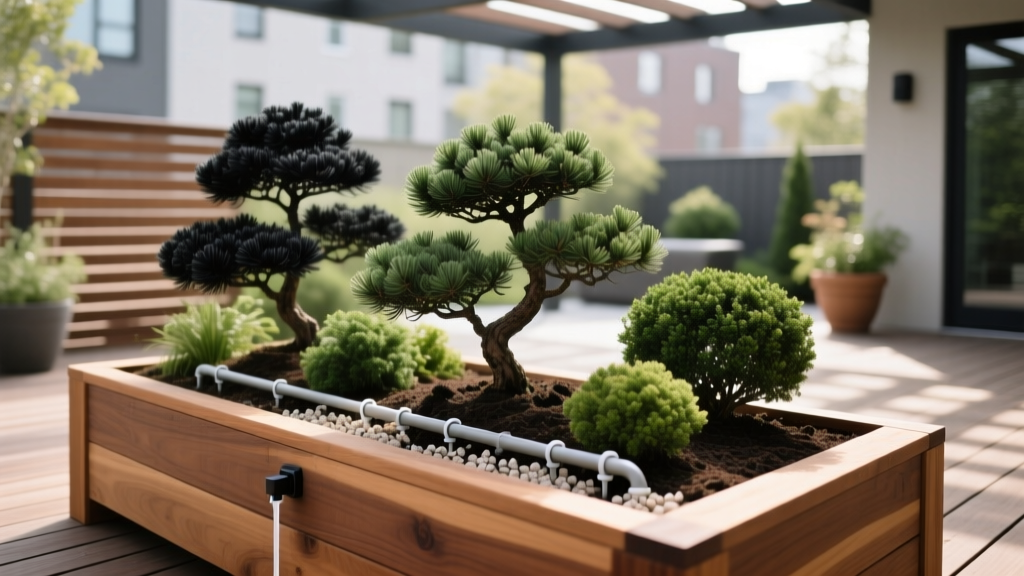
Top Trees For Cedar Raised Planters With Drip Irrigation 2026
Emily WatsonPublished
Why Cedar Raised Planters Are Ideal for Patio Trees in 2026
As urban and suburban outdoor spaces evolve in 2026, landscaping trends heavily favor sustainable, high-yield, and space-efficient designs. For homeowners looking to incorporate vertical interest, privacy, or fruit-bearing elements without the commitment of in-ground orchards, planting trees in raised cedar planter boxes equipped with automated drip irrigation is the ultimate solution. This guide bridges the gap between hardscaping and horticulture, providing a comprehensive tree selection and planting strategy tailored specifically for cedar containers and precision watering systems.
When constructing a raised planter box destined to hold a woody perennial, material selection is critical. Western Red Cedar (Thuja plicata) remains the gold standard in 2026 for outdoor landscaping structures. Unlike pressure-treated pine, which relies on chemical preservatives like copper azole that can alter soil pH and potentially leach into the root zone, cedar contains natural oils and tannins—specifically thujaplicins—that act as powerful fungicides and insect repellents. Furthermore, cedar offers superior thermal insulation. Tree roots confined to a raised box are highly susceptible to ambient temperature fluctuations. The cellular structure of cedar wood provides a buffer against extreme summer heat and winter freezes, protecting the delicate root cambium. According to the Arbor Day Foundation, protecting the root zone from thermal shock is one of the most critical factors in ensuring the long-term viability of container-grown trees.
Selecting the Right Trees for Container Environments
Not all trees can thrive in the restricted volume of a raised planter. The key is to select dwarf cultivars, slow-growing ornamentals, or species with fibrous, non-invasive root systems. In 2026, nursery stock is increasingly bred for 'patio performance,' offering genetic traits that limit canopy spread while maintaining high ornamental value. Dwarf Japanese Maples (Acer palmatum) offer stunning fall color and have shallow, fibrous root systems that adapt beautifully to the 24-inch depth of a cedar box. Columnar apples, such as the 'Northpole' variety, grow strictly upward, making them perfect for narrow cedar troughs used as privacy screens. Meyer Lemons thrive in cedar planters in warmer zones or when the planter is fitted with heavy-duty casters for winter indoor relocation.
| Tree Species | Mature Height | Sunlight Needs | USDA Zones |
|---|---|---|---|
| Dwarf Japanese Maple | 6-10 ft | Partial Sun | 5-9 |
| Columnar Apple ('Northpole') | 8-12 ft | Full Sun | 4-8 |
| Dwarf Meyer Lemon | 6-8 ft | Full Sun | 8-11 |
| Crape Myrtle ('Pocomoke') | 3-5 ft | Full Sun | 6-9 |
| Dwarf Olive ('Little Ollie') | 4-6 ft | Full Sun | 8-11 |
Sizing and Constructing the Cedar Box
A common mistake in container tree planting is underestimating the required soil volume. For a dwarf fruit tree or a medium-sized ornamental like a Japanese Maple, your cedar planter box should have a minimum interior volume of 15 to 20 cubic feet. A standard footprint of 4 feet by 4 feet, with a depth of 24 inches, is ideal. Ensure the box is lined with a heavy-duty, food-safe EPDM pond liner or landscape fabric to protect the cedar from constant moisture contact, extending its lifespan. Crucially, drill multiple 1-inch drainage holes in the bottom base, spaced every 12 inches, and elevate the box on 4x4 cedar skids to allow gravity to pull excess water away from the root crown.
The 2026 Sustainable Soil Matrix for Container Trees
Never use native garden soil or topsoil in a raised cedar planter. In-ground soils are too dense and will rapidly compact in a container, suffocating tree roots. The University of Minnesota Extension emphasizes the need for high-porosity, well-draining media for containerized woody plants. In 2026, the industry standard has shifted away from peat-heavy mixes due to sustainability concerns regarding peat bog harvesting. Instead, utilize a peat-free container matrix:
- 40% High-Quality Coir: Coconut coir bricks, rehydrated, provide excellent moisture retention without compaction.
- 30% Composted Pine Bark Fines: Provides essential structure, aeration, and slow-decaying organic matter.
- 15% Horticultural Pumice or Perlite: Ensures rapid drainage and prevents anaerobic soil conditions.
- 10% Worm Castings: Introduces vital microbiology and slow-release nutrients.
- 5% Biochar: Inoculated with mycorrhizal fungi to vastly expand the tree's nutrient uptake network within the confined space.
Step-by-Step Tree Planting Guide
Proper planting depth is non-negotiable for tree survival. Follow these steps for your cedar planter:
- Hydrate the Root Ball: Before planting, soak the nursery pot in a basin of water mixed with a mycorrhizal root dip for 30 minutes.
- Establish the Base: Fill the cedar box with your soil matrix up to the point where the tree's root flare will sit exactly 2 inches below the rim of the planter.
- Tease the Roots: Gently loosen the outer circling roots. If the tree is pot-bound, make four vertical slices down the root ball with a sterilized knife to encourage outward growth.
- Backfill and Water: Backfill the soil matrix, tamping down gently to eliminate large air pockets. Water thoroughly to settle the soil around the root flare.
Designing the Drip Irrigation System
Hand-watering a 20-cubic-foot cedar planter is inefficient and often leads to uneven moisture distribution. A dedicated drip irrigation system is mandatory for the health of containerized trees. In 2026, precision micro-irrigation kits from brands like Netafim and Rain Bird offer unmatched efficiency. According to EPA WaterSense, drip irrigation delivers water directly to the root zone with up to 90% efficiency, virtually eliminating evaporative loss and keeping the cedar wood drier to prevent rot.
Pressure-compensating (PC) emitters are non-negotiable for this setup. Because the cedar planter box may be situated on a sloped patio or balcony, standard emitters will drain unevenly. PC emitters maintain a strict 2 GPH (Gallons Per Hour) output regardless of elevation changes or water pressure fluctuations, ensuring every side of the tree's root ball receives the exact same volume of water. Additionally, install a 200-mesh inline filter and a pressure regulator (set to 25 PSI) at the hose bib connection to prevent the micro-tubing from blowing out under municipal water pressure.
Layout Strategy: Create a spiral or concentric ring layout around the tree's trunk, keeping the main trunk dry to prevent collar rot. Place four to six 2 GPH emitters evenly spaced in a 12-inch radius around the drip line of the canopy. As the tree grows over the years, you will expand this ring. Secure the 1/4-inch micro-tubing to the cedar walls or stake it into the soil using landscape staples.
Smart Controllers and Sensor Integration
To truly modernize your cedar planter, integrate an inline soil moisture sensor. In 2026, Bluetooth-enabled soil probes can communicate directly with your smart Wi-Fi irrigation controller (such as the Rachio 3e or B-hyve XR), overriding scheduled watering if the cedar box already retains adequate moisture. This prevents the most common cause of container tree death: root rot from overwatering. Set your controller to run the drip system for longer durations (e.g., 45 minutes) but less frequently (e.g., twice a week) to encourage deep, drought-tolerant root growth within the cedar box.
Seasonal Maintenance and Winterization
Trees in raised cedar planters are effectively 'above ground' and their roots are exposed to colder winter air temperatures than in-ground trees. In late autumn, wrap the exterior of the cedar box with bubble insulation or burlap stuffed with straw to protect the roots from hard freezes. Prune your trees during their dormant season (late winter) to maintain their structural integrity and keep the canopy balanced with the restricted root volume. Top-dress the soil matrix annually with an inch of fresh compost and worm castings to replenish nutrients. With the right cedar box, a precise drip system, and proper tree selection, your patio orchard or ornamental focal point will thrive beautifully in 2026 and beyond.

