
Landscaping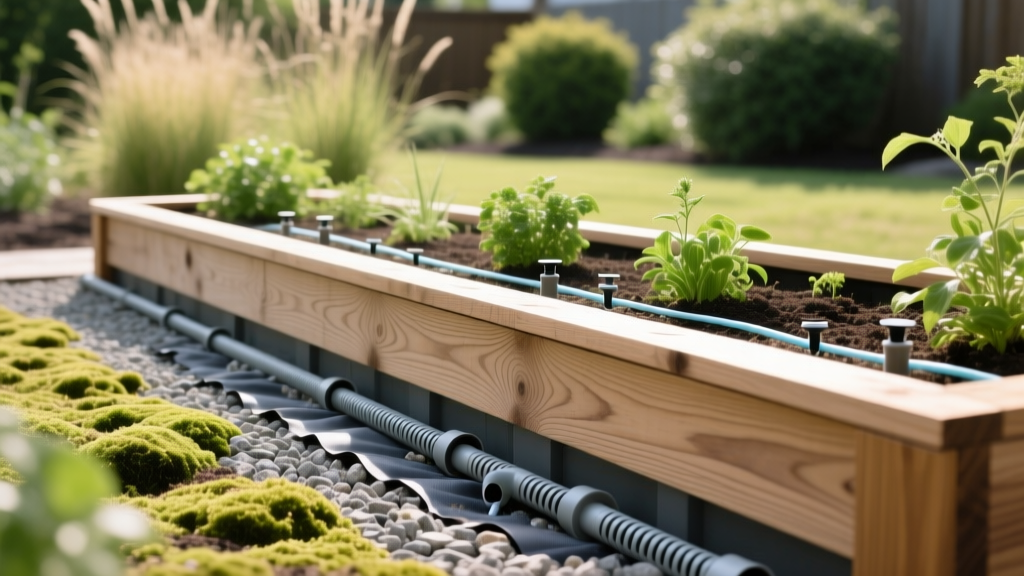
French Drain Installation for Cedar Raised Beds in 2026
Anna KowalskiPublished
The 2026 Standard for Cedar Planter Hydration Management
Building a raised planter box with cedar wood and drip irrigation remains one of the most rewarding and sustainable landscaping projects you can undertake in 2026. Cedar offers natural beauty, exceptional durability, and organic rot resistance, while modern drip irrigation systems deliver precise, water-saving hydration directly to the root zones of your vegetables, herbs, or ornamental plants. However, even the most beautifully constructed cedar beds face a hidden enemy: subsurface water accumulation. When heavy rainfall or aggressive drip irrigation schedules saturate the soil, water can pool at the base of the planter. Without a proper escape route, this trapped moisture leads to a perched water table that drowns deep roots and accelerates the interior degradation of the cedar wood. The ultimate solution for preserving your hardscaping investment and optimizing plant health is integrating a French drain installation directly into or around your raised bed footprint.
Why Cedar Raised Planters Require Superior Drainage
Western Red Cedar and Yellow Cedar contain natural oils called thujaplicins, which act as fungicides and decay inhibitors. While cedar is vastly superior to pressure-treated pine or composite materials for organic gardening, it is not entirely waterproof. When the bottom boards of a cedar planter box sit in constantly saturated soil, the wood wicks moisture upward. Over time, this compromises the cellular structure of the timber, leading to premature rot. Furthermore, according to guidelines from The Old Farmer's Almanac, most high-yield garden crops and ornamental shrubs require well-draining soil to prevent root asphyxiation and fungal diseases like phytophthora. A French drain acts as a subsurface relief valve, capturing excess water from both natural precipitation and your drip irrigation system, and channeling it safely away from the planter box.
Designing the Perimeter vs. Base-Layer French Drain
When planning your French drain installation for a cedar raised bed, you must choose between two primary configurations based on your yard's native soil composition and topography:
- The Perimeter Trench Drain: Ideal for yards with moderate drainage issues. A trench is dug around the outside perimeter of the cedar bed, lined with geotextile fabric, filled with gravel, and fitted with a slotted pipe. This catches lateral groundwater and surface runoff before it can undermine the cedar walls.
- The Base-Layer Relief Drain: Essential for heavy clay soils or flat yards with zero natural gradient. A shallow trench is excavated directly beneath the footprint of the raised bed before the cedar box is assembled. The pipe exits through a drilled hole in the bottom cedar board or runs out from under the corner, ensuring that deep percolation from your drip emitters is immediately evacuated.
Step-by-Step French Drain Installation for Cedar Beds
Step 1: Excavation and Slope Planning
Begin by marking the perimeter of your cedar planter box. Dig a trench that is 12 inches wide and 12 to 18 inches deep. If you are installing a base-layer drain, excavate a central channel 6 inches deep and 8 inches wide running the length of the bed, sloping toward your desired discharge point. Use a line level to ensure a minimum slope of 1 inch per 8 feet of pipe run. This gravity-fed slope is non-negotiable for effective water evacuation.
Step 2: Geotextile Fabric and Base Gravel
Line the entire trench with a commercial-grade, woven geotextile landscape fabric. Do not use cheap, non-woven weed barrier, as it will clog with silt within a single season. Leave enough fabric overhang on the sides to completely wrap over the top of the gravel later. Add a 2-inch base layer of 3/4-inch washed drain rock. Avoid pea gravel, as the smooth, round stones do not interlock and can shift, altering your pipe slope.
Step 3: Pipe Placement and Connection
Lay a 3-inch or 4-inch slotted corrugated pipe or rigid PVC pipe with perforations facing downward. Industry leaders like NDS drainage systems recommend the slots-down configuration to prevent immediate sediment influx while allowing the water table to rise into the pipe. Ensure the pipe daylight at a lower elevation in your yard, a dry well, or a municipal storm drain (where local codes permit).
Step 4: Backfilling and Soil Separation
Cover the pipe with an additional 4 to 6 inches of washed drain rock. Fold the overhanging geotextile fabric over the top of the gravel to create a complete 'burrito' wrap. This prevents fine garden soil from migrating into the gravel voids and clogging the system. Finally, backfill the remaining trench with native soil or decorative river rock to blend seamlessly with your landscape design.
Integrating Drip Irrigation with Your Drainage Plan
The synergy between your French drain and your drip irrigation system is where true landscaping mastery shines in 2026. Modern Rain Bird drip irrigation components, such as Xeri-Bug emitters or 1/4-inch soaker tubing, deliver water at a slow, measured rate (typically 0.5 to 2.0 gallons per hour). This slow application allows the soil profile in your cedar bed to reach field capacity without triggering massive surface runoff. However, during extended watering cycles or heavy summer monsoons, the water will eventually percolate past the root zone. The French drain beneath or beside the cedar bed catches this nutrient-rich leachate, preventing it from turning the bottom of your planter into an anaerobic swamp. To maximize efficiency, pair your drip system with a smart Wi-Fi controller equipped with a soil moisture sensor, ensuring the drip valves only open when the cedar bed actually requires hydration, thereby reducing the overall load on your French drain.
2026 Material Cost and Planning Table
Budgeting for a combined cedar planter and French drain project requires an understanding of current material costs. Below is a breakdown of estimated 2026 pricing for a standard 4-foot by 8-foot raised bed with an integrated perimeter drainage system.
| Material / Component | Quantity Needed | Estimated 2026 Cost | Primary Purpose |
|---|---|---|---|
| Western Red Cedar (2x8x8) | 6 Boards | $160.00 | Rot-resistant planter box walls |
| NDS 3-inch Slotted Pipe | 25 Feet | $35.00 | Subsurface water collection |
| Woven Geotextile Fabric | 50 Sq. Ft. | $28.00 | Sediment filtration and separation |
| 3/4-inch Washed Drain Rock | 0.5 Tons | $45.00 | Void space for water flow |
| Smart Drip Irrigation Kit | 1 Complete System | $110.00 | Precision, low-volume hydration |
| Stainless Steel Corner Braces | 8 Pieces | $24.00 | Structural integrity for wet soil |
| Total Estimated Material Cost | --- | $402.00 | Comprehensive Hardscape & Drainage |
Long-Term Maintenance and Smart Watering
Even the most meticulously installed French drain requires basic maintenance to ensure longevity. Once a year, preferably in late autumn after the growing season, flush the drainage pipe with a high-pressure garden hose to clear any fine silt or root intrusions that may have bypassed the geotextile fabric. Additionally, inspect the interior walls of your cedar planter box. If you notice the bottom boards darkening or softening, it may indicate that the drip irrigation emitters are positioned too close to the wood edges or that the drain rock has shifted. In 2026, leveraging smart landscaping technology is easier than ever. By integrating wireless soil moisture probes directly into the cedar bed and linking them to your irrigation controller, you can automate your drip system to halt watering the moment the lower soil profile reaches optimal saturation. This not only conserves municipal water but drastically extends the lifespan of both your French drain infrastructure and your beautiful cedar wood planter box.

