Lawn Care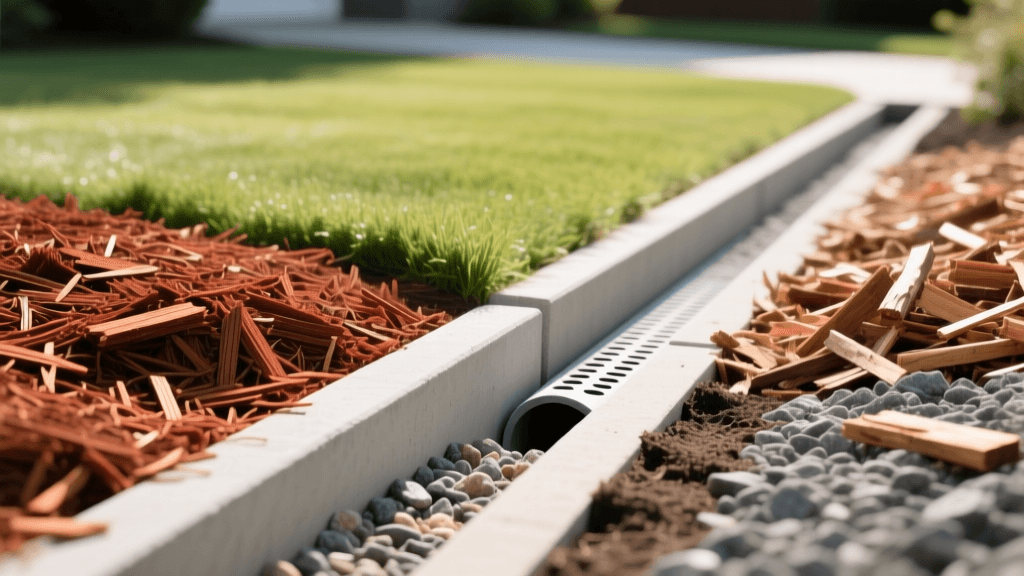
Cedar vs Hardwood Mulch for French Drain Borders in 2026
The Critical Intersection of French Drains and Landscape Borders
In 2026, extreme weather patterns and shifting seasonal rainfall have made proper yard drainage more critical than ever for homeowners. When installing a French drain system to combat waterlogged lawns and soggy foundations, the focus is often placed entirely on the subsurface mechanics: the trench depth, the perforated pipe, and the drainage gravel. However, the surface-level integration of the drain into your lawn bed borders is equally vital. The mulch you choose for these borders directly impacts surface water flow, soil erosion, and the long-term functionality of your drainage system.
Choosing between cedar mulch and hardwood mulch for lawn bed borders adjacent to a French drain requires a nuanced understanding of how organic materials interact with water velocity, soil percolation, and landscape edging. This comprehensive guide breaks down the pros, cons, and 2026 market realities of using cedar versus hardwood mulch in drainage-heavy landscape beds.
Understanding French Drain Anatomy and Surface Water
A standard French drain consists of a gravel-filled trench lined with non-woven geotextile fabric (typically 4 oz to 8 oz weight in 2026 landscaping standards) and a 4-inch corrugated or PVC perforated pipe. While the primary job of the drain is to collect subsurface water, the top layer of the trench and the surrounding lawn bed borders must manage surface runoff. If surface water pools or washes away the topsoil cap, sediment can infiltrate the gravel trench, eventually clogging the system.
Mulch serves as the protective armor for your lawn bed borders. It regulates soil temperature, retains moisture for ornamental plants, and slows down surface water runoff, allowing it to percolate gently into the soil or flow toward the drain's catch basins without eroding the bed. According to landscaping experts at This Old House, protecting the integrity of the soil above and around the drain trench is paramount to preventing costly system failures.
Cedar Mulch for French Drain Borders: Pros and Cons
Cedar mulch, particularly shredded cedar, is a premium choice for landscape beds in 2026. Its distinct aromatic oils and fibrous texture offer unique advantages and specific challenges when installed near French drain systems.
The Advantages of Cedar
- Interlocking Fibers: Shredded cedar mats together tightly. This interlocking property creates a cohesive surface that resists minor surface runoff, keeping the mulch in place over the French drain trench cap during light to moderate rain events.
- Pest and Rot Resistance: The natural oils (thujone) in cedar act as a deterrent to carpenter ants, termites, and fungal decay. This is especially beneficial near French drains, where the subsurface environment is consistently damp and prone to harboring insects.
- Aeration and Percolation: Because cedar resists compacting, it maintains a loose structure that allows surface water to easily percolate through the mulch layer and down into the soil or toward the drain's surface grates.
The Drawbacks of Cedar
- Buoyancy Issues: Cedar is remarkably lightweight. Near the "daylight" point (the outlet where the French drain discharges water into a swale or dry well), the high velocity of exiting water can easily float cedar mulch away, leading to severe erosion and mulch loss.
- 2026 Pricing: Due to supply chain shifts and sustainable forestry regulations, premium shredded cedar averages between $55 and $75 per cubic yard in 2026, making it a significant investment for large drainage borders.
Hardwood Mulch for French Drain Borders: Pros and Cons
Shredded hardwood mulch, often derived from local oak, hickory, and maple trees, is the workhorse of the landscaping industry. It is widely available and behaves very differently in high-moisture environments.
The Advantages of Hardwood
- Superior Weight and Anchoring: Hardwood mulch is dense and heavy. When placed near French drain outlets, catch basins, or areas with high surface water velocity, hardwood stays firmly anchored to the soil, preventing washouts and protecting the underlying drain trench.
- Cost-Effectiveness: Hardwood mulch remains highly economical, averaging $35 to $45 per cubic yard in 2026. For expansive lawn bed borders that run the entire length of a 100-foot French drain, this cost difference is substantial.
- Soil Amendment: As hardwood breaks down, it adds rich organic matter to the soil, improving the soil structure around the drain trench and promoting deep root growth for border plants, which in turn helps stabilize the soil.
The Drawbacks of Hardwood
- Compaction and Runoff: Over time, hardwood mulch breaks down into fine particles that can compact into a dense mat. As noted by Penn State Extension, heavily compacted organic layers can become hydrophobic or impede water infiltration, forcing surface water to sheet across the top of the bed rather than draining properly into the soil or French drain grates.
- Nitrogen Tie-Up: As the carbon-rich hardwood decomposes, it consumes nitrogen from the surrounding soil. Plants bordering the French drain may suffer from nitrogen deficiency unless supplemented with a balanced 2026 lawn and garden fertilizer.
Head-to-Head Comparison: Cedar vs. Hardwood (2026 Data)
| Feature | Shredded Cedar Mulch | Shredded Hardwood Mulch |
|---|---|---|
| 2026 Avg. Cost | $55 - $75 / cubic yard | $35 - $45 / cubic yard |
| Weight / Density | Lightweight (Prone to floating) | Heavy (Stays anchored in flow) |
| Water Percolation | Excellent (Resists compaction) | Fair (Can compact and impede flow) |
| Erosion Control | Good for gentle slopes | Excellent for high-flow outlets |
| Lifespan | 2 to 3 years before top-dressing | 1 to 2 years before top-dressing |
| Soil Impact | Neutral (Slow to decompose) | Acidic / Nitrogen-depleting initially |
Best Practices for Integrating Mulch with French Drain Systems
To maximize the effectiveness of your French drain and ensure your lawn bed borders remain pristine, follow these actionable installation steps in 2026:
- Establish a Hardscape Buffer at the Trench Edge: Do not place mulch directly over the gravel trench of the French drain. Instead, cap the trench with 2 inches of topsoil and sow with turfgrass, or use a 12-inch-wide strip of decorative river rock (3/4-inch to 1-inch diameter) directly above the pipe. River rock allows water to enter the drain while preventing mulch from migrating into the gravel bed.
- Install Rigid Landscape Edging: Use aluminum or heavy-duty polyethylene edging along the border where the mulch meets the lawn or the drain trench. This prevents the mulch from spilling onto the grass and stops surface runoff from carving channels through the bed.
- Maintain Proper Mulch Depth: Apply mulch to a depth of 2 to 3 inches. Any deeper, and you risk suffocating the roots of your border plants and blocking surface water from reaching the soil. Keep the mulch at least 2 inches away from the base of shrubs and tree trunks to prevent rot.
- Use Hardwood at the Daylight Point: The terminus of your French drain, where water exits the pipe, experiences the highest water velocity. Use heavy hardwood mulch or, preferably, a splash block of riprap stone in this specific zone to prevent the mulch from washing away into your swale or storm drain.
Managing Soil Types and Drainage Synergy
Your native soil type heavily influences which mulch will perform best. If your lawn bed borders sit on heavy clay soil, water percolation is naturally slow. In this scenario, using cedar mulch is highly recommended because its loose, non-compacting structure encourages whatever surface water is present to slowly infiltrate the clay rather than sheeting off and causing erosion. Conversely, if your beds are built on sandy loam, water drains rapidly on its own. Hardwood mulch can be used safely here, as the underlying soil will easily absorb the water that manages to pass through the denser hardwood layer.
Final Verdict for 2026 Lawn Care
There is no single "best" mulch for every French drain installation; the right choice depends on the specific hydrology of your yard. For the majority of the lawn bed border, where gentle surface percolation and weed suppression are the primary goals, shredded cedar mulch is the superior choice in 2026 due to its aeration properties and pest resistance. However, for high-flow zones, steep slopes, and the immediate vicinity of the French drain's daylight outlet, hardwood mulch (or river rock) is essential to provide the weight necessary to prevent catastrophic washouts. By strategically combining these materials and adhering to modern trench-capping techniques, you can protect your drainage investment and maintain beautiful, thriving landscape borders for years to come.