Lawn Care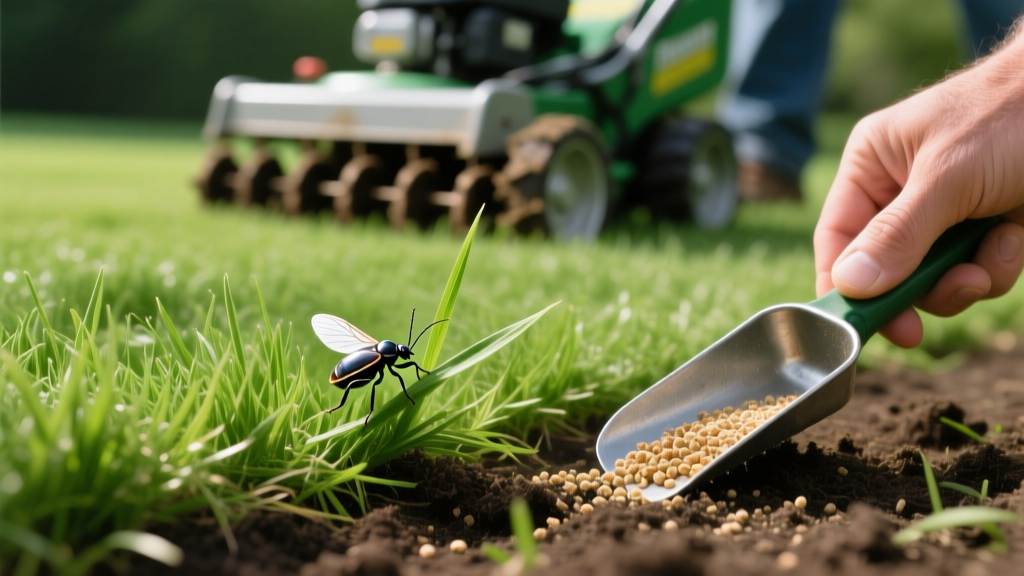
Chinch Bug Control: Bifen IT & Core Aeration Guide 2026
Robert HayesPublished
The Rising Threat of Chinch Bugs in 2026
As we navigate the 2026 growing season, shifting climate patterns and unseasonably warm springs have accelerated the life cycles of many common turfgrass pests. Among the most destructive is the southern chinch bug (Blissus insularis), a tiny but voracious insect capable of turning a lush, green lawn into a patchwork of dead, yellow-brown straw in a matter of weeks. Homeowners often mistake chinch bug damage for drought stress or fungal diseases, leading to improper watering and wasted resources. However, the most effective eradication strategy requires a multifaceted approach. Relying solely on chemical sprays is no longer sufficient due to the protective thatch layer found in most mature lawns. By combining precise pest identification with targeted applications of Bifen IT and the mechanical advantages of core aeration, you can eliminate chinch bug colonies and restore your turf's vitality.
Accurate Identification: Is it Drought or Chinch Bugs?
Before deploying any treatment, accurate identification is critical. Chinch bugs primarily target St. Augustinegrass, Bermudagrass, and Zoysiagrass, though they can affect other warm-season and cool-season varieties. The damage typically appears first in hot, dry, sunny areas of the lawn, particularly near sidewalks and driveways where heat radiates from the concrete.
Visual Cues and Life Stages
Adult chinch bugs are small, measuring about 1/8 to 1/5 of an inch long. They feature black bodies with white wings folded over their backs, displaying a distinct black triangular marking. The nymphs, which cause the most rapid damage due to their aggressive feeding, are bright red with a white band across their abdomen before molting into darker, winged adults. They feed by piercing the grass blades and injecting a toxic saliva that blocks the plant's vascular system, causing irreversible wilting and death.
The Coffee Can Test
To confirm an infestation, perform the classic "coffee can test." Remove both ends of a metal coffee can or a large PVC pipe. Push the cylinder deep into the soil at the margin where healthy green grass meets the dead, damaged turf. Fill the cylinder with water and wait for five to ten minutes. If chinch bugs are present, they will float to the surface. Finding more than 20 to 25 bugs per square foot indicates a severe infestation requiring immediate intervention.
The Core Aeration Advantage: Why Spraying Alone Fails
Understanding the habitat of the chinch bug is the key to unlocking the power of core aeration in your pest control strategy. Chinch bugs live, mate, and overwinter in the thatch layer—the dense mat of dead and living organic matter that accumulates between the green grass blades and the soil surface. When a lawn develops a thatch layer thicker than 0.5 inches, it acts as an impenetrable sponge and physical barrier.
This is where many DIY pest control efforts fail. According to the Environmental Protection Agency (EPA), Bifenthrin (the active ingredient in Bifen IT) is highly lipophilic, meaning it binds tightly to organic matter. If you spray Bifen IT over a thick thatch layer, the chemical binds to the top of the thatch and never reaches the soil surface where the most vulnerable nymphs and egg-laying females reside. The pests simply retreat deeper into the thatch or the soil cracks, surviving the treatment and rebounding weeks later.
Core aeration physically disrupts this dynamic. By extracting 2-to-3-inch plugs of soil and thatch, aeration accomplishes three vital goals for pest management:
- Thatch Reduction: It physically removes a significant percentage of the thatch layer, eliminating the primary harbor for chinch bugs.
- Chemical Penetration: The empty aeration holes act as direct conduits, allowing the Bifen IT solution to bypass the remaining thatch and reach the soil surface and root zone where pests hide.
- Microbial Activity: Dragging the extracted soil cores across the lawn introduces soil-borne microbes to the thatch layer, accelerating natural decomposition and starving the bugs of their preferred habitat.
Bifen IT: Active Ingredient, Safety, and 2026 Economics
Bifen IT is a professional-grade, broad-spectrum insecticide containing 7.9% Bifenthrin, a synthetic pyrethroid. It is highly regarded in the turf management industry for its rapid knockdown effect and long-lasting residual control, which can protect your lawn for up to 30 days post-application. The National Pesticide Information Center (NPIC) notes that bifenthrin disrupts the nervous system of insects upon contact or ingestion, making it exceptionally lethal to chinch bugs.
In 2026, a 16-ounce bottle of Bifen IT typically retails between $45 and $55, which is highly economical considering a single bottle can treat up to 16,000 square feet at the standard maintenance rate, or 8,000 square feet at the heavy infestation rate. When handling Bifen IT, always wear chemical-resistant gloves, long sleeves, and eye protection. Keep pets and children off the lawn until the application has completely dried.
The Integrated Protocol: Aerating and Applying Bifen IT
To maximize the synergy between cultural practices and chemical controls, follow this step-by-step protocol designed specifically for the 2026 growing season.
Step 1: Mow and Hydrate
Two days before aeration, mow your lawn slightly lower than your usual height (about 1.5 to 2 inches) to expose the thatch layer. Water the lawn deeply the night before to soften the soil, ensuring the aerator tines can penetrate to a full 3-inch depth without clogging.
Step 2: Perform Core Aeration
Rent a modern, heavy-duty core aerator. Make two passes over the lawn in perpendicular directions to ensure maximum soil disruption and thatch extraction. The goal is to pull cores spaced 2 to 3 inches apart. Leave the extracted cores on the lawn for now.
Step 3: Drag and Break the Cores
Using a drag mat, a piece of chain-link fence, or a stiff push broom, vigorously drag the lawn to break apart the soil cores. This top-dresses the lawn, pushes soil microbes into the thatch, and ensures the aeration holes remain open for the impending chemical application.
Step 4: Mix and Apply Bifen IT
For an active chinch bug infestation, use the high label rate: mix 1 to 2 ounces of Bifen IT per 1,000 square feet of turf. Use a hose-end sprayer or a pressurized backpack sprayer for even coverage. Spray the lawn thoroughly, focusing heavily on the damaged areas and a 5-foot buffer zone of healthy grass where the bugs are likely migrating. The open aeration holes will immediately draw the chemical deep into the root zone.
Step 5: Water In the Application
Unlike foliar diseases, chinch bugs reside at the base of the plant. Immediately after spraying, apply 0.25 inches of water using your irrigation system. This crucial step washes the Bifen IT off the grass blades and down into the thatch and aeration holes, creating a lethal zone at the soil surface. According to University of Minnesota Extension turf management guidelines, proper watering-in is the single most important factor in the success of soil-surface insecticides.
Treatment Comparison Chart: 2026 Chinch Bug Solutions
While Bifen IT combined with aeration is our top recommendation for rapid knockdown, it is helpful to understand how it compares to other common market options.
| Treatment Type | Active Ingredient | Aeration Synergy | Knockdown Speed | Residual Control | Est. Cost (per 5k sq ft) |
|---|---|---|---|---|---|
| Bifen IT (Recommended) | Bifenthrin (7.9%) | Excellent (Penetrates cores) | Fast (24-48 hours) | Up to 30 Days | $15 - $20 |
| Systemic Granules | Imidacloprid | Good (Requires heavy watering) | Slow (7-14 days) | Up to 90 Days | $25 - $35 |
| Premium Combo Spray | Bifenthrin + Zeta-Cypermethrin | Excellent | Very Fast (12-24 hours) | Up to 45 Days | $40 - $55 |
| Biological Nematodes | Steinernema carpocapsae | Fair (UV sensitive) | Slow (5-10 days) | Variable | $30 - $45 |
Post-Treatment Lawn Recovery and Overseeding
Once the chinch bug colony has been eradicated and the Bifen IT residual has begun to break down (typically after 3 to 4 weeks), your lawn will need assistance to fill in the dead patches left behind by the pests. The core aeration you performed prior to treatment has already prepared the soil perfectly for overseeding. Choose a drought-tolerant, chinch-bug-resistant grass cultivar suited to your specific USDA hardiness zone. Keep the newly seeded areas consistently moist, and apply a starter fertilizer to encourage deep root growth. By integrating core aeration into your pest management routine, you are not just killing bugs; you are fundamentally improving the soil architecture, ensuring your lawn remains thick, resilient, and naturally resistant to future infestations throughout 2026 and beyond.