Lawn Care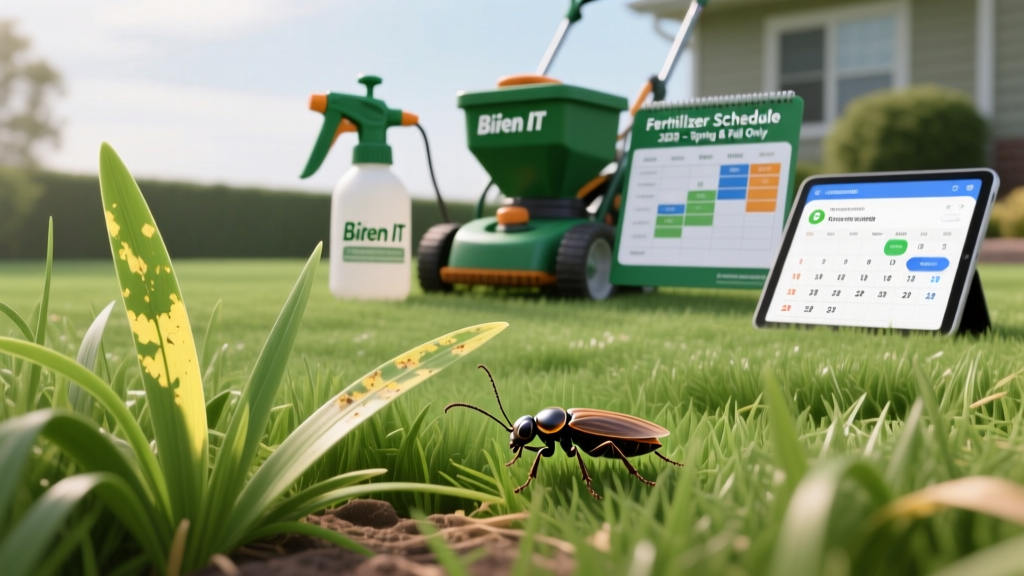
2026 Chinch Bug Treatment: Bifen IT & Fertilizer Guide
Anna KowalskiPublished
The 2026 Lawn Care Challenge: Chinch Bugs and Nutrition
As we navigate the 2026 lawn care season, homeowners across the southern and transition zones are facing a familiar but highly destructive adversary: the southern chinch bug (Blissus insularis). While many turf managers and DIY enthusiasts immediately reach for the pesticide cabinet at the first sign of brown patches, treating chinch bugs effectively requires a holistic approach. Specifically, your fertilization schedule plays a massive, often overlooked role in both attracting these pests and aiding your lawn's recovery post-treatment. In this comprehensive guide, we will explore how to accurately identify chinch bug damage, how to properly apply Bifen IT (a highly effective bifenthrin-based insecticide), and how to align your 2026 fertilizer types and schedules to create an environment where chinch bugs simply cannot thrive.
Identifying Chinch Bug Damage vs. Drought Stress
One of the most common mistakes homeowners make in the heat of summer is misdiagnosing chinch bug damage as drought stress. Both present as yellowing grass that eventually turns brown and dies, typically starting in open, sunny areas near driveways, sidewalks, or streets where the heat radiating from the pavement creates a microclimate that chinch bugs adore. However, unlike drought stress, which will usually affect the entire lawn somewhat evenly or respond quickly to deep irrigation, chinch bug damage appears in distinct, irregular patches that continue to expand outward even when the lawn is adequately watered.
According to the University of Florida IFAS Extension, southern chinch bugs are the most destructive insect pest of St. Augustinegrass, but they will also readily attack Bermuda, Zoysia, and Centipede lawns, particularly when the turf is stressed or over-fertilized with quick-release nitrogen.
The 'Tin Can' Flotation Test
To confirm an infestation before applying any chemicals, perform the classic Tin Can Test. Remove both the top and bottom of a standard coffee can. Push the can about two inches into the soil at the margin of a damaged patch (where the dying grass meets the healthy grass). Fill the can with water and wait for about five minutes. If you have an active infestation, the chinch bugs will float to the surface. Nymphs will appear small and reddish-orange with a distinct white band across their backs, while adults are roughly 1/6 inch long, black, and feature white, triangular wings folded flat over their bodies. Finding 15 to 20 or more bugs per square foot indicates that immediate treatment is necessary.
The Fertilizer Connection: Why Your Feeding Schedule Matters
Why do some lawns get decimated by chinch bugs while neighboring lawns remain untouched? The answer often lies beneath the surface in the soil's nutrient profile and the type of fertilizer applied. Chinch bugs are highly attracted to lush, rapidly growing grass that is rich in nitrogen. When homeowners apply high rates of quick-release, water-soluble nitrogen (such as urea or ammonium sulfate) during the peak summer months, it forces the grass to produce soft, succulent tissue. This tissue is easier for chinch bugs to pierce with their needle-like mouthpieces to suck out the plant's vital fluids, and it lacks the natural cellular defenses found in slower-growing, properly nourished turf.
Furthermore, excessive nitrogen application leads to rapid thatch buildup. Thatch is the layer of dead and living organic matter that accumulates between the soil surface and the green grass blades. Chinch bugs live, breed, and hide in this thatch layer, which protects them from predators and environmental extremes. A thick thatch layer also prevents water and insecticides from penetrating the soil, rendering treatments less effective.
2026 Fertilizer Types and Chinch Bug Susceptibility
| Fertilizer Type | Nitrogen Release Rate | Chinch Bug Risk | Recommended 2026 Application Window |
|---|---|---|---|
| Quick-Release Synthetic (Urea) | Immediate (1-3 weeks) | High | Early Spring / Late Fall Only |
| Slow-Release Synthetic (SCU/PCU) | Gradual (6-10 weeks) | Moderate | Mid-Spring / Early Fall |
| Organic / Biosolids (e.g., Milorganite) | Slow (8-12 weeks) | Low | Safe for Summer Months |
| High-Potassium Winterizer | Variable (Focus on K) | Low | 6 weeks before first frost |
As noted by the Clemson Cooperative Extension, shifting to slow-release or organic nitrogen sources during the summer months is critical for maintaining turf health without creating a feeding frenzy for turf-destroying insects. By keeping nitrogen levels steady and avoiding sudden spikes, your grass develops thicker cell walls and deeper root systems, making it naturally more resilient to pest pressure.
Treating Chinch Bugs with Bifen IT (Bifenthrin)
When cultural controls and fertilizer adjustments are not enough to stop an active outbreak, chemical intervention is required. Bifen IT is a widely trusted, professional-grade insecticide containing 7.9% Bifenthrin as its active ingredient. Bifenthrin is a synthetic pyrethroid that acts on the nervous system of insects, providing rapid knockdown and long-lasting residual control (up to 30 days or more) against chinch bugs and a host of other lawn pests.
Mixing and Application Rates
For active chinch bug infestations, the standard application rate for Bifen IT is 0.5 to 1.0 fluid ounces per 1,000 square feet. However, the most critical factor in treating chinch bugs with Bifen IT is not just the chemical concentration, but the water volume. Because chinch bugs reside deep within the thatch layer and at the base of the grass stems, a light misting will not reach them. You must mix the 1.0 oz of Bifen IT into at least 1.5 to 2.0 gallons of water per 1,000 square feet to ensure the solution penetrates the thatch and coats the lower leaf sheaths where the bugs hide.
Application Best Practices for 2026
- Mow First: Mow your lawn a day before application. This removes excess leaf tissue, allowing the spray to reach the thatch layer more easily. Be sure to bag the clippings if the thatch is severe to help expose the pests.
- Timing is Everything: Apply Bifen IT in the early morning or late evening. Chinch bugs are most active near the surface during the cooler parts of the day, and spraying during the heat of the afternoon can lead to rapid evaporation of your carrier water and potential phytotoxicity (leaf burn) on stressed grass.
- Do Not Water In Immediately: Unlike grub treatments that must be watered deep into the soil, chinch bugs are surface and thatch dwellers. Allow the Bifen IT application to dry completely on the grass blades and thatch. Once dry, it is rainfast and will remain active in the pest's habitat.
- Protect Pollinators: The Environmental Protection Agency (EPA) notes that bifenthrin is highly toxic to bees and aquatic invertebrates. Never spray Bifen IT on blooming weeds (like clover or dandelions) in your lawn. Mow the lawn thoroughly to remove any flowers before treating, and avoid spraying near storm drains, ponds, or streams.
Integrating Bifen IT with Your 2026 Fertilizer Schedule
Successfully eradicating chinch bugs is only half the battle; helping your lawn recover without triggering a secondary pest outbreak is the other. Here is how to integrate your Bifen IT treatments with a smart, seasonal fertilizer schedule in 2026.
Phase 1: Spring Preparation (April - May)
Start the season with a soil test to determine your lawn's exact nutrient needs. Apply a high-quality, slow-release nitrogen fertilizer (such as a polymer-coated urea) to encourage steady, deep-rooted growth. Avoid quick-release nitrogen, which sets the stage for summer chinch bug explosions. Ensure your irrigation system is calibrated to deliver 1 inch of water per week, as drought-stressed grass is more susceptible to pest damage.
Phase 2: Early Summer Monitoring & Treatment (June)
As temperatures consistently climb above 85°F, begin weekly inspections of sunny, heat-radiating areas of your lawn using the Tin Can Test. If you hit the threshold of 15-20 bugs per square foot, apply your first round of Bifen IT. Do not apply fertilizer at this time. Adding nitrogen to a lawn that is currently under attack by sap-sucking insects will only divert the plant's energy away from root defense and toward vulnerable top-growth, worsening the damage.
Phase 3: Mid-Summer Recovery (July - August)
Two to three weeks after your Bifen IT application, the chinch bug population should be decimated. The lawn will likely show signs of stress and yellowing from the previous damage. This is the time to apply a gentle, organic fertilizer or a biostimulant containing humic acids and seaweed extract. Organic fertilizers feed the soil microbiome and release nitrogen slowly, aiding in the recovery of the damaged stolons and rhizomes without signaling to surviving chinch bug nymphs that a fresh food source is available. Keep the lawn well-watered, as the Bifen IT residual will continue to protect the new growth.
Phase 4: Fall Transition (September - October)
As the intense heat breaks and chinch bug activity naturally declines, shift your focus back to building root mass for the winter. Apply a fall winterizer fertilizer that is lower in nitrogen but higher in potassium (the 'K' in N-P-K). Potassium acts as an antifreeze for grass cells, improving drought and cold tolerance for the following year. A healthy, deeply rooted lawn entering the winter will emerge much more robust in the spring, naturally resisting early-season pest pressures.
Summary
Winning the war against southern chinch bugs in 2026 requires more than just a reactive approach to pesticides. By understanding the profound link between your fertilizer types, application schedules, and pest susceptibility, you can manipulate your lawn's environment to naturally deter these destructive insects. When outbreaks do occur, utilizing Bifen IT with the correct water volume and application timing ensures rapid eradication. Combine this targeted chemical control with a disciplined, slow-release and organic fertilization strategy, and your lawn will remain thick, green, and resilient throughout the hottest months of the year.