Lawn Care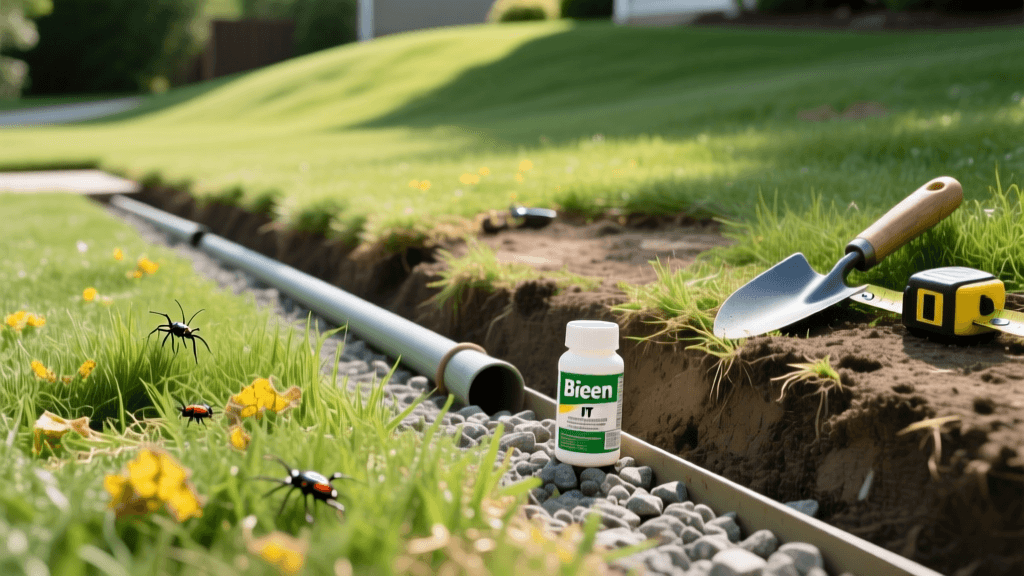
2026 Chinch Bug Bifen IT Guide For French Drain Yards
The Intersection of Yard Drainage and Pest Infestations
As landscaping and drainage contractors, we often get called to properties suffering from severe waterlogging, prompting the installation of a French drain system. However, in 2026, we are seeing a massive secondary issue on these job sites: the elevated, dry, or heavily compacted zones at the edges of the yard are being decimated by the Southern Chinch Bug (Blissus insularis). Homeowners frequently mistake this damage for drought stress caused by grading changes or poor soil percolation. In reality, chinch bugs thrive in hot, dry, and stressed turf—exactly the conditions found in the poorly drained, thatch-heavy perimeters of a yard that desperately needs a drainage overhaul.
Integrating pest management into your French drain installation workflow is critical. If you trench, backfill, and lay new sod without addressing an active chinch bug colony, the pests will simply migrate to the fresh turf, ruining your landscaping investment. This guide details how to accurately identify chinch bugs in graded microclimates and how to strategically apply Bifen IT (Bifenthrin 7.9%) during your 2026 drainage projects to ensure a pristine, pest-free lawn rehabilitation.
Identifying Chinch Bugs in Graded and Stressed Turf
Chinch bugs are notoriously difficult to spot because of their small size and the way their damage mimics irrigation failure. They inject a toxic saliva into the grass blades as they feed, which blocks the plant's vascular system and causes rapid necrosis. In St. Augustine, Zoysia, and Centipede grasses, this manifests as irregular, expanding yellow-brown patches that do not green up after heavy rainfall or deep irrigation.
According to Texas A&M AgriLife Extension, chinch bug populations peak during the hottest, driest months of summer. When assessing a yard for a French drain, pay special attention to the 'rain shadows' near the foundation, the edges of concrete driveways, and the dry ridges where water naturally sheds away. These areas are prime real estate for chinch bug colonies.
The Flotation (Tin Can) Test
Before mixing any chemicals, confirm the presence of chinch bugs using the flotation method. This is especially important on drainage sites where soil compaction might be the actual culprit of dead grass.
- Step 1: Take a metal coffee can or a PVC pipe section and drive it 2 to 3 inches into the soil at the margin of a damaged patch (where dead grass meets green grass).
- Step 2: Fill the can with water and wait for 5 minutes.
- Step 3: Observe the surface. If chinch bugs are present, they will float to the top. Finding more than 15 to 20 chinch bugs per square foot indicates a severe infestation requiring immediate chemical intervention before laying new sod over your French drain trenches.
Why Bifen IT Remains the 2026 Industry Standard
Bifen IT is a professional-grade liquid concentrate containing 7.9% Bifenthrin, a powerful synthetic pyrethroid. In 2026, it remains the gold standard for turf pest control due to its broad-spectrum efficacy, long residual activity (up to 30 days outdoors), and cost-effectiveness. A standard pint of Bifen IT retails for approximately $45 to $55 in 2026 and can treat up to 15,000 square feet of turf for chinch bugs, making it highly economical for large-scale yard grading and drainage rehabilitation projects.
The Environmental Protection Agency (EPA) notes that Bifenthrin works by disrupting the nervous system of insects upon contact and ingestion. Crucially for drainage contractors, Bifenthrin binds tightly to soil organic matter and thatch, meaning it will not easily leach through the soil profile into your newly installed French drain perforated pipes or groundwater, provided it is applied correctly to the turf surface.
Coordinating Bifen IT Application with French Drain Trenching
Timing your Bifen IT application around heavy excavation is vital to prevent chemical waste and environmental contamination. Here is the optimal 3-phase protocol for integrating Bifen IT into your French drain installation schedule.
Phase 1: Pre-Excavation Assessment and Spot Treatment
Before the mini-excavator or trencher touches the lawn, map out the infestation zones. If the proposed trench line cuts directly through a heavily infested, dead patch of St. Augustine grass, apply a localized Bifen IT treatment 48 hours before digging. This knocks down the active population and prevents them from scattering into the healthy turf when the heavy machinery tears up the thatch layer.
Phase 2: Protecting the Drainage Exit and Trench
French drains typically daylight at a lower elevation, a dry well, or a storm drain. Bifenthrin is highly toxic to aquatic organisms. You must ensure that no Bifen IT enters the exposed perforated pipe, the gravel bed, or the daylight exit during application. Never spray directly into the open trench. Wait until the trench is backfilled with gravel, covered with commercial-grade landscape fabric, and topped with 4 to 6 inches of clean topsoil before treating the surface.
Phase 3: Post-Backfill Turf Treatment
Once the French drain is buried and the new topsoil and sod are laid, treat the entire perimeter of the drainage swale and the surrounding lawn. The goal is to create a continuous chemical barrier in the thatch and topsoil interface where chinch bugs feed and lay eggs.
Bifen IT Mixing and Application Chart for Lawn Perimeters
| Target Pest | Bifen IT Rate | Water Volume | Coverage Area |
|---|---|---|---|
| Chinch Bugs (Light/Moderate) | 0.5 fl oz | 2 to 3 Gallons | 1,000 sq ft |
| Chinch Bugs (Severe/Thick Thatch) | 1.0 fl oz | 3 to 5 Gallons | 1,000 sq ft |
| Perimeter Barrier (Foundation) | 1.0 fl oz | 2 Gallons | 1,000 sq ft |
Note: Higher water volumes are strictly required for chinch bug treatment. The water acts as a carrier to push the Bifen IT past the grass blades and down into the thatch and soil surface where the bugs reside. As noted by Clemson University HGIC, watering the lawn lightly before application and heavily immediately after ensures the active ingredient reaches the root zone without excessive surface runoff.
Thatch Management and Soil Buffering
A major reason French drain installations are required is that years of poor drainage lead to shallow root systems and massive thatch buildup. Thatch acts like a sponge, intercepting the Bifen IT before it reaches the soil-dwelling nymphs. If the thatch layer on the property exceeds 0.75 inches, we highly recommend performing a mechanical dethatching or core aeration pass immediately after the French drain backfilling is complete, but before the Bifen IT application.
Furthermore, because Bifenthrin binds to organic carbon, the clean, sandy topsoil you use to cap your French drain trench will not hold the chemical as effectively as the existing, organically rich lawn soil. To compensate, ensure your new topsoil cap is blended with peat or compost, which not only helps the new sod establish roots over the drain line but also provides the organic matter necessary to anchor the Bifen IT molecules, extending the residual pest control well into the late 2026 autumn months.
Final Thoughts on Comprehensive Lawn Rehabilitation
A French drain solves the hydrological issues of a yard, but it does not cure the biological issues. By incorporating chinch bug identification and targeted Bifen IT treatments into your 2026 drainage installation workflow, you protect the homeowner's investment and ensure the new sod laid over your trench lines thrives. Always adhere to local pesticide regulations, wear appropriate PPE during mixing, and communicate clearly with homeowners regarding watering schedules and pet safety post-application. A dry yard is a healthy yard, but a pest-free yard is a masterpiece.