Pest Control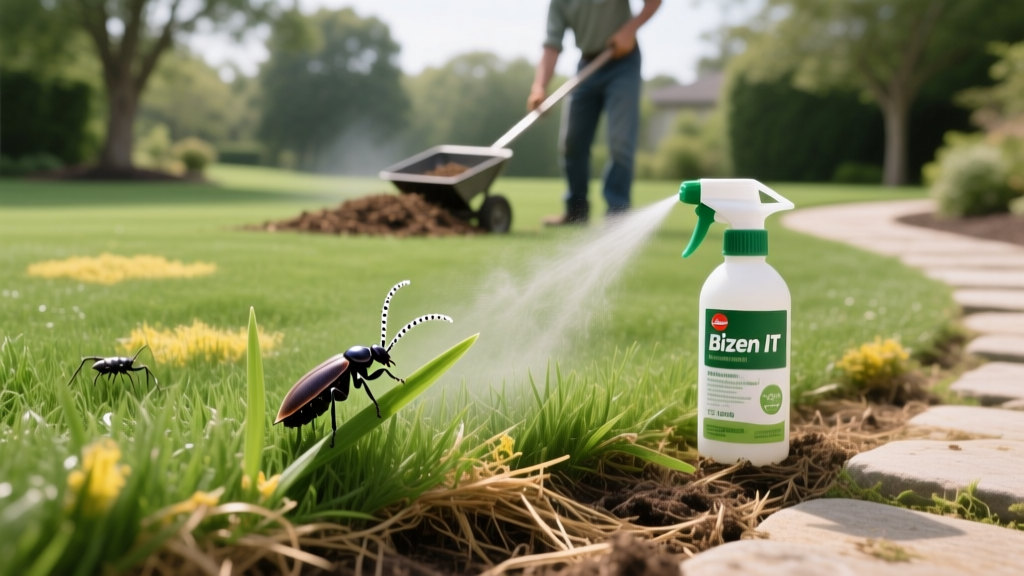
Chinch Bug Damage & Bifen IT: 2026 Mulching Strategies
Mike RodriguezPublished
Introduction to Chinch Bugs and Mulching Dynamics in 2026
As we navigate the 2026 growing season, turfgrass managers and homeowners are facing increasingly hot, dry summers that create the perfect storm for one of the most destructive lawn pests: the Southern chinch bug (Blissus insularis). While chemical interventions remain a cornerstone of severe infestation management, modern Integrated Pest Management (IPM) emphasizes the critical role of cultural practices—specifically, mulching methods and thatch management. Understanding how your mowing and mulching habits interact with pest habitats is essential for long-term lawn health. This guide explores how to accurately identify chinch bug damage, properly apply Bifen IT (Bifenthrin 7.9%) spray, and adjust your mulching strategies to starve these pests of their preferred environments.
Identifying Chinch Bug Lawn Damage
Chinch bugs damage turf by piercing the grass blades and sucking out the plant juices, while simultaneously injecting a toxic saliva that clogs the plant's vascular system. This results in rapid yellowing, followed by brown, dead patches that often mimic drought stress or fungal diseases. In 2026, with erratic spring rainfall patterns, misdiagnosis is common.
Visual Symptoms and the 'Stink' Test
Look for irregular patches of dead grass surrounded by a yellowing halo, particularly in sunny, heat-stressed areas near sidewalks or driveways. If you part the grass at the edge of the damaged zone, you may see tiny nymphs (bright red with a white band) or adults (black with opaque white wings). Additionally, chinch bugs emit a distinct, unpleasant odor when crushed or present in large numbers—often described as a sharp, stink-bug-like scent.
The Tin Can Flotation Test
To confirm an infestation, perform the classic flotation test. Remove the top and bottom of a metal coffee can or a PVC pipe. Push the cylinder into the soil at the margin of a damaged patch (where dead grass meets green grass). Fill it with water and wait for 3 to 5 minutes. If you see more than 20 to 25 chinch bugs floating to the surface, treatment is immediately required. According to the University of Florida IFAS Entomology Department, this threshold remains the gold standard for confirming economic injury levels in St. Augustine and Zoysia lawns.
The Role of Mulching Methods in Chinch Bug Prevention
Mulching is often viewed strictly as a moisture-retention or landscaping-bed technique, but in turf management, 'mulching' refers to grasscycling (returning clippings to the lawn) and managing the thatch layer. Chinch bugs thrive in thick, dry thatch because it provides a protective canopy against predators and harsh UV rays, keeping the microclimate humid and warm.
Grasscycling vs. Thatch Accumulation
Using a mulching mower to finely chop clippings is highly beneficial for returning nitrogen to the soil. However, if your mower blades are dull, or if you are mowing wet, overgrown grass, the clippings will clump. These heavy, wet clumps smother the turf, die off, and contribute to a dense thatch layer. A thatch layer exceeding 0.5 inches is a massive red flag for chinch bug proliferation. In 2026, upgrading to high-lift mulching blades and adhering to the 'one-third rule' (never cutting more than one-third of the grass blade at a time) is critical to ensuring mulch breaks down rapidly rather than becoming a pest hotel.
Landscape Bed Mulching and Perimeter Risks
The materials you use in adjacent garden beds also impact lawn pest pressure. Pine straw and thick bark mulch pushed right up against the turf edge provide excellent overwintering sites for chinch bugs. Conversely, utilizing cedar mulch near lawn perimeters can offer a mild natural repellent effect due to its aromatic oils, though it should not replace targeted chemical treatments during an active outbreak.
Bifen IT Spray: Application, Dosage, and 2026 Best Practices
Bifen IT is a widely trusted, broad-spectrum insecticide containing 7.9% Bifenthrin, a synthetic pyrethroid. It is highly effective against chinch bugs due to its strong residual activity and quick knockdown power. As of 2026, a 16-ounce bottle of Bifen IT typically retails between $28 and $35, making it a cost-effective solution for treating up to 16,000 square feet of turf.
Mixing Ratios and Application
For chinch bug control, the standard application rate is 1 fluid ounce of Bifen IT per 1,000 square feet. To ensure the chemical penetrates the thatch layer and reaches the soil surface where the bugs reside, you must use sufficient water volume. Mix 1 ounce of Bifen IT into 1 to 2 gallons of water for every 1,000 square feet. Apply using a pump sprayer or a hose-end sprayer calibrated to the correct dilution.
Environmental Safety Note: Bifenthrin is highly toxic to aquatic organisms and bees. The Environmental Protection Agency (EPA) mandates that applicators avoid spraying near storm drains, ditches, or bodies of water. Always apply in the early morning or late evening when pollinators are not actively foraging.
Integrating Bifen IT with Your Mulching Routine
Applying Bifen IT without considering your mulching and thatch profile will lead to subpar results. If the thatch layer is too thick, the bifenthrin will bind to the organic matter and never reach the stolons and soil surface where the chinch bugs feed. Below is a comparison chart detailing how different mulching scenarios interact with chinch bug risk and Bifen IT efficacy.
| Mulching Method / Material | Impact on Thatch | Chinch Bug Risk | Bifen IT Spray Compatibility |
|---|---|---|---|
| Grasscycling (Mulching Mower) | Low (if managed properly) | Moderate (if clumps form) | High (spray penetrates easily) |
| Heavy Clipping Accumulation | High (rapid buildup) | High (harbors pests/moisture) | Low (barrier blocks spray) |
| Pine Straw (Landscape Beds) | N/A (Turf edge) | High (overwintering site) | Moderate (treat perimeter deeply) |
| Cedar Mulch (Landscape Beds) | N/A (Turf edge) | Low (mild natural repellent) | High (treat perimeter) |
Step-by-Step Treatment and Mulch Management Plan
To achieve total control over a chinch bug outbreak in 2026, follow this integrated protocol:
- Assess and Dethatch: Before spraying, check your thatch depth. If it exceeds 0.5 inches, rent a power rake or vertical mower to physically remove the excess organic matter. This removes the bugs' protective canopy and opens the soil for chemical penetration.
- Mow and Bag (Temporarily): For the mowing session immediately preceding your Bifen IT application, use a bagger instead of a mulching blade. Removing the clippings ensures the spray hits the soil and stolons directly without being intercepted by fresh grass clippings.
- Apply Bifen IT: Mix and apply the Bifen IT solution at the rate of 1 oz per 1,000 sq ft. Focus heavily on the damaged areas and a 5-foot buffer zone of healthy-looking grass, as chinch bugs migrate outward from the initial infestation site.
- Watering In: Unlike some contact-only sprays, Bifen IT benefits from a light watering (about 0.25 inches) immediately after application. This washes the active ingredient off the grass blades and down into the thatch/soil interface where the nymphs hide. Check the National Pesticide Information Center (NPIC) guidelines for specific post-application watering intervals regarding pet and human re-entry.
- Resume Smart Mulching: Once the treatment has dried and been watered in, resume your grasscycling routine. Ensure your mower blades are razor-sharp to finely dice clippings, promoting rapid microbial decomposition and preventing future thatch buildup.
- Perimeter Maintenance: Pull pine straw or bark mulch back at least 2 inches from the edge of your turfgrass. Create a small trench or use a hard edge barrier to prevent landscape bed mulch from creeping into the lawn and creating a bridge for pests.
Conclusion
Managing chinch bugs in 2026 requires more than just reaching for a chemical sprayer. By understanding the intricate relationship between your mulching methods, thatch accumulation, and pest habitats, you can create an environment that is inherently hostile to chinch bugs. When paired with the targeted, responsible application of Bifen IT, these cultural practices will ensure your lawn remains thick, green, and pest-free throughout the hottest months of the year.