Pest Control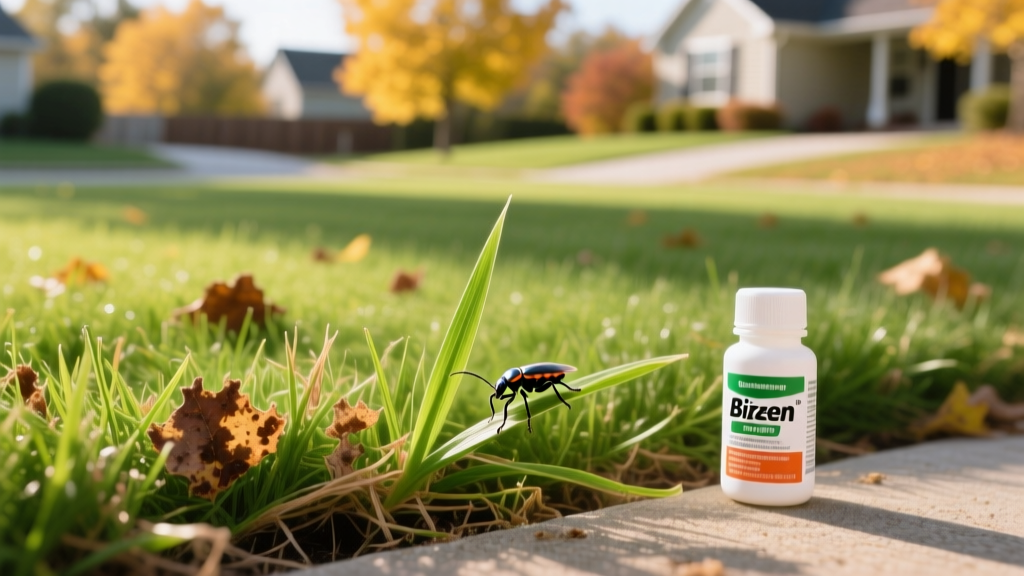
2026 Fall Chinch Bug Guide: Damage ID and Bifen IT
David ParkPublished
The Hidden Autumn Threat: Chinch Bugs in Fall 2026
As homeowners transition into autumn lawn care routines, the focus often shifts to aeration, overseeding, and leaf management. However, the extended warm spells characteristic of the 2026 fall season have created a prolonged window for one of the most destructive turfgrass pests: the chinch bug. While typically associated with peak summer heat, chinch bugs (particularly the southern chinch bug and the hairy chinch bug) remain highly active well into early fall. During this time, they feed aggressively to build fat reserves for overwintering, causing severe damage that is frequently misdiagnosed as normal fall dormancy or seasonal drought stress.
If left unchecked, these pests will overwinter in your lawn's thatch layer, emerging in massive numbers the following spring. According to the University of Florida IFAS, a single female chinch bug can lay hundreds of eggs during her lifespan, making late-season population control an absolute necessity for a healthy lawn in 2027. This comprehensive guide will teach you how to accurately identify chinch bug damage in the fall and effectively utilize Bifen IT (Bifenthrin 7.9%) to eliminate overwintering populations.
Identifying Chinch Bug Damage vs. Fall Dormancy
One of the greatest challenges in autumn pest management is distinguishing between natural seasonal changes and active pest destruction. Cool-season grasses naturally slow their growth and may brown as temperatures drop, while warm-season grasses begin their winter dormancy. Chinch bug damage, however, has distinct characteristics that set it apart from environmental stress.
Chinch bugs feed by piercing grass blades and injecting a toxic saliva that blocks the plant's vascular system, preventing water and nutrient uptake. This results in distinct, irregularly shaped patches of yellowing grass that rapidly turn brown and die. Unlike drought stress, these patches will not recover even after deep irrigation.
The Tin Can Flotation Test
To confirm the presence of chinch bugs, perform the classic tin can test. Remove both ends of a metal coffee can or large tin. Push the can about two inches into the soil at the margin of a damaged patch (where the dying grass meets the healthy grass). Fill the can with water and wait for five to ten minutes. If chinch bugs are present, they will float to the surface. Finding more than 20 to 25 bugs per square foot indicates a severe infestation requiring immediate chemical intervention.
Comparison Chart: Chinch Bug Damage vs. Fall Drought
| Characteristic | Chinch Bug Damage | Normal Fall Dormancy / Drought |
|---|---|---|
| Patch Shape | Irregular, expanding outward from localized hot spots | Uniform browning across large sections of the lawn |
| Location | Full sun areas, heavily concentrated near driveways and sidewalks | Anywhere, but often worse on high spots or in sandy, fast-draining soil |
| Grass Blade Base | Purple, reddish, or dark brown discoloration at the crown and base | Brown and dry uniformly throughout the blade |
| Response to Watering | No recovery; grass remains dead despite deep irrigation | Greens up or shows signs of recovery after heavy rainfall or watering |
| Presence of Insects | Small black bugs with white wings (adults) or red nymphs visible in thatch | No insects present in the thatch or crown layer |
Bifen IT: The Gold Standard for Fall Chemical Control
When cultural controls are insufficient and the tin can test confirms an active infestation, chemical intervention is required. For the 2026 season, Bifen IT remains one of the most trusted and effective liquid insecticides for chinch bug control. Its active ingredient, Bifenthrin (7.9%), is a synthetic pyrethroid that acts as a sodium channel modulator in insects, causing rapid paralysis and death upon contact or ingestion.
Bifen IT is highly favored by lawn care professionals and DIYers alike because of its dual-action capability: it provides an immediate knockdown of active adults and nymphs, while also leaving a long-lasting residual barrier in the thatch layer. This residual effect is crucial in the fall, as it continues to eliminate late-hatching nymphs and prevents surviving adults from establishing secure overwintering sites. In 2026, a 16-ounce bottle of Bifen IT typically retails between $28 and $35, making it a highly cost-effective solution, as one bottle can treat up to 16,000 square feet of turf.
Step-by-Step Guide to Applying Bifen IT in Autumn
Proper application is critical to ensure the product reaches the target zone. Chinch bugs do not live deep in the soil like grubs; they reside in the thatch layer and at the base of the grass crown. Therefore, your application strategy must focus on delivering the chemical exactly where they hide.
1. Timing and Weather Conditions
Apply Bifen IT in early to mid-fall, ideally when daytime temperatures are still between 70°F and 85°F. Chinch bugs are most active during these warm autumn afternoons, increasing the likelihood of contact with the insecticide. Avoid applying if rain is forecasted within the next 24 hours, and never spray during high winds to prevent drift onto ornamental plants or water features.
2. Preparation and Mixing
Before mixing, mow your lawn slightly shorter than usual and rake out excessive thatch. This removes physical barriers and allows the spray to penetrate directly to the soil surface and crown. Using a pump sprayer or hose-end sprayer, mix 1 fluid ounce of Bifen IT per gallon of water for every 1,000 square feet of turf. For severe infestations, you may increase the rate to 1.5 ounces per 1,000 square feet, but do not exceed the maximum label rates.
3. Application Technique
Apply the mixture evenly across the affected areas, extending at least 5 feet into the surrounding healthy grass to catch migrating bugs. Use a fan-nozzle tip on your pump sprayer for the most uniform coverage. Ensure you are wearing appropriate personal protective equipment (PPE), including long sleeves, pants, chemical-resistant gloves, and eye protection.
4. The Crucial Watering Step
Unlike grub treatments that require heavy watering to reach the root zone, chinch bug treatments require only a light watering. Immediately after application, irrigate the lawn with approximately 1/8 to 1/4 inch of water. This is just enough to wash the Bifen IT off the grass blades and down into the thatch layer where the bugs live, without washing the chemical completely past the target zone into the deep soil.
Integrating Bifen IT with Fall Lawn Care (IPM)
Chemical control is most effective when paired with Integrated Pest Management (IPM) strategies. As noted by Penn State Extension, maintaining a vigorous turf through proper cultural practices is the best long-term defense against chinch bugs. Here is how to integrate your Bifen IT treatment with your broader 2026 fall lawn care regimen:
- Thatch Management: Chinch bugs thrive in thick thatch layers, which provide insulation against winter cold and protection from predators. If your thatch layer exceeds half an inch, perform core aeration and dethatching in early fall before applying Bifen IT. Dethatching after application will disrupt the chemical barrier you just created.
- Fall Fertilization: A well-fed lawn recovers faster from pest damage. Apply a slow-release, potassium-rich fall fertilizer to strengthen grass cell walls and improve winter hardiness. Avoid high-nitrogen synthetic fertilizers in late fall, as the rapid, tender growth they produce is highly attractive to sap-sucking insects.
- Strategic Irrigation: Chinch bugs prefer hot, dry conditions. While you should reduce watering frequency as autumn temperatures drop, ensure that when you do water, you water deeply. Deep, infrequent watering encourages deep root growth and creates a less hospitable environment for surface-dwelling pests.
- Encouraging Beneficial Insects: The big-eyed bug (Geocoris species) is a natural predator of the chinch bug. Avoid broad-spectrum insecticides in garden beds adjacent to your lawn to preserve these beneficial predators. While Bifen IT is highly effective, it is toxic to pollinators and beneficial insects upon direct contact, so confine your spray strictly to the turfgrass.
Preparing for the Next Season
By executing a targeted Bifen IT application in the fall, you are drastically reducing the overwintering population of chinch bugs in your yard. This proactive approach means that when the soil temperatures warm up in the spring of 2027, the initial hatching populations will be significantly smaller and much easier to manage. Combine this chemical knockdown with diligent fall aeration, proper mowing heights, and smart irrigation, and your lawn will emerge from winter thick, healthy, and highly resistant to future pest outbreaks. Always read and follow the manufacturer's label instructions on your specific bottle of Bifen IT, as the label is the law and ensures both the safety of your family and the health of your turf.