Pest Control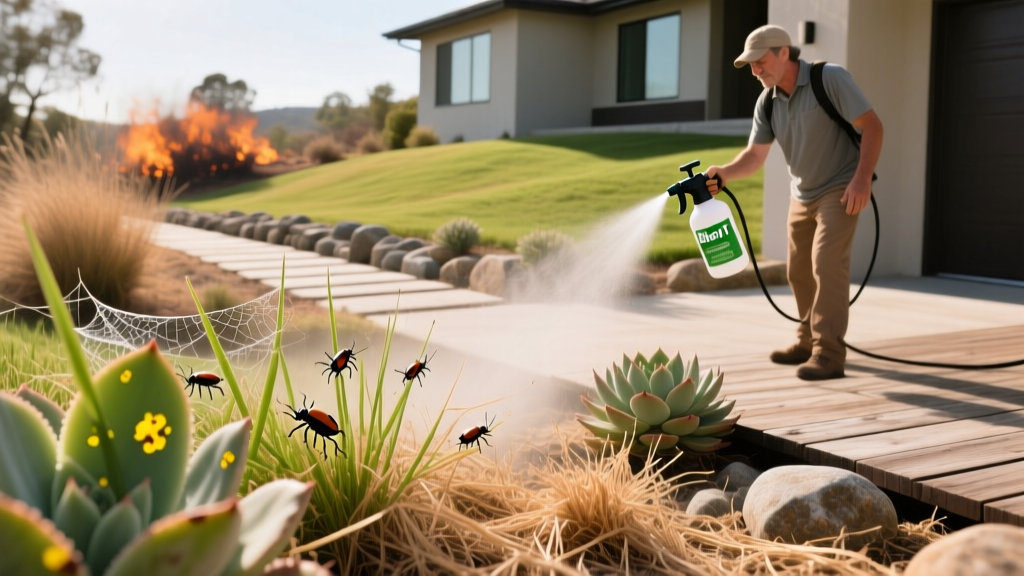
2026 Chinch Bug ID & Bifen IT Spray For Fire-Safe Lawns
Sarah ChenPublished
The Intersection of Pest Control and Fire-Resistant Landscaping
When homeowners think of fire-resistant landscaping, they often envision hardscaping, gravel beds, and carefully spaced fire-retardant shrubs. However, the immediate perimeter of your home—often referred to as the "defensible space" or Zone 0—frequently includes turfgrass. In 2026, maintaining a lush, hydrated lawn is not just an aesthetic choice; it is a critical fire-prevention strategy. Dry, dead turfgrass acts as highly combustible "fine fuel" that can easily catch wind-blown embers and carry fire directly to your home's structure.
This is where pest control intersects with fire safety. The southern chinch bug (Blissus insularis) is a notorious turf destroyer, particularly in warm-season grasses like St. Augustine. By sucking the sap from grass blades and injecting a toxin that kills the plant, chinch bugs rapidly transform a fire-resistant, hydrated green lawn into a brittle, brown, highly flammable hazard. Identifying this damage early and deploying targeted treatments like Bifen IT spray is essential for maintaining your fire-wise landscape buffer.
The 2026 Climate Context and Chinch Bug Life Cycles
As we navigate the 2026 fire season, extended heat domes and erratic drought patterns in the South and West have drastically accelerated chinch bug life cycles. Historically, regions might see three to four generations of chinch bugs per year. In 2026, turfgrass managers are reporting up to five overlapping generations, meaning the window for turf destruction is wider and more severe. This rapid reproduction rate means that a small, manageable infestation can explode into a massive, lawn-killing event in a matter of weeks, creating dangerous dry fuel beds right outside your front door.
Identifying Chinch Bug Damage in Your Defensible Space
According to the University of Florida IFAS Extension, chinch bugs thrive in hot, dry conditions—exactly the same conditions that elevate wildfire risks. Their damage often mimics drought stress, making accurate identification crucial before you waste water or apply the wrong treatment.
Visual Symptoms
- Initial Yellowing: Patches of grass begin to turn yellow, often starting in sunny, heat-stressed areas near driveways, sidewalks, or southern exposures.
- Rapid Browning: The yellow patches quickly turn brown and die. Unlike drought stress, this browning will not recover with deep watering.
- Thatch Accumulation: Chinch bugs love thick thatch. The dead, dry thatch layer they inhabit is a prime ember receptor during fire season.
The "Tin Can" Test
To confirm an infestation, remove both ends of a coffee can or tin can. Push it a few inches into the soil at the edge of a damaged patch. Fill it with water and wait for 3 to 5 minutes. If chinch bugs are present, they will float to the surface. Finding 20 to 25 bugs per square foot indicates a severe infestation that threatens your fire-resistant landscape integrity and requires immediate chemical intervention.
Chinch Bug Damage vs. Drought Stress: 2026 Comparison
| Characteristic | Chinch Bug Damage | Drought Stress |
|---|---|---|
| Location | Sunny, hot areas near concrete | Generalized across the lawn |
| Progression | Yellow to dead brown rapidly | Wilting, bluish-gray tint, slow browning |
| Response to Water | No recovery; grass remains dead | Recovers quickly after deep irrigation |
| Presence of Insects | Small black/white bugs visible at soil line | No insects present at soil line |
| Fire Risk Factor | Creates localized, dense dry thatch fuel beds | Generalized dry vegetation |
Bifen IT Spray: Your Chemical Defense Strategy
Bifen IT is a widely used, professional-grade insecticide containing 7.9% Bifenthrin, a synthetic pyrethroid. For homeowners managing a fire-resistant landscape in 2026, Bifen IT offers rapid knockdown and long-lasting residual control of chinch bugs, ensuring your turf remains a green, fire-retardant barrier rather than a dry fuel source.
The National Pesticide Information Center (NPIC) notes that bifenthrin works by disrupting the nervous system of insects. Because it binds well to soil and thatch, it is highly effective against thatch-dwelling pests like chinch bugs.
Application Rates, Mixing, and Calibration
For active chinch bug infestations, the standard application rate for Bifen IT is 1 fluid ounce per 1,000 square feet. Mix this with 1 to 2 gallons of water to ensure the spray penetrates the thatch layer and reaches the soil surface where the bugs reside.
- Preparation: Mow the lawn to a standard height and water lightly the day before to encourage chinch bugs to move closer to the surface.
- Calibration: Ensure your pump sprayer or hose-end sprayer is calibrated to deliver an even mist. Uneven application leaves pockets of surviving bugs that will quickly recolonize.
- Application: Apply evenly over the affected areas and a 5-foot buffer zone into the healthy grass.
- Post-Application: Do not water the lawn for at least 24 hours after application to allow the bifenthrin to bind to the thatch and soil, maximizing its residual control.
Integrating Pest Control with Fire-Wise Landscaping Zones
According to CAL FIRE's Defensible Space guidelines, the area immediately surrounding your home requires meticulous management to prevent ember ignition. Here is how Bifen IT and chinch bug management fit into the broader fire-resistant landscaping strategy:
Zone 0: The Immediate Perimeter (0-5 Feet)
In the strictest fire-wise guidelines, Zone 0 should be free of all combustible materials, including dead vegetation. If you maintain a narrow strip of irrigated, fire-resistant turfgrass here as a walkway or buffer, it must remain completely free of chinch bug damage. Dead grass in Zone 0 is a severe liability. Spot-treat with Bifen IT immediately upon seeing the first signs of yellowing to eliminate the fine fuel hazard.
Zone 1: The Lean, Clean, and Green Zone (5-30 Feet)
This zone often features well-irrigated lawns that act as a primary firebreak. Chinch bugs compromise this firebreak by creating dry, dead patches. Implement a 2026 Integrated Pest Management (IPM) plan: monitor weekly with the tin can test, maintain thatch levels below 0.5 inches to reduce both bug habitat and fine fuels, and use Bifen IT as a targeted rescue treatment rather than a blanket preventative.
Environmental Considerations and Beneficial Insects
While Bifen IT is highly effective, responsible use is paramount, especially in fire-prone areas that may also be near sensitive watersheds. Bifenthrin is highly toxic to aquatic organisms and bees. Never apply Bifen IT near storm drains, ditches, or water features. Apply in the early morning or late evening when pollinators are not actively foraging on nearby flowering weeds.
Furthermore, managing chinch bugs chemically must be paired with cultural practices and an awareness of beneficial insects. Big-eyed bugs (Geocoris species) and predatory earwigs are natural predators of chinch bugs. Broad-spectrum pyrethroids like Bifen IT can harm these beneficials, which is why spot-treating only the infested zones is crucial. By preserving beneficial insect populations in the outer zones of your defensible space, you create a natural biological buffer that reduces the need for future chemical applications.
Conclusion
In 2026, the lines between lawn care, pest control, and wildfire preparedness are increasingly blurred. A lawn compromised by chinch bugs is a dry, dangerous liability in any fire-resistant landscape. By accurately identifying damage, utilizing the tin can test, and deploying Bifen IT spray responsibly, you protect not only the beauty of your yard but the structural integrity of your home against the threat of wildfire. Maintaining a green, hydrated, and pest-free lawn is one of the most effective, yet frequently overlooked, components of a comprehensive defensible space strategy.