Pest Control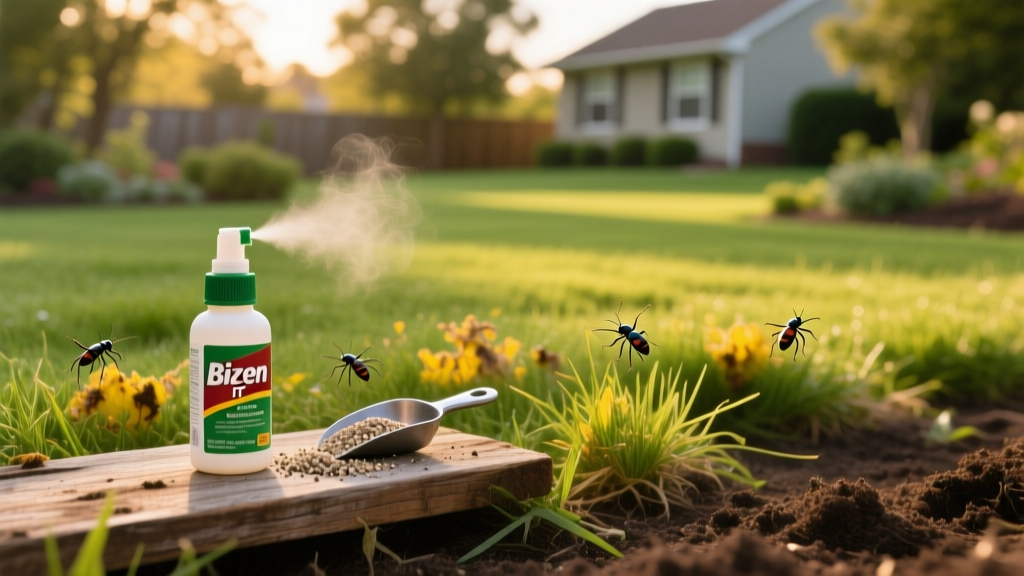
Identify Chinch Bug Damage & Apply Bifen IT in 2026
Sarah ChenPublished
The Intersection of Fertilization and Pest Control in 2026
As we navigate the 2026 growing season, lawn care professionals and homeowners alike are facing increasingly aggressive turf pests. Among the most destructive is the southern chinch bug (Blissus insularis), a tiny but devastating insect that targets warm-season grasses like St. Augustine, Zoysia, and Centipede. While many view pest control and lawn fertilization as entirely separate disciplines, modern integrated pest management (IPM) reveals a critical truth: your fertilizer types and application schedules directly dictate your lawn's susceptibility to chinch bug infestations.
When an outbreak occurs, Bifen IT (a 7.9% bifenthrin suspension concentrate) remains the gold standard for rapid knockdown and residual control. However, applying this powerful pyrethroid without considering your recent or upcoming fertilizer schedule can lead to chemical runoff, reduced efficacy, and wasted money. This comprehensive guide will teach you how to accurately identify chinch bug damage, understand the biochemical link between nitrogen and pest outbreaks, and perfectly synchronize your Bifen IT spray applications with your 2026 fertilization calendar.
Identifying Chinch Bug Lawn Damage
Chinch bug damage is notoriously difficult to distinguish from environmental stress, particularly drought or fertilizer burn. These pests feed by piercing the grass blades and injecting a toxic saliva that halts water movement within the plant, causing rapid desiccation.
Visual Symptoms to Monitor
- Initial Yellowing: Damage typically begins as small, irregular yellow patches, often localized in full-sun areas or near heat-radiating surfaces like concrete driveways, sidewalks, and retaining walls.
- Rapid Browning: Within days, these yellow patches turn straw-brown and eventually die off completely. The grass will not recover even if heavily watered.
- Stunted Growth: The perimeter of the dead patch will show grass that appears stunted or wilted, indicating active feeding at the margins.
The Tin Can Flotation Test
Before reaching for the Bifen IT spray, you must confirm the presence of chinch bugs. According to entomologists at the University of Florida IFAS Extension, the flotation method is the most reliable identification technique. Simply remove the top and bottom of a metal coffee can, push it two inches into the soil at the edge of a damaged area, and fill it with water. Wait five minutes. If you see more than 20 to 25 tiny, black-and-white insects floating to the surface, you have an active infestation requiring immediate chemical intervention.
The Fertilizer Connection: Why Your Schedule Matters
Why do some lawns suffer catastrophic chinch bug damage while neighboring yards remain pristine? The answer often lies in the fertilizer type and schedule. Chinch bugs are highly attracted to the lush, rapid growth stimulated by excessive nitrogen. When you apply fast-release synthetic fertilizers, the grass produces high levels of soluble amino acids and thins its cellular walls, essentially creating an all-you-can-eat buffet for piercing-sucking insects.
Furthermore, heavy synthetic feeding accelerates thatch buildup. Thatch provides the perfect microclimate for chinch bugs to hide, breed, and avoid natural predators and surface-applied insecticides. To mitigate this in 2026, turf managers are shifting toward slow-release and organic nutrient sources.
Fertilizer Types and Chinch Bug Vulnerability
| Fertilizer Type | Nitrogen Release Rate | Thatch Accumulation | Chinch Bug Risk Level |
|---|---|---|---|
| Fast-Release Synthetic (Urea) | Rapid (1-2 weeks) | High | Severe |
| Polymer-Coated Slow-Release | Steady (8-12 weeks) | Moderate | Moderate |
| Organic/Compost-Based | Slow (Microbial dependent) | Low (Improves soil biology) | Low |
By transitioning to polymer-coated or organic fertilizers in your 2026 schedule, you maintain steady, resilient turf growth that is naturally less palatable to chinch bugs, reducing the overall need for chemical sprays.
Bifen IT Spray: The 2026 Standard for Eradication
When cultural controls and fertilizer adjustments are not enough to stop an active infestation, Bifen IT is the industry standard. Bifenthrin is a synthetic pyrethroid that targets the insect's nervous system, providing rapid knockdown and up to 90 days of residual protection in the thatch layer. The Environmental Protection Agency (EPA) classifies bifenthrin as highly effective against turf-destroying insects, though it requires careful handling to protect aquatic environments and pollinators.
Mixing and Application Rates
For severe chinch bug infestations, the standard application rate for Bifen IT is 1 fluid ounce per 1,000 square feet. Because chinch bugs live deep in the thatch and at the soil surface, water volume is just as critical as the chemical concentration. You must mix the 1 oz of Bifen IT with 2 to 3 gallons of water per 1,000 square feet to ensure the spray penetrates the thatch layer where the pests reside.
Pro Tip for 2026: Add a non-ionic surfactant (at 0.25% v/v) to your tank mix. Surfactants break the surface tension of the water, allowing the bifenthrin to coat the grass blades and penetrate the waxy thatch layer much more effectively, ensuring the insects come into contact with the lethal dose.
Synchronizing Bifen IT with Your Fertilizer Schedule
The most common mistake homeowners make is applying insecticides and fertilizers without a coordinated strategy. Misaligned timing can result in the fertilizer burning the stressed grass, or the irrigation required for the fertilizer washing away your expensive Bifen IT application before it has time to bind to the thatch.
Scenario 1: You Just Applied Granular Fertilizer
Granular fertilizers require immediate watering to activate and move the nutrients into the root zone. However, Bifen IT needs to remain in the upper thatch layer to intercept the chinch bugs. Do not apply Bifen IT on the same day as granular fertilizer. Instead, apply and water in your fertilizer first. Wait 48 to 72 hours for the grass to absorb the nutrients and the soil surface to dry slightly. Then, apply your Bifen IT spray. Once the Bifen IT spray has dried on the foliage and thatch (usually 2-4 hours), it is rainfast and safe to resume normal, light irrigation schedules.
Scenario 2: Liquid Fertilizer Tank Mixing
While it may seem efficient to mix liquid nitrogen or micronutrients directly into your Bifen IT sprayer, this is highly discouraged in 2026. Liquid fertilizers often contain salts and alter the pH of the water. Pyrethroids like bifenthrin are sensitive to alkaline hydrolysis; if your liquid fertilizer raises the pH of the tank mix above 7.0, the Bifen IT will rapidly degrade, rendering your pest control application useless. Always keep your pest control and foliar feeding applications separate.
Your 2026 Integrated Fertilizer and Pest Control Calendar
To maintain a lush, pest-resistant lawn, follow this synchronized schedule designed for warm-season grasses in high-pressure chinch bug regions:
- Early Spring (April): Apply a slow-release, organic-based fertilizer to promote deep root growth without triggering excessive top-growth. Keep thatch levels below 0.5 inches through core aeration.
- Early Summer (June): Monitor heat-stressed areas near concrete. Perform the tin can test. If thresholds are met, apply Bifen IT at 1 oz per 1,000 sq ft with a surfactant. Delay any summer fertilizer applications until the infestation is fully controlled.
- Mid-Summer (July/August): If a second generation of chinch bugs emerges, rotate your chemical class to prevent resistance (e.g., use a neonicotinoid or diamide). Feed the lawn lightly with a potassium-rich fertilizer to boost drought and heat tolerance, avoiding high nitrogen.
- Early Fall (September): Apply a balanced, slow-release fertilizer to help the lawn recover from summer pest damage and store carbohydrates for winter dormancy.
Long-Term Prevention and IPM Strategies
Chemical sprays like Bifen IT are vital rescue treatments, but a sustainable 2026 lawn care strategy relies on biological and cultural controls. Over-fertilization not only attracts chinch bugs but also decimates populations of beneficial predatory insects, such as the big-eyed bug (Geocoris species) and predatory earwigs, which naturally keep chinch bug populations in check. By adhering to a strict, slow-release fertilizer schedule, maintaining proper mowing heights, and utilizing targeted Bifen IT applications only when scouting confirms an outbreak, you can protect your turf, your budget, and the local ecosystem throughout the 2026 season and beyond.