Pest Control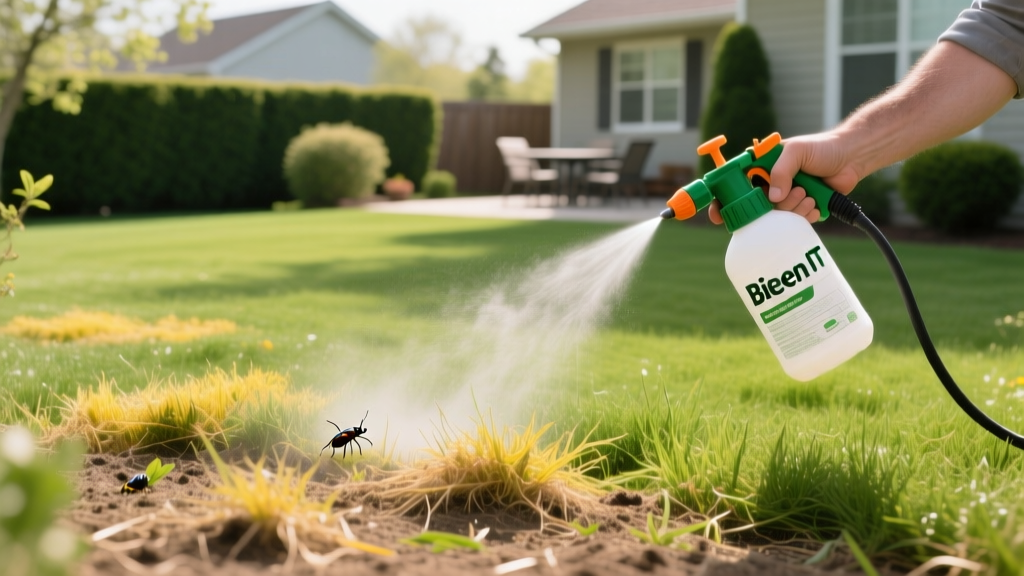
Chinch Bug Lawn Damage & Bifen IT Spray Guide 2026
James MillerPublished
As a pest management specialist who spends the bulk of the spring and summer battling fall webworms and eastern tent caterpillars high in the tree canopy, I often remind my clients that the turf below deserves equal scrutiny. While tree web worms defoliate your oaks, pecans, and fruit trees, the southern chinch bug operates at ground level, silently devastating St. Augustine and Zoysia lawns. Interestingly, the same active ingredients we use to drench tree canopies for webworms are highly effective at the soil line. In 2026, with shifting climate patterns extending the breeding season and warming winters allowing for higher overwintering survival rates, chinch bug populations are peaking earlier and hitting harder than in previous years. If you notice your lawn turning brown despite adequate irrigation, you may be looking at a chinch bug infestation rather than drought stress. This comprehensive guide will walk you through accurate identification and the precise application of Bifen IT spray to reclaim your turf.
Identifying Chinch Bug Lawn Damage in 2026
The southern chinch bug (Blissus insularis) is the most destructive insect pest of St. Augustinegrass in the southern United States. Both the nymphs and adults damage the lawn by piercing the grass blades with their needle-like mouthparts and sucking out the plant sap. As they feed, they inject a toxic saliva that blocks the movement of water and nutrients, causing the grass to yellow, then brown, and eventually die.
In 2026, the biggest challenge for homeowners is distinguishing chinch bug damage from environmental stressors like drought or fungal diseases. Chinch bugs thrive in hot, dry, sunny areas, which is why damage often first appears near driveways, sidewalks, and curbs where the concrete radiates heat. However, relying solely on visual browning is a recipe for misdiagnosis and wasted chemical treatments.
Damage Comparison Chart: Chinch Bugs vs. Drought vs. Fungus
| Diagnostic Feature | Chinch Bug Damage | Drought Stress | Brown Patch Fungus |
|---|---|---|---|
| Pattern | Irregular patches, often near heat-radiating concrete | Uniform browning, overall wilting across large zones | Circular rings with smoke-colored margins |
| Leaf Appearance | Yellowing base, purple/brown tips, shredded look | Rolled leaves, brittle texture, footprints remain | Lesions on leaf blades, rotting at the base |
| Soil Moisture | Soil may be moist, but grass continues to die | Bone dry soil, hydrophobic thatch layer | High moisture, poor drainage, high humidity |
| Pest Presence | Tiny black/white bugs at the thatch/soil line | None | None (fungal mycelium present in morning dew) |
The Flotation Test: Confirming the Infestation
Before you mix any chemicals, you must confirm the presence of chinch bugs. According to the Texas A&M AgriLife Extension, the most reliable method for detecting chinch bugs is the coffee can flotation test. This is far more accurate than simply parting the grass and looking, as the insects are tiny and quick to scatter.
How to perform the test:
- Cut both ends out of a large metal coffee can or a PVC pipe.
- Push the can 2 to 3 inches into the soil at the margin of a damaged area (where dead grass meets green grass). This margin is critical because chinch bugs move outward from dead patches to feed on live, healthy grass.
- Fill the can with water and wait for 3 to 5 minutes, adding more water to keep it full.
- Count the chinch bugs that float to the surface. They are small (about 1/5 inch long), black, and feature distinctive white wings with a triangular black marking.
2026 Treatment Thresholds: If you count 20 to 25 chinch bugs per can across multiple test sites, treatment is immediately warranted. If counts are lower, focus on cultural controls and monitor weekly.
Bifen IT Spray: The 2026 Standard for Chinch Bug Control
When canopy pests like tree webworms require a broad-spectrum knockdown, arborists frequently turn to bifenthrin. For turf, Bifen IT (a liquid concentrate containing 7.9% bifenthrin) remains one of the most trusted and cost-effective pyrethroid insecticides on the market in 2026. It operates as both a contact kill and a residual barrier, disrupting the nervous system of the chinch bugs upon contact and providing weeks of protection against hatching nymphs.
One of the reasons Bifen IT is highly recommended for turf applications is its low odor and relatively low toxicity to mammals once dried. However, it is highly toxic to aquatic life and bees. Therefore, timing your application for the late evening when pollinators are inactive and avoiding spraying near storm drains or water features is mandatory. While granular bifenthrin is available, liquid Bifen IT is vastly superior for active 2026 outbreaks because it provides an immediate contact kill that granules cannot match.
Current 2026 Pricing: A 32-ounce bottle of Bifen IT typically retails between $45 and $60, which is enough to treat up to 16,000 square feet of lawn, making it an economical choice for large properties.
Step-by-Step Bifen IT Application Guide
To ensure the Bifen IT reaches the chinch bugs hiding in the thatch layer, proper dilution and water volume are critical. A common mistake is using too little water, which leaves the chemical on the grass blade rather than washing it down to the soil surface where the pests reside.
Mixing Rates and Instructions
- Standard Rate: Mix 0.5 to 1.0 fluid ounces of Bifen IT per 1,000 square feet.
- Water Volume: Use 1.5 to 2.0 gallons of water per 1,000 square feet to ensure deep penetration into the thatch.
- Surfactant: Add a non-ionic surfactant (like a dedicated lawn spreader-sticker) to help the solution break the surface tension of the thatch and coat the insects thoroughly.
Application Protocol
- Mow First: Mow your lawn 12 to 24 hours before application and remove heavy clippings to reduce thatch barriers.
- Mix the Solution: Fill your pump sprayer or hose-end sprayer halfway with water, add the Bifen IT and surfactant, agitate, and then fill the rest with water.
- Spray Evenly: Apply in a sweeping motion over the affected areas and a 5-foot buffer zone into the healthy grass to catch migrating bugs.
- Water It In: Unlike tree canopy sprays that must dry on the leaves, turf applications for chinch bugs require a light watering (about 1/8 inch) immediately after spraying to wash the bifenthrin down into the thatch and soil surface.
Integrated Pest Management (IPM) & Resistance Rotation
While Bifen IT is highly effective, the University of Florida IFAS Extension warns that southern chinch bugs have developed significant resistance to pyrethroids in several regions due to years of over-reliance. As part of a robust 2026 Integrated Pest Management (IPM) strategy, you must rotate your chemical classes.
If you have used Bifen IT or other pyrethroids (like lambda-cyhalothrin) for your last two treatments, switch to a neonicotinoid (such as imidacloprid or clothianidin) or an insect growth regulator (IGR) like NyGuard or Distance. IGRs do not kill adult bugs but stop the nymphs from molting into reproductive adults, breaking the life cycle without contributing to acute toxicity resistance.
Furthermore, cultural controls are your first line of defense. Just as pruning dead wood and improving air circulation in trees prevents webworm egg-laying, managing your lawn's thatch layer prevents chinch bug harborage. Keep thatch under 1/4 inch thick through regular aeration, and avoid excessive nitrogen fertilization, which promotes rapid, sappy grass growth that acts as an all-you-can-eat buffet for chinch bugs. You should also be mindful of beneficial insects like big-eyed bugs and predatory earwigs that naturally prey on chinch bugs; blanket spraying the entire lawn with Bifen IT can harm these allies, so target your applications strictly to the infested zones and their immediate margins.
Final Thoughts on Turf and Canopy Pest Synergy
Whether you are looking up at a canopy wrapped in the silken tents of webworms or looking down at a St. Augustine lawn turning the color of straw, the principles of pest management remain the same: accurate identification, precise chemical application, and proactive cultural care. By utilizing the flotation test to confirm your suspicions and deploying Bifen IT with the correct water volume and rotation strategy, you can halt chinch bug damage in its tracks. Keep your sprayer calibrated, respect the pollinators, and your lawn will recover its vibrant green health for the remainder of the 2026 growing season.