
Landscaping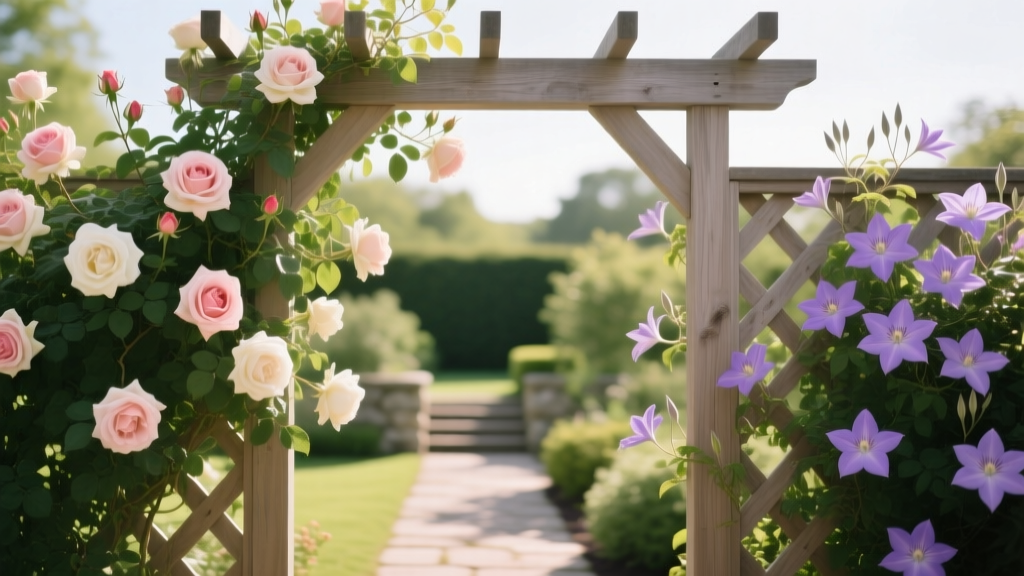
Best Trellises For Rose & Clematis Photography 2026
James MillerPublished
The Intersection of Structural Support and Visual Art
In 2026, the art of garden documentation has evolved from simple seasonal snapshots into a sophisticated practice of visual storytelling. For landscape photographers and avid gardeners alike, few subjects offer the romantic allure and textural complexity of climbing roses intertwined with clematis vines. However, capturing the true majesty of this classic companion planting requires more than just a high-resolution mirrorless camera or the latest computational smartphone lenses; it demands a foundational understanding of the structures that support them. The garden trellis is not merely a horticultural necessity—it is a vital compositional tool that dictates the leading lines, framing, and depth of field in your garden photography.
Pairing climbing roses with clematis is a time-honored horticultural technique. The rose provides a sturdy, woody framework and lush foliage, while the clematis weaves its delicate, herbaceous stems through the rose canes, offering a spectacular secondary bloom cycle. According to the Royal Horticultural Society (RHS), clematis thrives when its roots are kept cool and shaded—often achieved by the rose's lower foliage—while its flowering tops reach for the sun. When viewed through a camera lens, this biological synergy creates a stunning gradient of dense, shadowy greens at the base, transitioning into an airy, sun-drenched canopy of vibrant blooms at the top. To maximize this photographic potential, selecting the right trellis is paramount.
Choosing the Right Trellis for Photographic Impact
The physical architecture of your trellis will define the geometric constraints of your photographs. In 2026, landscape designers and photographers are favoring structures that offer distinct visual rhythms without overwhelming the organic chaos of the vines. Here is a breakdown of the most effective trellis styles for documenting rose and clematis companionships, complete with current market estimates and photographic advantages.
| Trellis Style | Material | Photographic Advantage | Best Rose/Clematis Pairing | 2026 Est. Cost |
|---|---|---|---|---|
| Wooden Lattice Panel | Western Red Cedar | Provides warm, organic framing; diagonal lines add dynamic energy to static shots. | 'New Dawn' Rose & 'Nelly Moser' Clematis | $85 - $160 |
| Wrought Iron Arch | Powder-Coated Steel | Creates symmetrical leading lines; perfect for framing a subject or pathway focal point. | 'Zephirine Drouhin' Rose & 'The President' Clematis | $250 - $450 |
| Metal Obelisk | Galvanized Iron | Adds striking verticality; excellent for tight spaces and isolating macro backgrounds. | 'Cecile Brunner' Rose & Clematis alpina | $120 - $240 |
| Wire Cable System | Stainless Steel Tensioners | Nearly invisible to the lens; creates a 'floating' effect for the vines against brick or stone. | 'Madame Alfred Carriere' & 'Jackmanii' Clematis | $60 - $110 |
The Wooden Lattice: Classic Cottage Framing
For photographers seeking a traditional, romantic aesthetic, the cedar lattice remains unmatched. The intersecting diagonal lines naturally guide the viewer's eye toward the center of the frame. When shooting during the golden hour, the warm tones of weathered cedar complement the soft pinks and purples of a 'New Dawn' and 'Nelly Moser' pairing. The physical depth of the wood also casts intricate micro-shadows, adding a three-dimensional quality to macro photography.
The Iron Arch: Symmetrical Storytelling
Arches are inherently theatrical. They invite the viewer to step into the image. By training a nearly thornless 'Zephirine Drouhin' rose alongside the deep purple 'The President' clematis over an arch, you create a immersive tunnel of color. In 2026, utilizing an arch as a natural vignette allows photographers to use wider focal lengths (such as 24mm or 35mm) while maintaining a strong central subject, effectively pulling the audience into the garden space.
Training Vines for the Lens: The 'See-Through' Rule
A common mistake in garden documentation is allowing vines to completely consume the trellis, resulting in a flat, impenetrable wall of foliage that photographs as a chaotic, two-dimensional blob. Professional garden photographers employ the 'See-Through' rule. When training your clematis through the climbing rose, intentionally leave negative space. The trellis structure should remain partially visible, providing a geometric skeleton that gives the photograph scale, order, and depth.
The University of Minnesota Extension emphasizes the importance of proper air circulation and sunlight penetration for climbing roses to prevent fungal diseases like black spot. Fortunately, the horticultural best practice of spacing out canes and weaving clematis horizontally aligns perfectly with photographic best practices. Horizontal weaving encourages more lateral blooming shoots, which spreads the floral display evenly across the trellis grid, ensuring that your wide-angle landscape shots are evenly balanced with color rather than top-heavy.
Photographer's Tip: When tying vines to the trellis, use matte black or dark green flexible garden tape. Avoid bright white or neon zip-ties, which will catch the camera sensor's attention and require tedious cloning or AI-removal in post-processing.
Lighting, Composition, and 2026 Camera Tech
Clematis petals, particularly the large-flowered hybrids, are translucent and possess a delicate, crepe-like texture. To capture this, backlighting is essential. Position your trellis so that the morning or late afternoon sun shines through the clematis blooms from behind the camera's perspective. This technique illuminates the intricate veining of the petals and highlights the fuzzy, spider-like stamens that make clematis macro photography so captivating.
Modern 2026 camera bodies and flagship smartphones feature advanced AI-driven subject tracking and computational bokeh. When photographing a single 'Jackmanii' clematis flower against a backdrop of climbing rose foliage, these systems can now seamlessly separate the subject from the background, even when the wind causes the trellis to sway. However, optical physics still reigns supreme. Using a fast prime lens (like an 85mm f/1.4 or a 105mm macro) will render the rose canes and trellis structure into a creamy, impressionistic blur, allowing the sharp, in-focus clematis bloom to pop dramatically.
Long-Term Documentation and Time-Lapse Setups
Beyond single-frame photography, the trellis serves as an invaluable tool for long-term garden documentation. Time-lapse photography of a clematis vine unfurling its tendrils and scaling a rose bush is a hallmark of premium botanical videography. The rigid, predictable grid of a metal obelisk or wire cable system provides fixed spatial reference points. When importing hundreds of frames into 2026's AI-assisted video editing suites, software can easily lock onto the intersecting lines of the trellis to stabilize the footage, eliminating the micro-jitters caused by outdoor wind.
Creating a Seasonal Visual Journal
To document the lifecycle of your companion planting, establish a fixed tripod mount in your garden. By photographing the trellis from the exact same coordinates and focal length on the first day of every month, you build a comprehensive visual journal. The trellis acts as a permanent scale bar. In January, the bare, woody rose canes and dormant clematis stems outline the structure's skeleton. By June, the frame bursts into a chaotic, beautiful explosion of overlapping pinks and purples. By November, the clematis has transformed into swirling, silvery seed heads that catch the frost, offering a moody, textural winter study. This chronological documentation not only tracks the aesthetic evolution of your landscape but also provides critical data on bloom times, pruning efficacy, and structural integrity year over year.
Conclusion
The marriage of climbing roses and clematis is a testament to the beauty of symbiotic nature, and the trellis is the silent partner that makes both their growth and their visual documentation possible. By thoughtfully selecting a structure that complements your photographic style—whether it is the rustic charm of cedar lattice or the modern invisibility of tensioned wire—you elevate your garden from a mere planting bed to a living, breathing studio. As we move through 2026, embracing the intersection of horticultural science and photographic art ensures that the fleeting beauty of the garden is preserved with the clarity, composition, and reverence it deserves.

