Pest Control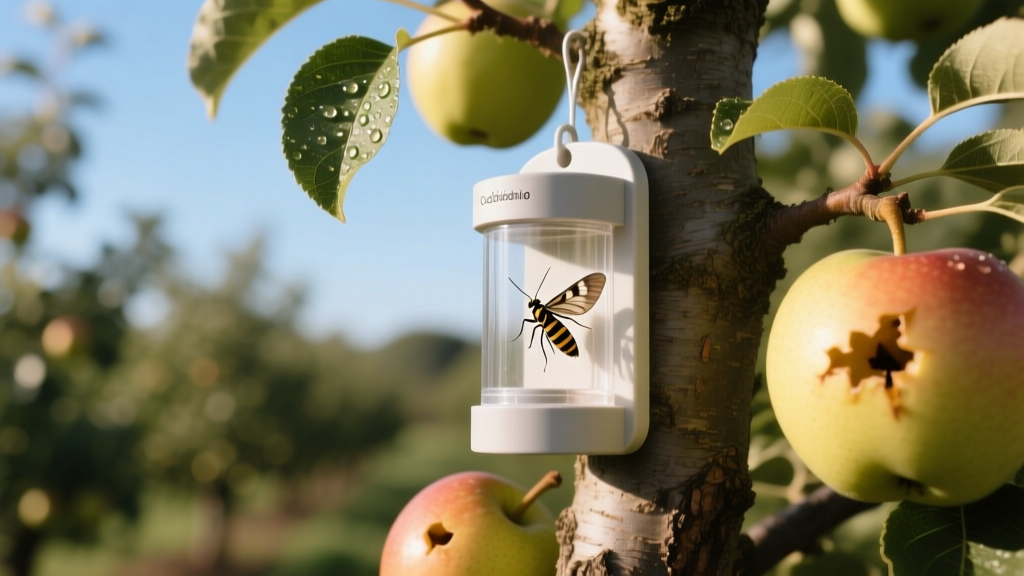
2026 Codling Moth Pheromone Trap Monitoring Guide
James MillerPublished
The Canopy Pest Hierarchy: Webworms vs. Codling Moths
When managing backyard orchards and landscape trees, homeowners often fall into the trap of prioritizing visual nuisance pests over destructive agricultural threats. Many homeowners practicing general tree web worm control often reach for broad-spectrum insecticides the moment they spot the unsightly silk tents of fall webworms (Hyphantria cunea) or eastern tent caterpillars. However, this reactive, visually-driven approach is disastrous for fruit trees. Broad-spectrum sprays decimate the beneficial predator populations—such as parasitic wasps, assassin bugs, and ground beetles—that naturally suppress far worse offenders.
While webworms merely cause cosmetic defoliation on branch tips and rarely kill a healthy tree, the codling moth (Cydia pomonella) destroys the actual fruit from the inside out. The codling moth is the classic "worm in the apple," boring directly into the fruit core, rendering the crop inedible and introducing secondary fungal rots. In 2026, modern Integrated Pest Management (IPM) dictates that we tolerate minor webworm activity while deploying precision monitoring for the far more destructive codling moth. By shifting your perspective from canopy defoliators to internal fruit destroyers, you can save your harvest without destroying your local ecosystem.
Why Pheromone Monitoring is Critical in 2026
As of 2026, shifting microclimates and extended growing seasons have altered the traditional emergence windows of the codling moth. Warmer spring temperatures mean that historical calendar-based spraying schedules are now largely obsolete. If you spray too early, the pesticide degrades before the larvae hatch; if you spray too late, the larvae have already penetrated the fruit, making them immune to topical treatments.
Pheromone traps solve this timing dilemma. By utilizing synthetic versions of the female codling moth's sex pheromone, these traps lure and capture male moths. Monitoring the trap catches allows you to pinpoint the exact moment the moths are flying and mating, enabling you to calculate the precise date of egg hatch. According to the University of California Statewide IPM Program, utilizing pheromone traps in conjunction with degree-day modeling is the gold standard for reducing unnecessary pesticide applications and maximizing the efficacy of targeted biological controls.
Choosing the Right Pheromone Trap
For the 2026 growing season, two primary trap designs dominate the market for backyard and small-scale orchardists:
- Delta Traps: These are made of a sticky, waterproof material folded into a triangular shape. They are highly durable, resist heavy rain, and are excellent for dusty environments. The pheromone lure is placed inside, and the entire bottom surface is coated with a high-tack adhesive.
- Diamond Traps: Folded into a diamond or tent shape, these traps are slightly more open, allowing for better airflow. This increased airflow can sometimes result in a wider pheromone plume, potentially catching more moths in areas with low population density.
Regardless of the design you choose, ensure you purchase fresh 2026 lures. Pheromone lures degrade over time and lose their volatility. Store unopened lures in a freezer until the day you deploy them in the orchard.
Step-by-Step Deployment Guide
Proper placement is just as critical as the trap itself. Follow these steps for optimal monitoring:
- Timing: Hang your traps just before the first expected flight, which typically coincides with the "pink bud" stage of apple and pear development, or when local degree-day models indicate the first generation emergence.
- Placement: Hang the trap in the upper third of the tree canopy, ideally on the south or southwest-facing side where the moths are most active due to warmer afternoon temperatures.
- Density: For a backyard orchard, use at least one trap per variety of fruit tree. If you have a large, contiguous block of apples, place one trap for every 500 square feet of canopy area.
- Maintenance: Check the traps twice a week. Use tweezers to remove captured moths and debris. Replace the sticky liner when it becomes saturated with dust, leaves, or non-target insects.
2026 Action Thresholds and Degree-Day Models
Catching a moth in your trap does not immediately mean you need to spray. You must track the cumulative catch and utilize degree-day (DD) calculations (base 50°F) to time your interventions. Research highlighted by Penn State Extension confirms that treating based on action thresholds rather than mere presence saves money and preserves beneficial insects that keep webworms and aphids in check.
| Trap Catch (Moths/Week) | Risk Level | Recommended Action | Optimal Treatment Window |
|---|---|---|---|
| 0 - 1 | Low | No action required. Continue monitoring. | N/A |
| 2 - 4 | Moderate | Prepare organic controls. Monitor degree-days closely. | 100-150 DD after first sustained catch |
| 5 - 9 | High | Apply targeted biological insecticides. | 200-250 DD after first sustained catch |
| 10+ | Severe | Apply immediate targeted treatment; consider mating disruption. | Immediate, followed by 250 DD hatch window |
Integrating Biological and Organic Controls
Once your pheromone traps indicate that the action threshold has been met and the degree-day model predicts egg hatch, it is time to intervene. Because we want to avoid the broad-spectrum sprays typically used for tree web worm control, we rely on highly targeted, soft-chemistry options:
- Codling Moth Granulosis Virus (Cyd-X): This is a naturally occurring virus that specifically targets and kills codling moth larvae. As of 2026, a standard 10-ounce bottle of Cyd-X retails for approximately $45 and provides excellent control when applied just as eggs are hatching. The larvae ingest the virus while chewing through the fruit skin and die before causing significant damage.
- Spinosad: A naturally derived bacterium that is highly effective against codling moth larvae. It must be ingested by the pest, making timing critical. Spinosad is toxic to bees while wet, so apply it in the late evening when pollinators are no longer active.
- Kaolin Clay (Surround WP): This is a physical barrier method. By coating the developing fruit in a fine film of white clay, you irritate the adult moths, discouraging them from landing and laying eggs. It also masks the visual and olfactory cues of the fruit. This is an excellent preventative measure to apply before the first generation flight begins.
Mating Disruption: The Next Level of IPM
If your pheromone monitoring traps consistently show high moth counts year after year, consider upgrading from monitoring to mating disruption in 2026. Mating disruption involves flooding the orchard environment with so much synthetic female pheromone that the male moths become confused and cannot locate the actual females to mate.
Products like Isomate-C+ dispensers or aerosol puffers (e.g., Puffer CM-O) are now widely available for small-acreage growers. While the upfront cost is higher than a simple monitoring trap, the reduction in larval damage and the complete elimination of the need for chemical sprays during the flight period makes it a highly cost-effective, long-term solution. Remember, mating disruption dispensers do not trap moths; you must continue to hang standard monitoring traps to verify that the disruption is working (a successful disruption program will result in zero moths caught in your monitoring traps).
Sanitation and Cultural Controls
No pheromone trap or biological spray can replace good orchard hygiene. Codling moth larvae overwinter in the rough bark of the tree trunk and in debris on the orchard floor. During the winter months, scrape loose bark from the lower trunks to expose overwintering cocoons to freezing temperatures and foraging birds. Furthermore, aggressively thin your fruit clusters in early spring so that individual apples do not touch; codling moths prefer to lay eggs in the protected crevices where two fruits meet. Finally, pick up and destroy any dropped, infested fruit immediately to break the life cycle before the next generation can emerge.
Conclusion
Effective pest management requires looking past the obvious and addressing the insidious. While fall webworms might trigger an emotional response due to their messy webs, they are a secondary concern compared to the crop-destroying codling moth. By deploying pheromone traps in 2026, tracking degree-days, and utilizing targeted biological controls, you can protect your fruit harvest while maintaining a vibrant, balanced ecosystem in your backyard orchard.