Pest Control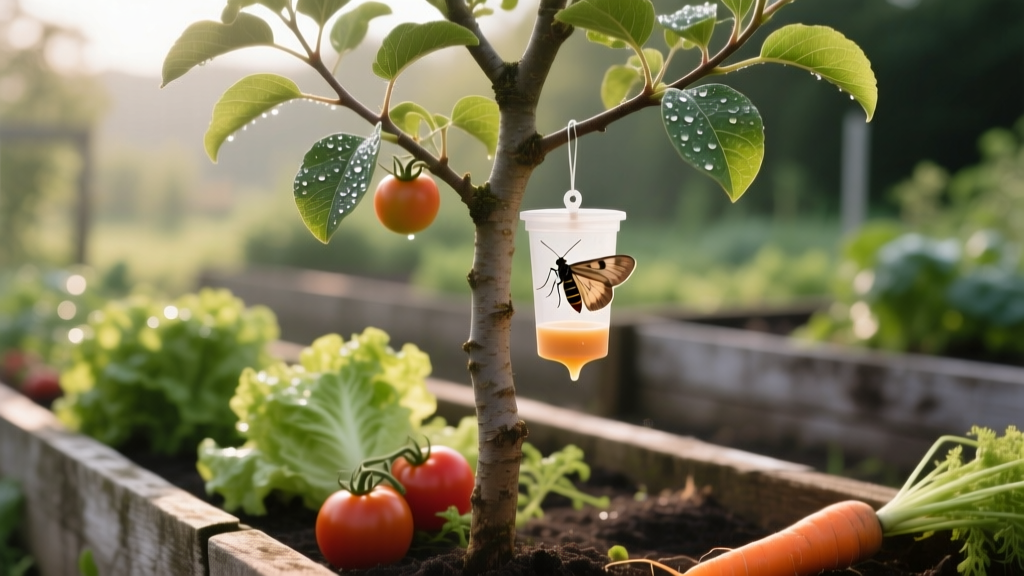
Codling Moth Pheromone Traps 2026: Save Fruit Trees Near Raised Beds
Anna KowalskiPublished
The Intersection of Raised Beds and Fruit Tree Pests
Many modern homesteaders and urban gardeners utilize a permaculture approach, integrating dwarf apple, pear, and stone fruit trees in large fabric grow bags or directly at the sunny borders of their raised bed vegetable gardens. While this maximizes yield per square foot and creates beautiful, edible landscaping, it introduces a unique pest-management challenge. Fruit trees are highly susceptible to specific orchard pests, most notably the codling moth (Cydia pomonella). If left unchecked, these pests will destroy your apple and pear harvest, and the broad-spectrum pesticide sprays often used to combat them can drift onto your raised beds, harming sensitive vegetable crops and beneficial insects.
To maintain a thriving, organic ecosystem where your fruit trees and raised bed vegetables coexist peacefully, precision is key. In 2026, the gold standard for this precision is pheromone trap monitoring. By understanding exactly when the codling moth is active, you can time targeted, organic interventions perfectly, eliminating the need for calendar-based spraying and protecting your tomatoes, peppers, and leafy greens from unnecessary chemical exposure.
Understanding the Codling Moth Threat in 2026
The codling moth is the quintessential 'worm in the apple.' The adult moths are small, mottled gray and brown, and they emerge in the spring to mate and lay eggs on developing fruit and leaves. Once the eggs hatch, the larvae immediately bore into the fruit, feeding on the seeds and core before dropping to the ground to pupate. Depending on your climate zone, there can be two to four overlapping generations per year.
According to the University of California Integrated Pest Management Program, shifting climate patterns have accelerated the emergence of the first generation of codling moths in many temperate zones. In 2026, gardeners are seeing 'biofix' (the first consistent capture of moths) earlier than historical averages. This makes relying on old almanac dates for spraying obsolete and dangerous for your adjacent raised bed crops. Monitoring is no longer optional; it is a critical pillar of modern integrated pest management (IPM).
How Pheromone Trap Monitoring Works
Pheromone traps do not control or eliminate the codling moth population. Instead, they act as an early warning radar system. Female codling moths emit a specific sex pheromone (codlemone) to attract males. Commercial traps utilize synthetic replicas of this pheromone to lure male moths into a sticky enclosure.
By checking these traps twice a week, you can identify the exact date of the 'biofix'—the first day you consistently catch moths. This date serves as Day Zero for calculating 'degree-days,' a heat-accumulation metric that predicts exactly when the eggs will hatch and the vulnerable larvae will begin searching for fruit. As noted by Washington State University Tree Fruit Extension, targeting the larvae just as they hatch, before they bore into the fruit, is the only effective window for organic sprays like Spinosad or Bacillus thuringiensis (Bt).
2026 Pheromone Trap Comparison Chart
Selecting the right trap for a home orchard bordering a vegetable garden requires balancing sensitivity, longevity, and ease of use. Below is a comparison of the top monitoring systems available to home gardeners in 2026.
| Trap System | Trap Design | Lure Longevity | Approx. Cost (2026) | Best For |
|---|---|---|---|---|
| Trécé CIDL 2 | Diamond Trap (Enclosed) | 6-8 Weeks | $18 - $22 | Dusty environments near dry raised beds |
| Suterra BioLure | Wing Trap (Open) | 4-6 Weeks | $15 - $18 | High-humidity areas, easy visual counting |
| Generic Delta Trap | Delta (Triangular) | 3-4 Weeks | $10 - $14 | Budget-conscious multi-tree monitoring |
Note: Always purchase fresh lures for the current 2026 season. Pheromones degrade over time, and using expired lures from previous years will result in false-negative readings, leading to mistimed sprays that could damage your vegetable crops.
Step-by-Step Deployment Near Raised Beds
Proper placement of your pheromone traps is crucial, especially when managing the microclimate between tall fruit trees and low-lying raised bed vegetables.
- Timing: Hang your traps just as the apple or pear blossoms are opening, or immediately at petal fall. This coincides with the natural emergence of the first generation of adult moths.
- Placement Height: Hang the trap in the upper third of the fruit tree canopy, roughly 6 to 8 feet off the ground. This ensures it catches the wind currents where moths fly, rather than the stagnant air near the soil level of your raised beds.
- Wind Direction: Position the trap on the side of the tree that faces the prevailing wind. This allows the pheromone plume to disperse outward, drawing moths away from the center of your garden.
- Monitoring Schedule: Check the sticky liners every 3 to 4 days. Use a hand lens to confirm the identity of the moth. Codling moths have a distinctive dark brown band with a coppery sheen at the tip of their wings. Replace the sticky liner when it becomes covered in debris or non-target insects.
Tracking Degree-Days for Precision Spraying
Once you record your biofix (the first consistent moth capture), you must begin tracking degree-days (DD). You can use free online calculators provided by local university extensions or smart garden weather stations that automatically calculate DD based on your zip code's daily high and low temperatures.
The magic number for the first generation of codling moths is 250 degree-days after biofix. At 250 DD, approximately 10% to 20% of the eggs have hatched. This is your cue to apply an organic spray. If you spray too early, the residual effect wears off before the bulk of the larvae emerge. If you spray too late, the larvae have already bored into the fruit, rendering the spray useless.
For the second generation, the target is typically around 1200 to 1260 DD from the first biofix. Precision timing ensures you only spray when absolutely necessary, adhering to the core Environmental Protection Agency (EPA) IPM Principles of minimizing pesticide use.
Protecting Your Raised Bed Vegetables from Chemical Drift
When the 250 DD threshold is reached, you must spray the fruit tree canopy. However, your raised beds are likely situated just a few feet away, filled with blooming squash, cucumbers, and tomatoes that rely on heavy pollinator traffic. Even organic sprays like Spinosad are highly toxic to bees when wet.
To protect your raised bed ecosystem:
- Use Targeted Organics: Opt for Codling Moth Granulovirus (Cyd-X). This is a highly specific biological control that only affects codling moth larvae. If drift lands on your raised bed vegetables, it poses zero threat to pollinators, humans, or beneficial insects like ladybugs and parasitic wasps.
- Application Timing: Always spray at dusk, after the bees have returned to their hives and the pollinator traffic on your raised bed flowers has ceased. By morning, the spray will be dry and significantly less harmful to any early-foraging insects.
- Physical Shields: If your dwarf fruit tree is planted directly inside or immediately adjacent to a raised bed, use a temporary physical barrier, such as a lightweight row cover draped over the vegetable plants, to catch any overspray or drift during the application.
- Nozzle Selection: Use a spray nozzle that produces larger, heavier droplets rather than a fine mist. Heavy droplets fall directly onto the fruit tree foliage and are less likely to be carried by the wind onto your vegetable crops below.
Sanitation and Garden Hygiene
Pheromone monitoring and timed sprays must be paired with rigorous sanitation. Codling moth larvae drop from infested fruit to pupate in the soil or in debris. If an infested apple falls from your border tree into your raised bed, it not only introduces rot and fungal pathogens to your vegetable soil, but it also allows the next generation of moths to breed right at the base of your garden.
Conduct weekly 'fruit sweeps' of your raised beds and the surrounding soil. Pick up any dropped fruit and destroy it (do not compost it in a standard pile, as home compost bins rarely reach the temperatures required to kill the larvae). Wrapping the trunk of your fruit tree with corrugated cardboard bands in mid-summer can also trap descending larvae, allowing you to physically remove and destroy them before they complete their life cycle.
Conclusion
Integrating fruit trees into a raised bed vegetable garden is a rewarding endeavor that maximizes your food production and enhances garden biodiversity. However, it requires a sophisticated approach to pest management. By utilizing pheromone trap monitoring in 2026, you replace guesswork with hard data. You will know exactly when the codling moth is a threat, allowing you to deploy highly targeted, organic treatments precisely when they are needed. This scientific approach not only saves your apple and pear harvest from the dreaded 'worm,' but it fiercely protects the delicate, pollinator-dependent ecosystem thriving in your raised vegetable beds just inches away.