Pest Control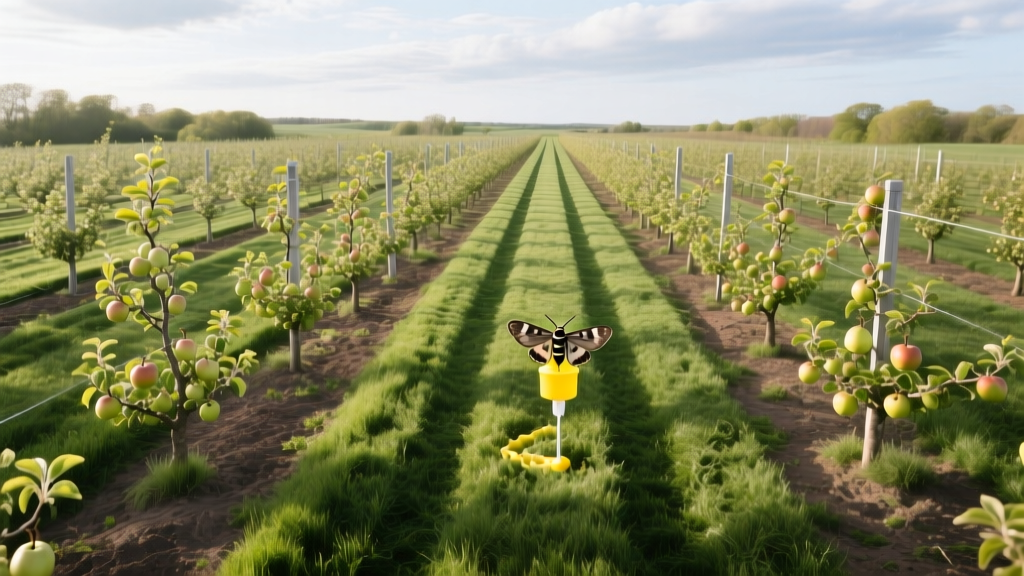
2026 Codling Moth Pheromone Traps & Mowing Patterns
Emily WatsonPublished
The Intersection of Orchard Mowing and Codling Moth IPM
The codling moth (Cydia pomonella) remains the most economically devastating pest of apples, pears, and walnuts in North America. As we navigate the 2026 growing season, integrated pest management (IPM) protocols rely heavily on precise pheromone trap monitoring to time insecticide applications and biological controls. However, many orchard managers overlook a critical component of successful monitoring: orchard floor management. Specifically, mowing techniques and patterns play a hidden but vital role in trap efficacy, pest suppression, and the preservation of beneficial insect populations.
While mowing is often viewed strictly as a vegetative management task, the way you cut your orchard floor directly impacts the microclimate, soil-dwelling predator habitats, and your physical ability to monitor traps consistently. In 2026, with shifting climate patterns altering pest emergence windows, combining strategic mowing patterns with rigorous pheromone trap monitoring is essential for keeping codling moth populations below economic thresholds.
Why Mowing Patterns Dictate Trap Monitoring Success
Pheromone traps for codling moths must be checked at least once a week during peak flight periods to accurately track male moth captures and establish a biofix. If your orchard floor is overgrown with tall grasses and broadleaf weeds, accessing the traps becomes a chore. This often leads to delayed monitoring, missed biofix dates, and poorly timed spray applications.
Creating Dedicated Monitoring Lanes
To ensure consistent trap checking, implement a dedicated scouting lane pattern. Rather than mowing the entire orchard floor uniformly, use a flail or rotary mower to cut a clean, 4-foot-wide lane directly beneath the tree canopies where traps are deployed. This 'monitoring lane' allows you to walk the orchard quickly without wading through dense vegetation, reducing the risk of kicking up dust that can coat the sticky trap liners and render them ineffective. Furthermore, keeping the area immediately beneath the canopy mowed reduces the humidity microclimate that can prematurely degrade the volatile pheromone lures.
Alternate Row Mowing for Predator Preservation
While clean cultivation under the canopy aids monitoring, mowing the entire orchard floor to bare dirt is a severe IPM misstep. Codling moth larvae drop to the ground to pupate in the soil or under leaf litter. Ground-dwelling predators, particularly carabid beetles and roaming spiders, are voracious consumers of these pupae. According to Washington State University Tree Fruit extension guidelines, preserving groundcover habitats is crucial for maintaining these natural enemy populations.
The best practice for 2026 is alternate row mowing or strip mowing. Mow the center of every other drive row, leaving the adjacent row unmowed or cut to a higher stubble height (4 to 6 inches). This pattern creates a mosaic of habitats. The unmowed strips harbor beneficial predators and parasitic wasps, while the mowed strips provide the necessary access for tractors, sprayers, and harvest equipment. When placing your pheromone traps, hang them on the side of the tree facing the mowed drive row to ensure easy visual access and retrieval.
2026 Pheromone Trap Deployment Strategies
Selecting the right trap and lure combination is just as important as the physical environment in which it is placed. In 2026, the industry has largely shifted toward biodegradable delta traps to reduce plastic waste in the orchard. These traps perform identically to traditional plastic variants but break down naturally if lost in the canopy.
Selecting the Right Lure and Trap
For standard monitoring, a delta trap baited with a standard codlemone (sex pheromone) lure is sufficient. However, if you are utilizing mating disruption dispensers in your orchard, you must use a high-volume 'Mega Lure' or a combination lure that includes both the sex pheromone and a pear ester (ethyl (E,Z)-2,4-decadienoate). The pear ester attracts both male and female moths, allowing you to monitor the population even when the air is saturated with mating disruption pheromones.
- Trap Density: Deploy at least one trap per 5 acres for standard blocks, and one trap per 2.5 acres for mating disruption blocks.
- Placement Height: Hang traps in the upper third of the tree canopy, approximately 6 to 8 feet off the ground, on the exterior edge of the canopy.
- Lure Replacement: Replace standard lures every 4 weeks, and high-capacity combo lures every 6 to 8 weeks, depending on the manufacturer's 2026 specifications.
Step-by-Step Monitoring and Degree-Day Tracking
Trap catches alone do not tell the whole story. To predict egg-laying and larval emergence, you must combine your weekly trap counts with a degree-day (DD) model. The biofix is established when you consistently catch moths in your traps over several consecutive days, coinciding with the accumulation of sufficient heat units. According to UC Davis Statewide IPM Program, tracking degree-days from the biofix allows you to time interventions precisely when the eggs are hatching and larvae are most vulnerable.
When you walk your mowed scouting lanes to check traps, record the number of moths caught, replace the sticky liner if it is covered in debris or insects, and log the local temperature data. This data will feed into your degree-day model to trigger your next IPM action.
2026 Codling Moth Pheromone Trap Thresholds & Actions
| Degree-Days (Base 50°F) | Trap Catch Trend | IPM Action Required |
|---|---|---|
| 100 DD from Biofix | Any sustained catch | First generation egg hatch begins. Apply ovicides or larvicides if thresholds are exceeded. |
| 250 DD from Biofix | Increasing male/female ratio | Peak first-generation egg hatch. Optimal window for codling moth granulovirus (CpGV) applications. |
| 1200 DD from Biofix | Second flight begins | Prepare for second generation. Re-check mating disruption dispensers and replace depleted lures. |
| 1700 DD from Biofix | Peak second flight | Second generation egg hatch. Apply targeted insecticides or release Trichogramma parasitic wasps. |
Synchronizing Mowing Schedules with Pest Life Cycles
Your mowing schedule should not operate independently of your pest monitoring data. When your pheromone traps indicate that the first-generation larvae are dropping to the ground to pupate (typically around 400 to 500 degree-days after biofix), it is an excellent time to adjust your mowing patterns. Avoid aggressive, close-to-the-ground mowing during this window, as it can disturb the soil surface and inadvertently protect pupating larvae from ground beetles.
Instead, raise your mower deck to maintain a 4-inch stubble. This provides shade and moisture for the beneficial insects hunting the pupae. Once the second-generation flight begins and the traps show a spike in moth captures, you can resume standard mowing patterns to keep the orchard floor manageable for harvest operations. By syncing your tractor time with your trap data, you create a holistic orchard management system that works with nature rather than against it.
Weed Management and Alternate Hosts
Mowing patterns also play a role in managing the broader orchard ecosystem. While codling moths do not reproduce on broadleaf weeds, certain weed species can harbor other secondary pests, such as lygus bugs or spider mites, which can migrate into your fruit trees and cause compounding damage. By utilizing strip mowing, you prevent any single weed species from going to seed and dominating the orchard floor. If you notice a proliferation of host weeds near your pheromone traps, target those specific areas with spot-mowing or organic herbicides to maintain a clean microclimate around your monitoring stations.
Conclusion
Effective codling moth management in 2026 requires looking beyond the tree canopy and paying close attention to the orchard floor. By implementing strategic mowing patterns—such as dedicated scouting lanes and alternate row mowing—you ensure that your pheromone traps remain accessible, accurate, and undisturbed. This physical access, combined with rigorous degree-day tracking and the preservation of ground-dwelling predators, forms the foundation of a robust, sustainable IPM program. Protect your fruit, optimize your labor, and let your mowing patterns work in harmony with your pest monitoring strategies this season.