Pest Control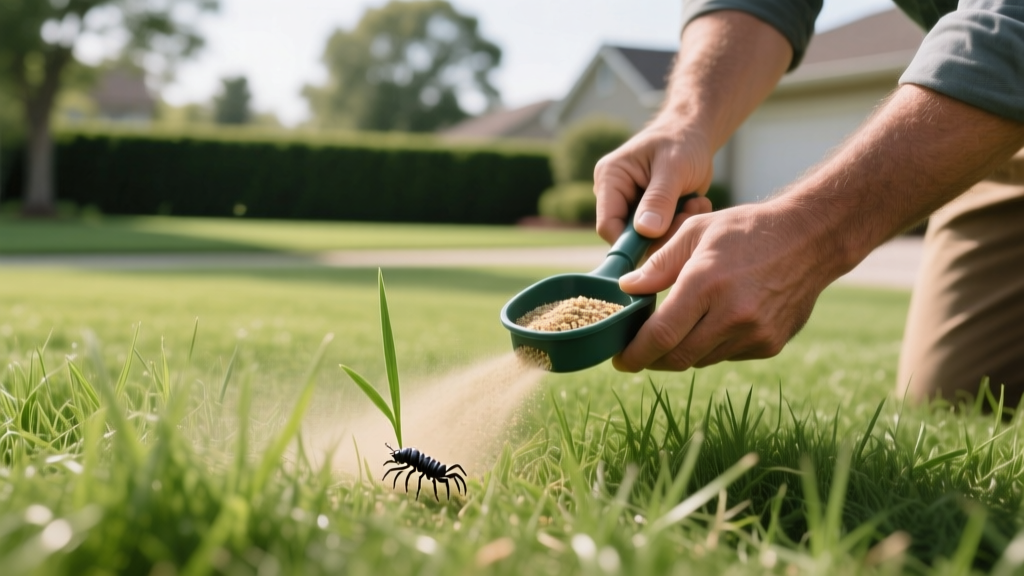
5 Common Lawn Grub Control Mistakes and How to Fix Them
Emily WatsonPublished
The Hidden Cost of Grub Damage
White grubs are the larval stage of scarab beetles, including Japanese beetles, June bugs, and European chafers. These C-shaped, cream-colored pests live just beneath the soil surface, aggressively feeding on grassroots. If left unchecked, a severe infestation can destroy an entire lawn in a matter of weeks, leading to thousands of dollars in sod replacement and landscaping costs. Furthermore, grubs attract secondary pests like skunks, raccoons, and armadillos, which will tear up your turf to feast on the larvae.
While treating for grubs is a standard part of lawn maintenance, many homeowners inadvertently waste time and money by making critical errors in their pest control strategy. According to Penn State Extension, improper timing and product mismatch are the leading reasons for grub control failure. By adopting an Integrated Pest Management (IPM) approach and avoiding these five common mistakes, you can protect your lawn effectively and sustainably.
Mistake 1: Applying Preventative Treatments Too Late
The Mistake: Many homeowners wait until they see brown patches or wildlife digging in their lawn during late summer before rushing to the garden center to buy a preventative grub control product. They apply it in August, expecting a quick fix, only to watch their lawn continue to die.
The Fix: Preventative products must be applied before the eggs hatch and while the grubs are still tiny. Products containing Chlorantraniliprole (such as Scotts GrubEx) take several months to fully translocate into the root zone and require application in April or May. Products containing Imidacloprid (such as Bayer Merit) act faster but should still be applied between mid-June and early July. If you wait until August, preventative chemicals will not penetrate the soil fast enough to stop the large, actively feeding grubs that are already destroying your roots.
Mistake 2: Using Preventatives on Active Infestations
The Mistake: It is September, your lawn is spongy, and you have confirmed an active grub infestation. You apply a standard long-term preventative, but it fails to kill the mature larvae.
The Fix: You must switch to a curative treatment. Curative products are designed for rapid knockdown of large, active grubs in late summer and early fall. The gold standard for curative control is Trichlorfon (commonly sold as Dylox or Bayer Advanced 24 Hour Grub Killer). Trichlorfon is highly water-soluble and penetrates the soil immediately, killing grubs within 24 to 48 hours. However, Michigan State University Extension notes that Trichlorfon degrades rapidly in soils with a high pH (above 7.5). Always test your soil pH before application; if your soil is highly alkaline, you may need to increase the application rate slightly or look into alternative curative options.
Mistake 3: Ignoring the Soil Moisture Requirement
The Mistake: Spreading granular grub control over a dry, drought-stressed lawn and assuming the morning dew will be enough to activate the chemical. The granules get trapped in the thatch layer, degrading in the sunlight without ever reaching the soil where the grubs live.
The Fix: Water is the vehicle that carries the active ingredient into the root zone. Follow this strict watering protocol:
- Pre-watering: Apply 1/4 inch of water a day before application to soften the soil and encourage grubs to move closer to the surface.
- Application: Apply the granular product evenly using a calibrated broadcast spreader.
- Post-watering: Immediately water the lawn with 1/2 inch of water to wash the granules off the grass blades, through the thatch, and into the top 2 to 3 inches of soil. Use empty tuna cans placed around your yard to measure exactly when you have reached the 1/2 inch mark.
Mistake 4: Treating Below the Economic Threshold
The Mistake: Adopting a 'spray and pray' mentality by applying harsh chemical curatives across the entire property just because a neighbor mentioned seeing a Japanese beetle.
The Fix: A healthy lawn can easily tolerate a small grub population without showing damage. Before spending money on chemicals, perform the 'Tug Test' and 'Sod Plug Test'. Grab a handful of dead turf and tug gently; if it rolls back like a carpet, grubs have severed the roots. Next, use a flat spade to cut a 12x12 inch square of sod about 2 inches deep, and peel it back. Count the grubs in the soil and on the roots.
- 0 to 4 grubs per sq. ft.: No treatment needed. The lawn will outgrow the damage.
- 5 to 9 grubs per sq. ft.: Monitor closely. Treat only if the lawn is under additional stress (drought, heat) or if wildlife is digging.
- 10+ grubs per sq. ft.: Immediate treatment is required to save the turf.
Mistake 5: Overlooking Biological Controls in Your IPM Strategy
The Mistake: Relying exclusively on synthetic neonicotinoids or organophosphates, which can harm non-target organisms, disrupt local ecosystems, and contribute to chemical resistance over time.
The Fix: Integrate biological controls into your IPM plan. Beneficial nematodes, specifically the species Heterorhabditis bacteriophora (Hb), are microscopic worms that actively hunt and infect grubs with a fatal bacteria. According to the University of California IPM, nematodes are highly effective when applied correctly.
How to apply nematodes:
Purchase live Hb nematodes from a reputable supplier (expect to pay around $50 to $70 for a package covering 5,000 square feet). Apply them in late summer using a hose-end sprayer designed for biologicals. Crucial tip: Nematodes are killed by UV light, so apply them at dusk or on a heavily overcast day. You must keep the soil consistently moist for 10 to 14 days post-application to allow the nematodes to move through the soil profile and locate their hosts.
Comparison Chart: Grub Control Methods
Use the table below to select the correct product based on the current month and the state of your lawn.
| Strategy | Active Ingredient / Organism | Best Application Window | Target Grub Stage | Est. Cost (per 5,000 sq ft) |
|---|---|---|---|---|
| Early Preventative | Chlorantraniliprole | April - May | Eggs / Newly hatched | $20 - $25 |
| Late Preventative | Imidacloprid / Clothianidin | June - Mid-July | Eggs / 1st Instar | $15 - $20 |
| Curative (Rescue) | Trichlorfon (Dylox) | August - October | 2nd / 3rd Instar (Active) | $18 - $24 |
| Biological (Organic) | H. bacteriophora Nematodes | Late August - September | Active Larvae | $50 - $75 |
Conclusion
Effective grub control is not about buying the most expensive chemical on the shelf; it is about understanding the life cycle of the pest and matching your intervention to the correct window of vulnerability. By applying preventatives early in the season, reserving fast-acting curatives for late-summer emergencies, properly watering products into the root zone, respecting economic thresholds, and exploring biological alternatives like nematodes, you can maintain a pristine, resilient lawn. Stop guessing, start testing your soil, and implement these targeted fixes to outsmart grubs this season.